



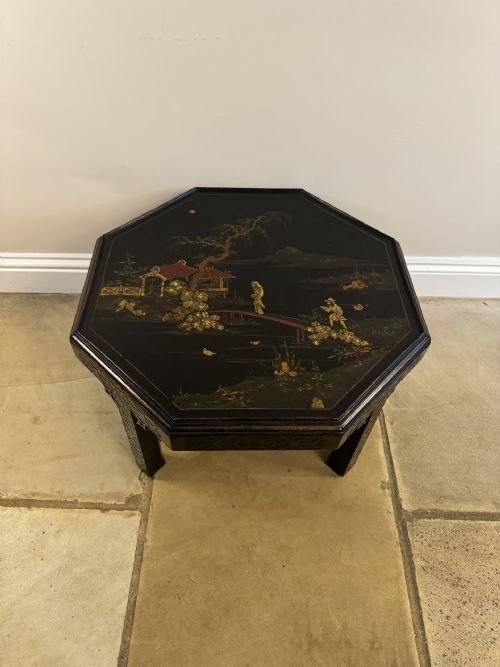


Hand Painted Low Table
These hand painted low table pieces bring low-slung surfaces and rich pigment into a room, offering both practical utility and bold decorative presence.
Hand Painted Low Table
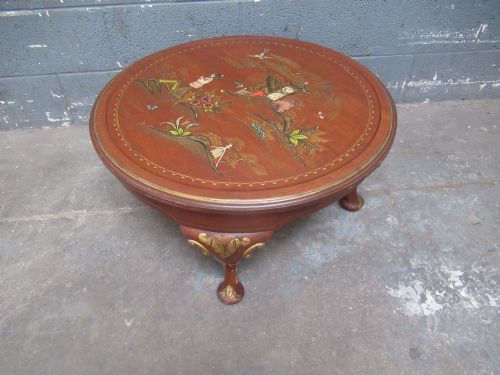
When you search for a hand painted low table, you encounter a diverse group of coffee tables, tray tables, low stools, and occasional tables designed for low seating arrangements. The selection spans the nineteenth century through the early decades of the twentieth century, including Edwardian examples and pieces from the nineteen-thirties.
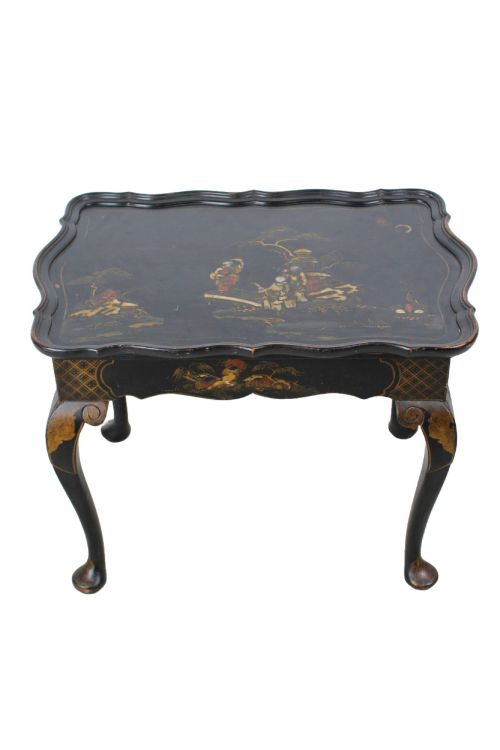
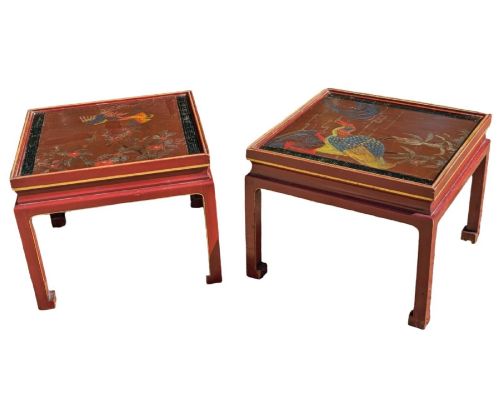
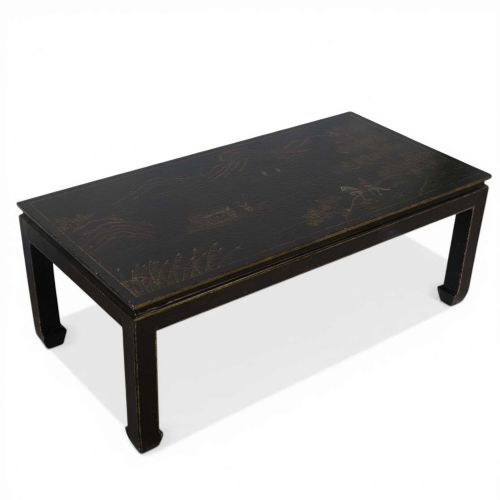
The most common forms on this page are coffee tables and tray tables, frequently styled in Chinoiserie or traditional Chinese designs. You also meet rustic farmhouse oak pieces, Kashmiri tables, Middle Eastern low stools, and oriental lacquered chests adapted for low surfaces.
Origins vary from English interpretations of Regency and Chinoiserie styles to imported or regional pieces from Kashmiri and Middle Eastern makers. A buyer finds everything from circular lacquer coffee tables to quartetto nests of four stacking lamp tables.
How they were made
Maker construction relies on timber, oak, and pine as the structural foundation, shaped into tray tops, chests, and low frames. Papier-mache also appears in the physical fabric of these surfaces.
The defining finish involves paint, lacquer, and pigment applied by hand to create decorative scenes. Artisans incorporated gilt and gold leaf highlights to accentuate the painted motifs across lacquer and wood.
Hand Painted Low Table Retail Price Guide 2026
Typical asking prices for hand painted low table among the pieces listed under this phrase on Sellingantiques today, from the lower quarter to the upper quarter. They describe what is for sale here now, not the wider market.
Materials recorded across the inventory include lacquer, wood, paint, gilt, papier-mache, gold leaf, timber, and pigment.
What varies in quality
Quality reveals itself in the execution of the hand-painted scenes and the depth of the lacquer or gilt work. Finer examples display meticulous detail in their decorative oriental or traditional motifs, whereas simpler rustic pieces rely on straightforward painted oak.
The structural integrity of the timber and the preservation of the original surface finish dictate the standing of a piece. Signed works and well-preserved Edwardian Chinoiserie tray tables represent the more sophisticated end of the range.
E.Daligny
The Hand Painted Low Table Glossary
- Chinoiserie
- European interpretation and imitation of Chinese and East Asian artistic traditions, popular in furniture decoration. This style frequently employs black or coloured lacquer with gilt painted scenes.
- Japanned
- European-made lacquerware designed to emulate Japanese and Asian lacquer finishes. It involves layered varnish and painted decoration.
- Quartetto
- A set of four small tables designed to stack inside one another. They function as occasional, lamp, or coffee tables.
- Tray table
- A table featuring a removable or fixed tray top with raised edges. These surfaces were often utilised for serving or display.
Hand Painted Low Table: Frequently Asked Questions
What periods do these low tables come from?
The pieces span the nineteenth century, the Edwardian era, and the early decades of the twentieth century up to nineteen-thirty. You encounter nineteenth-century lacquered tray tables alongside nineteen-ten rustic oak pieces and nineteen-twenty Kashmiri work.
Most examples cluster around the nineteen-hundreds to nineteen-twenties, reflecting Edwardian tastes and early twentieth-century revival styles.
How do I identify a Chinoiserie low table?
Chinoiserie pieces feature hand-painted decorative scenes inspired by East Asian art, typically set against a lacquered background. They often incorporate gilt or gold leaf to highlight figures, pagodas, and landscapes.
These surfaces frequently take the form of tray top coffee tables or circular lacquer tables dating from the Edwardian period.
Were these tables originally used as coffee tables?
Many older tables were adapted from tray tables, chests, or low stools to serve modern coffee table heights. Period pieces from the nineteenth and early twentieth centuries often originated as serving trays on folding stands or as occasional tables.
Over time, their proportions made them natural candidates for placement beside low seating in living spaces.
What materials should I expect on these surfaces?
Construction utilises timber, oak, pine, and papier-mache as the primary base materials. Surfaces are finished with paint, lacquer, and pigment, frequently enhanced by gilt and gold leaf.
The combination of wood and hand-applied lacquer creates the distinct decorative character found across the Chinoiserie, Kashmiri, and rustic farmhouse styles.