

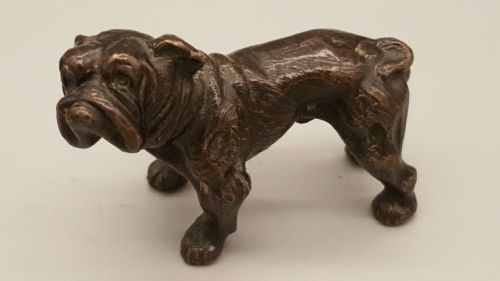


Painted Bronze Dog
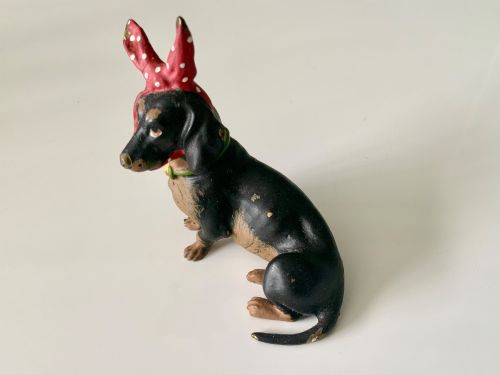
These painted bronze dog sculptures bring character to a room through expressive animalier forms finished in vibrant cold-paint.
Painted Bronze Dog
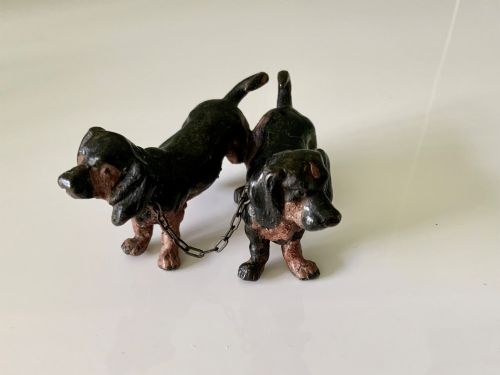
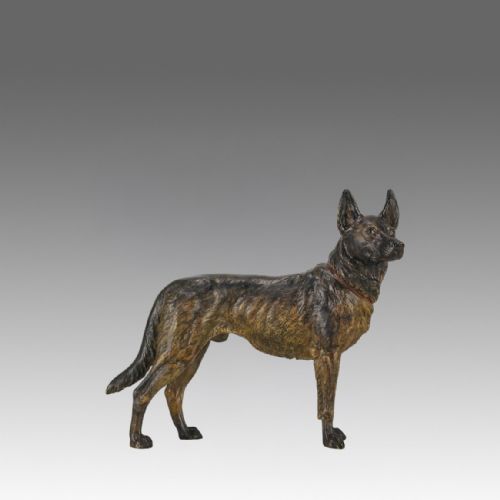
A painted bronze dog is a small metal sculpture or desk accessory depicting canine breeds ranging from pugs and bulldogs to terriers and dachshunds. These pieces emerge across the Victorian and Edwardian periods into the early twentieth century, spanning Art Deco movements and Austrian workshops.
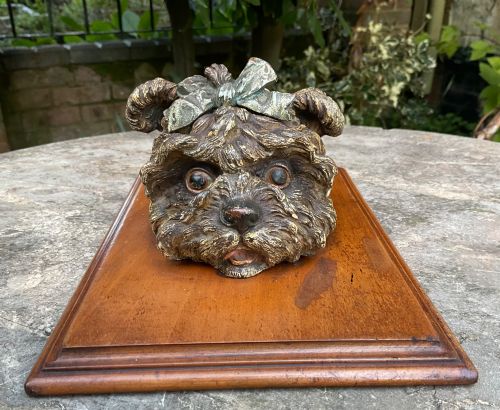
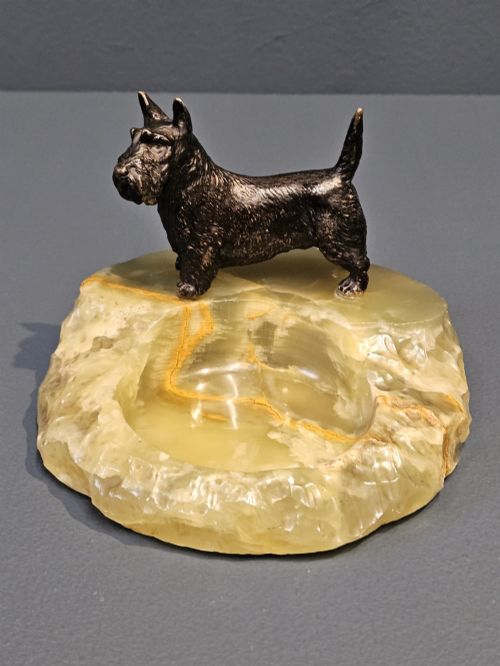
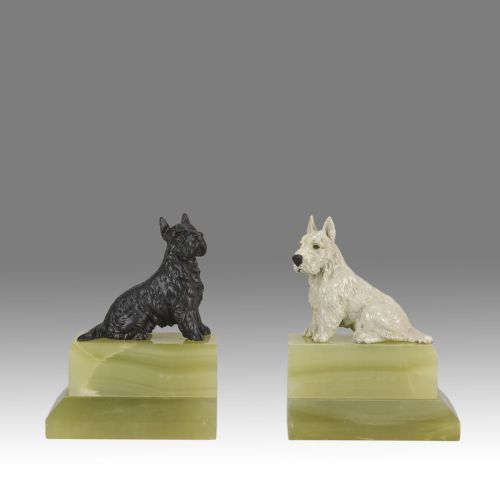
You will most frequently meet cold-painted bronze figurines and functional items such as paper clips, inkwells, bookends, and desk tidies. Many examples pair the metal figures with bases of marble or onyx.
The objects capture specific breeds with distinct postures, from alert terriers to humorous scenes of dogs cocking a leg or racing monkeys.
How they were made
Craftsmen cast these animal figures in bronze using traditional methods before applying layers of cold-paint directly to the metal surface. Unlike kiln-fired enamels, this paint dries without heat, preserving fine details across the fur and facial expressions.
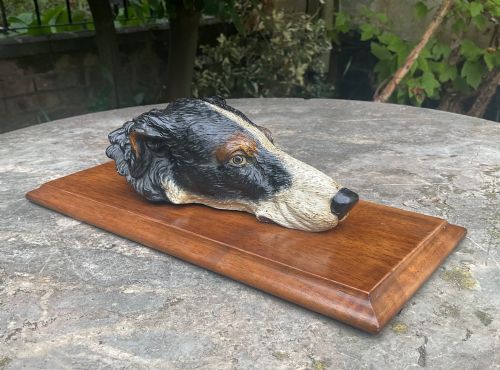
Makers often mounted the finished bronze dogs onto heavy bases of carved marble, onyx, wood, or papier-mache to create desk accessories and bookends.
Painted Bronze Dog Retail Price Guide 2026
Typical asking prices for painted bronze dog among the pieces listed under this phrase on Sellingantiques today, from the lower quarter to the upper quarter. They describe what is for sale here now, not the wider market.
Listings feature materials such as bronze, onyx, cold-painted bronze, paint, metal, marble, wood, and papier-mache across nineteenth-century and early twentieth-century periods.
What varies in quality
The standard of a painted bronze dog rests upon the crispness of the casting and the preservation of the original polychrome surface. Finer examples display meticulous chisel work on the coat and lifelike anatomical proportions.
The nuance of the characterisation separates master foundry work from simpler production pieces. Well-modelled expressions and intact, unpolished paint finishes elevate the object.
Franz Bergman·Stephan Buchinger·Jules Moigniez
The Painted Bronze Dog Glossary
- Cold-Painted Bronze
- Bronze sculpture decorated with unfired paint applied directly to the metal surface. This technique allows for intricate polychrome details on animal figures.
- Animalier
- Nineteenth-century artistic movement focusing on the realistic portrayal of animals. Sculptors in this tradition studied anatomy closely.
- Vienna Bronze
- Small-scale bronze figures produced in Austrian foundries, particularly noted for realistic animal subjects and humorous scenes. These pieces frequently utilise the cold-painting method.
- Desk Tidy
- A functional desk accessory designed to hold small stationery items. Many incorporate animal sculptures as decorative handles or figures.
Painted Bronze Dog: Frequently Asked Questions
What is a cold-painted bronze dog?
A cold-painted bronze dog is a small metal sculpture decorated with paint applied after casting, without kiln firing. These pieces depict various breeds in realistic or humorous poses.
Foundries across Austria and France produced these figures during the nineteenth and early twentieth centuries as desk ornaments and cabinet pieces.
How were these bronze dogs used originally?
Many of these pieces served practical functions on Victorian and Edwardian writing desks. Makers incorporated the bronze dogs into inkwells, paper clips, bookends, and desk tidies.
Other examples functioned purely as decorative figurines, miniature sculptures, or car mascots mounted on stone bases.
How do I identify Vienna bronzes?
Vienna bronzes typically exhibit detailed casting combined with polychrome cold-painting that captures realistic fur textures and expressions. Many feature animal subjects produced in Austrian workshops around nineteen hundred.
Look for naturalistic poses and distinct colour palettes characteristic of the period's foundry output.
How do I care for cold-painted bronze?
Protect the fragile painted surface by dusting gently with a soft, dry cloth. Avoid using liquid cleaners, polishes, or harsh chemicals that can strip the cold-paint.
Keep the pieces away from direct sunlight and excessive moisture to preserve the original finish.