
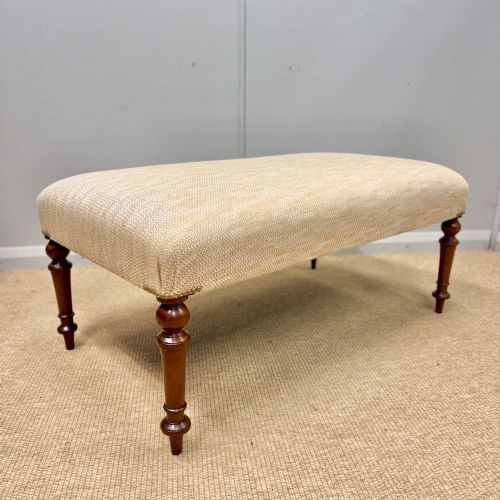
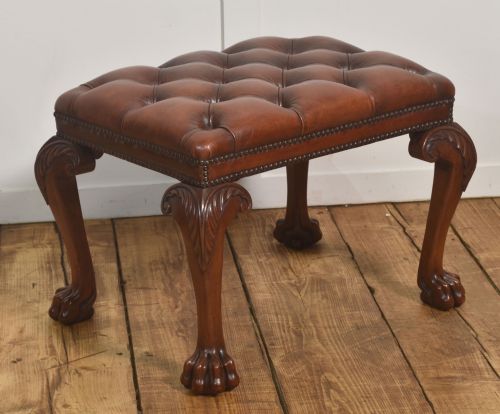
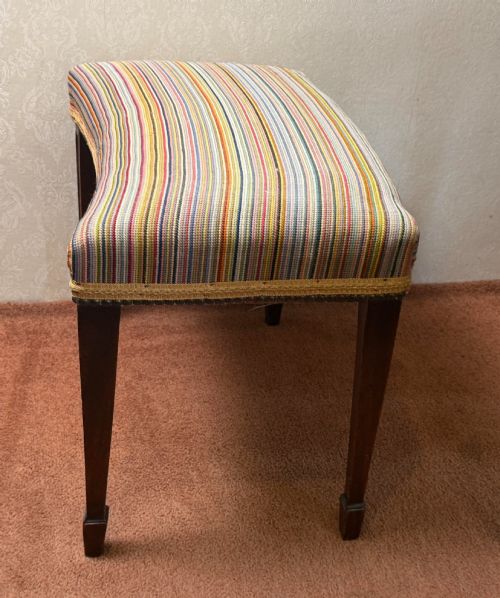
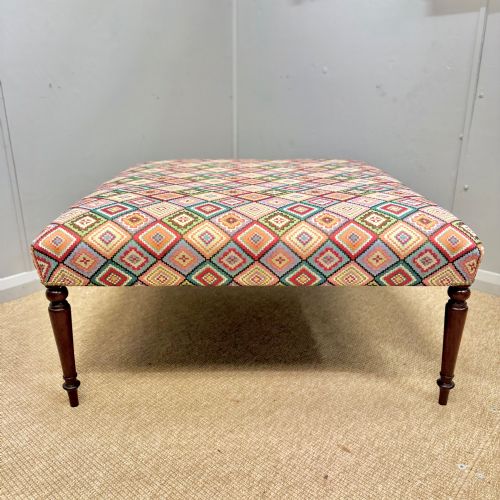
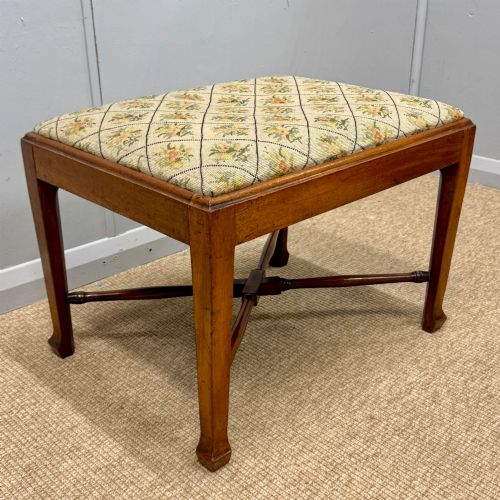
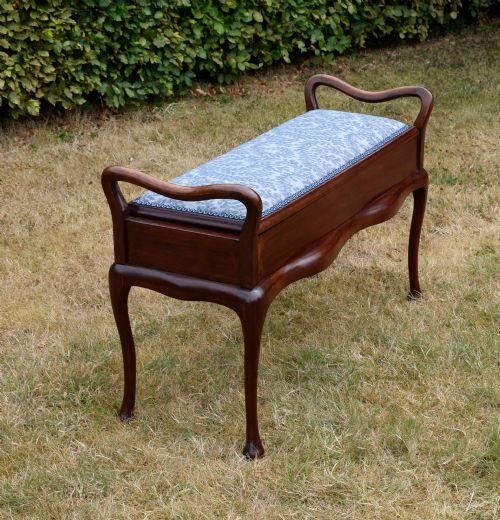
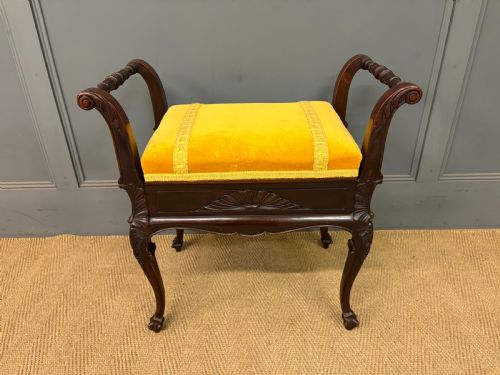
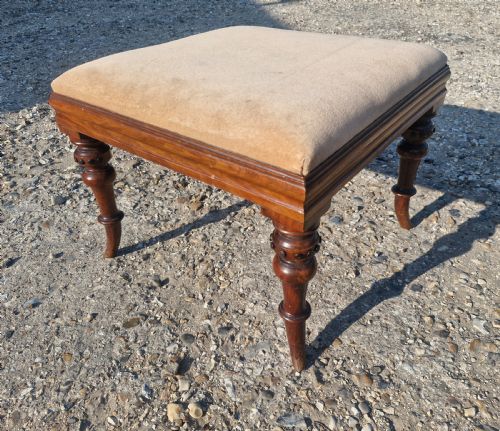
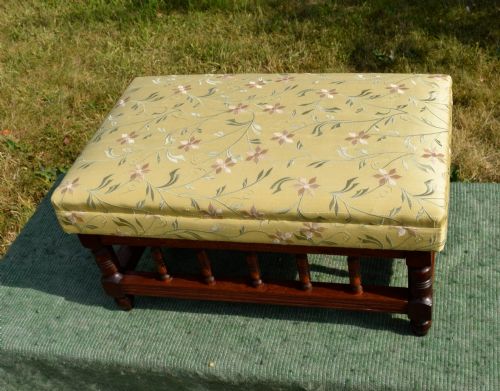
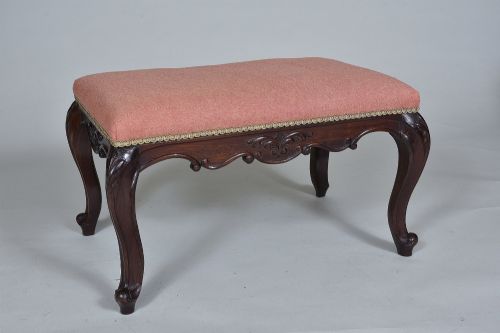
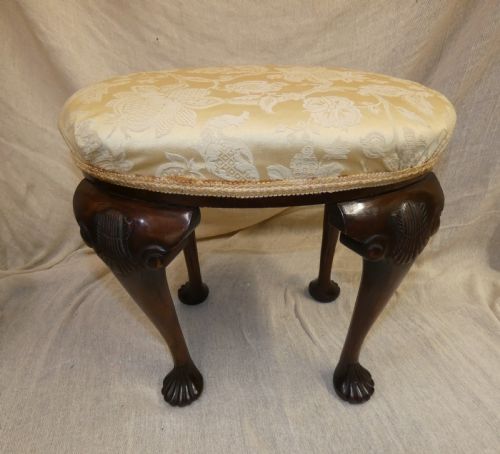
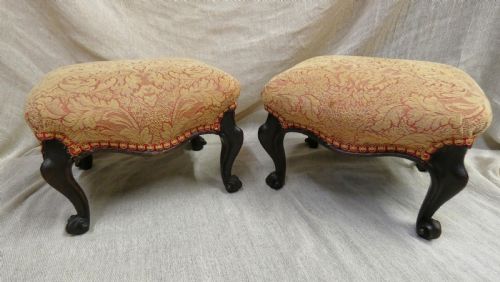

Padded Mahogany Stool
A padded mahogany stool is a sturdy timber seat upholstered in fabric or leather, offering a practical touch of period comfort.
Padded Mahogany Stool
A padded mahogany stool brings solid timber construction and soft top upholstery together in a practical household form. When you examine a padded mahogany stool on this page, you meet pieces ranging from compact piano seats to large footstools and dressing table benches.
The selections span multiple eras, with Victorian, Edwardian, and Regency examples appearing alongside 18th-century and Georgian pieces. Makers adapted these forms for specific domestic tasks, producing duet seats, revolving piano stools, and ottomans with storage.
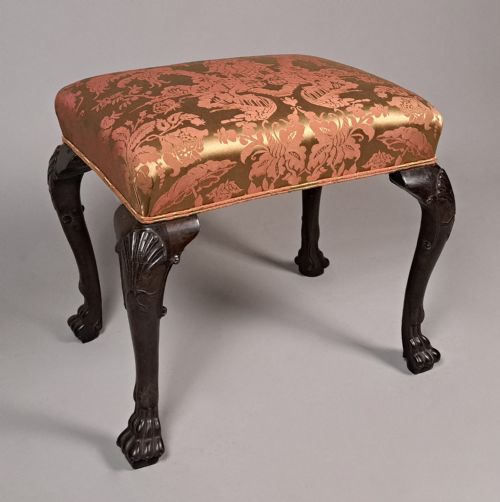
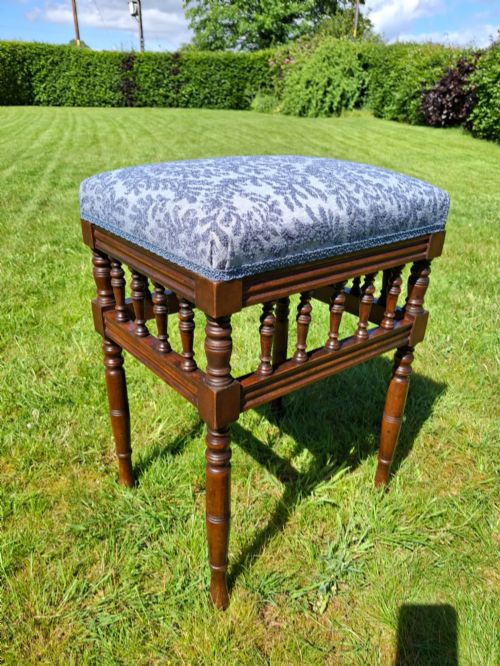
Most items you encounter rely on traditional proportions, supported by cabriole, square tapering, or turned legs. Whether functioning as a window seat or a low footstool, each piece combines dark hardwood frames with textile or leather padding.
Materials and construction
Cabinetmakers built these frames using dense mahogany, shaping the timber into sturdy legs and rails. Joinery techniques like mortise and tenon secured the structural skeleton before polish was applied to the wood surface.
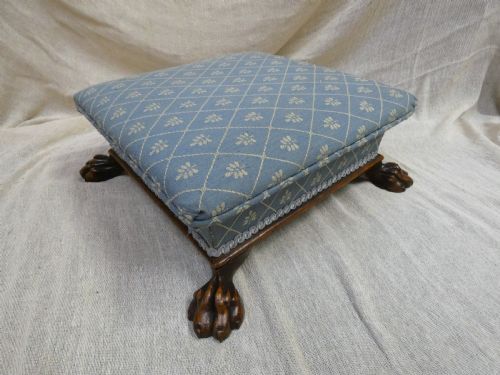
Upholstery completed the piece, utilising fabrics such as velvet, tapestry, leather, and woven textiles pulled over padding. Metal details like brass castors or lion paw feet occasionally finished the base of Regency and Victorian examples.
Padded Mahogany Stool Retail Price Guide 2026
Typical asking prices for padded mahogany stool among the pieces listed under this phrase on Sellingantiques today, from the lower quarter to the upper quarter. They describe what is for sale here now, not the wider market.
A revolving piano stool lets you spin in place while pondering whether to practice scales or simply admire the mahogany grain.
Markers of quality
Quality rests in the crispness of the timber carving and the integrity of the original frame construction. Superior examples show careful attention to proportions, particularly in the curve of cabriole legs or the sharpness of carved details.
The success of a piece depends on how harmoniously the upholstery works with the mahogany structure. Period-appropriate fabrics and sound internal stuffing elevate an ordinary seat into a balanced furnishing.
Howard and Sons·Mathew Gregson
The Padded Mahogany Stool Glossary
- Mahogany
- A durable tropical hardwood prized for its rich reddish-brown colour and fine grain. It served as the primary timber for high-quality furniture across the Georgian and Victorian eras.
- Cabriole leg
- A furniture leg that curves out in a convex arc and tapers inward in a concave arc, ending in a pad or foot. This design appears frequently on 18th-century and Victorian stools.
- Ottoman
- A low upholstered seat or bench without a back or arms, sometimes featuring internal storage. In period listings, these pieces often accommodate larger proportions and elaborate textiles.
- Window seat
- An elongated stool designed to fit within a window recess. These forms often feature side scrolls or upholstered ends for added comfort.
- Cross stretcher
- Wooden rails connecting the legs near the base to provide extra structural support. They add rigidity to the frame while introducing linear detail beneath the seat.
Padded Mahogany Stool: Frequently Asked Questions
What is a piano stool used for?
A piano stool provides a stable, adjustable or fixed seat for musicians at the keyboard. Many Edwardian and Victorian versions feature revolving mechanisms or duet proportions.
These pieces were designed to match parlour aesthetics while offering functional seating during practice. Their compact size makes them versatile auxiliary seats in modern rooms.
How do I identify a Regency stool?
Regency stools typically display classical revival motifs, bold scroll tops, and decorative elements like brass lion paw feet. The proportions reflect early 19th-century taste.
Look for architectural influences and dense mahogany frames that distinguish these pieces from later Victorian revivals. Their silhouette often includes sweeping lines and refined timber turning.
Where should I place an ottoman stool?
An ottoman stool works well at the foot of a bed, beneath a dressing table, or as a central low seat in a living room. Larger examples provide generous surface area for resting feet.
Pieces with internal storage also offer a discreet place to tuck away blankets or accessories. Their upholstered tops introduce soft textures against wooden floors.
How do I date a mahogany stool?
Dating relies on observing leg styles, stretcher arrangements, and upholstery styles across different periods. Eighteenth-century pieces often feature square tapering legs or fine carved cabriole supports.
Victorian and Edwardian variants introduce heavier turnings, castors, or inlaid details. Comparing the joinery and timber finish helps narrow the decade of origin.