





Square Mahogany Stool
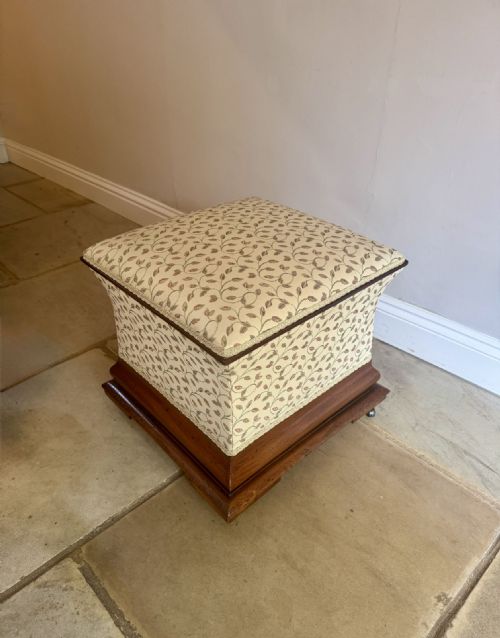
These square mahogany stool examples range from compact Georgian footstools to large Victorian ottomans, offering robust timber frames and varied textile tops.
Square Mahogany Stool
A square mahogany stool brings together dense timber frames and practical forms designed for domestic seating or footrests. When you search for a square mahogany stool, you encounter pieces spanning the Georgian, Regency, and Victorian periods, alongside later revival examples.
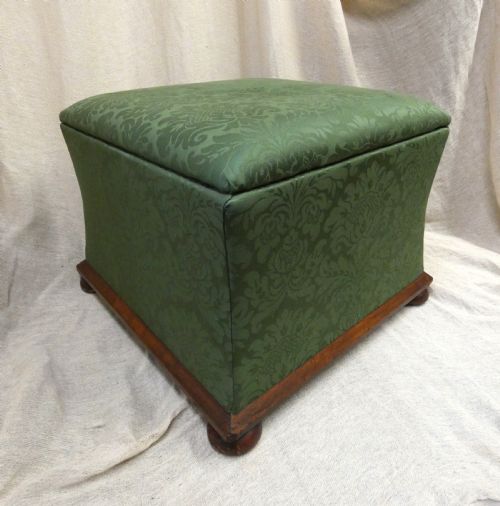
The physical form varies considerably across the archive and current listings. You find simple footstools, large centre ottomans, adjustable piano stools, and box stools that double as storage stands or low coffee tables.
Origins heavily favour British craftsmanship from the eighteenth and nineteenth centuries. The structural timber remains consistently rich in tone, paired with everything from plain fabric and wool to elaborate tapestry and needlework.
Materials and construction
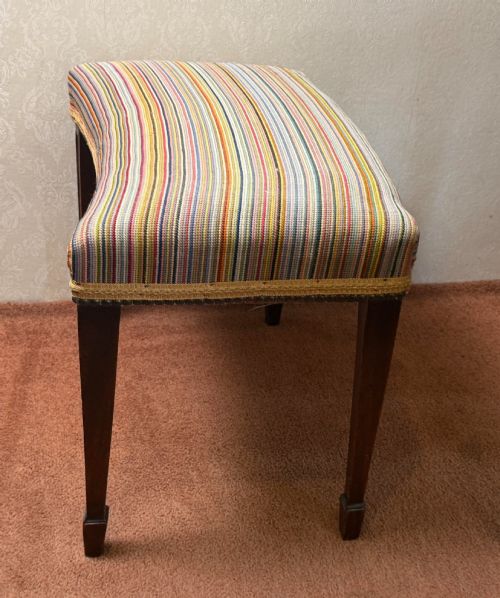
Cabinet makers relied primarily on mahogany for the structural frame, sometimes accented with rosewood cross banding or ebonised details. Timber was shaped into square tapering legs, turned supports, or robust X-frame bases.
Upholstery techniques involved canvas, webbing, and stuffing secured over the timber top, then finished with various textiles including wool, leather, tapestry, or plain upholstery fabric. Brass castors or fittings occasionally appear on the base of these pieces.
Square Mahogany Stool Retail Price Guide 2026
Typical asking prices for square mahogany stool among the pieces listed under this phrase on Sellingantiques today, from the lower quarter to the upper quarter. They describe what is for sale here now, not the wider market.
The selection combines eighteenth-century Georgian designs with nineteenth-century Victorian and Regency examples, utilising mahogany, brass, and various textile upholstery.
Assessing quality and finish
Quality rests in the precision of the timber joinery and the integrity of the mahogany grain. Pieces with crisp carving on cabriole legs or finely turned and tapered supports demonstrate superior workshop execution.
The selection of secondary woods and the execution of upholstery finishing, from needlework to leatherwork, distinguish standard domestic items from finer library or parlour seating.
Howard and Sons
The Square Mahogany Stool Glossary
- Mahogany
- A durable tropical timber valued for its deep reddish-brown colour and stable grain. It served as the primary material for high-grade furniture throughout the eighteenth and nineteenth centuries.
- Box stool
- A form featuring a hinged or removable top over a hollow storage compartment. These pieces often sat on square tapered legs.
- Tapering leg
- A support that gradually narrows toward the foot. This shape is frequently seen on late eighteenth century and Georgian frames.
- X-frame
- A structural support formed by intersecting diagonal members. This configuration provides distinct rigidity and visual weight to nineteenth century seating.
- Needlework
- Stitched textile ornamentation executed in yarn over canvas. It appears frequently on the upholstered top surfaces of Victorian footstools.
Square Mahogany Stool: Frequently Asked Questions
What is a square mahogany stool used for?
These pieces functioned primarily as footstools, dressing stools, or low seats in period parlours and drawing rooms. Larger variants also served as centre ottomans or occasional tables.
Over time, many adapted to modern living as compact coffee tables or fireside seats while retaining their original timber frames.
How do I date a square mahogany stool?
Dating relies on observing leg shapes, timber patination, and construction methods. Georgian examples often feature square tapering or cabriole legs, while Victorian pieces lean towards heavier turned supports and box compartments.
Upholstery materials and internal webbing also offer clues, though many pieces have been re-covered during their lifespan.
Are these stools comfortable for daily seating?
Many Victorian and Georgian footstools offer firm support derived from traditional stuffing and webbing techniques. Their primary design intention was foot elevation or brief seating rather than deep lounging.
Height-adjustable piano stools provide specific ergonomic utility, while box stools offer concealed storage alongside a stable top surface.
How do I care for mahogany and upholstery?
Protect the timber frame by avoiding direct sunlight and maintaining stable indoor humidity. Regular dusting keeps the mahogany finish clean without stripping natural oils.
Fabric or leather tops benefit from gentle brushing or specialist vacuuming depending on whether the textile is wool, tapestry, or hide.