
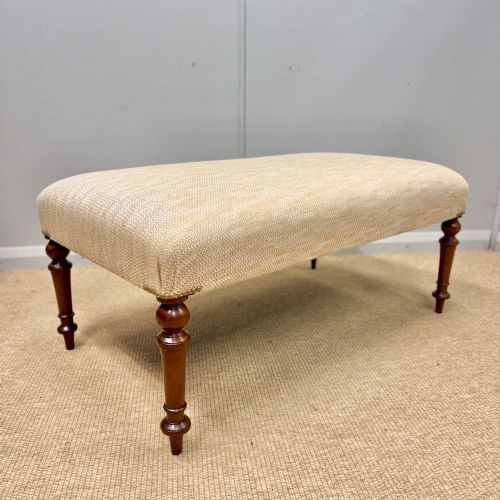
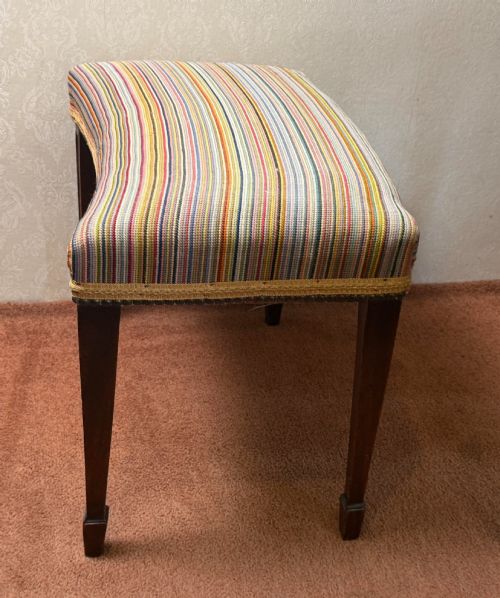
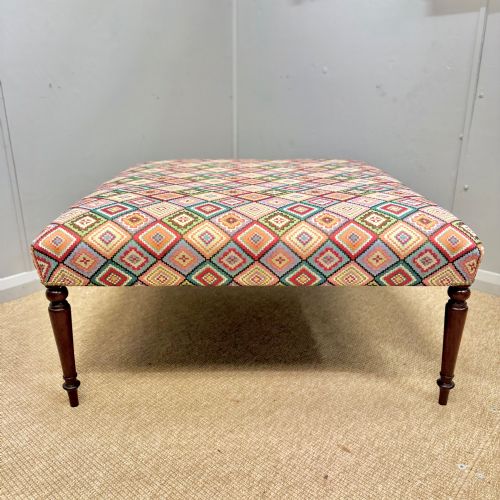
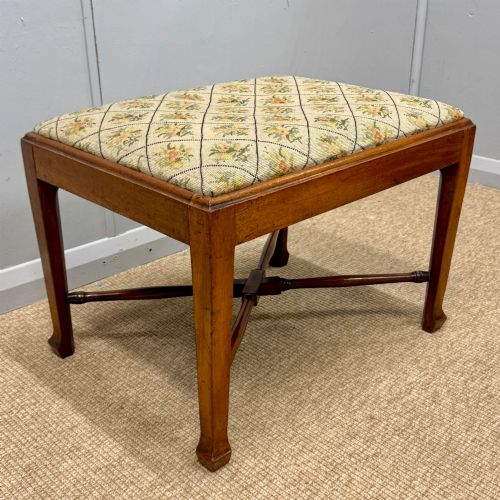



Padded Mahogany Bench
A padded mahogany bench offers solid timber framing and soft cushioning, combining functional seating with rich traditional grain.
Padded Mahogany Bench
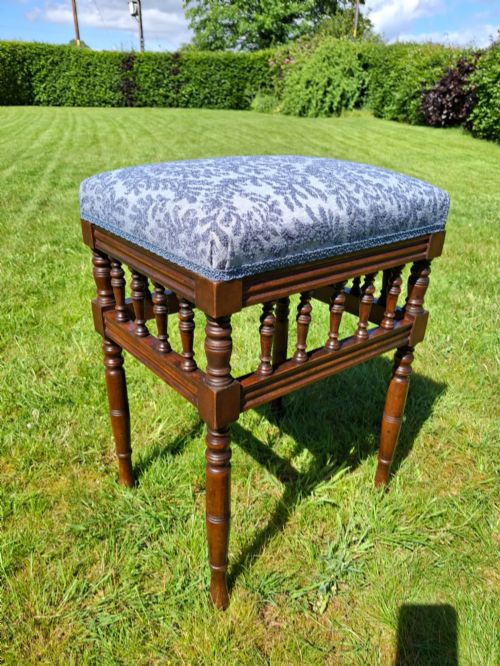
When searching for a padded mahogany bench, you encounter a variety of low seating forms designed for domestic comfort, including stools, piano stools, window seats, and settees. These pieces span the eighteenth, nineteenth, and early twentieth centuries, reflecting changing domestic habits and interior tastes.
The most common formats on this page are footstools and dressing table stools supported by mahogany frames. Alongside these, larger items such as window seats, duet piano stools, and upholstered settees appear frequently, showcasing the timber's versatility across different rooms.
Stylistic influences range from strict Georgian and Regency lines to Victorian carvings, Edwardian inlay, and later revivals like Arts and Crafts. This variety means buyers find both simple tapered leg designs and heavily carved or inlaid alternatives.
Materials and construction
Makers utilised solid mahogany for structural frames, taking advantage of its strength and deep reddish-brown colour. This dense timber allowed for crisp turning, carving, and the application of satinwood inlay without compromising structural integrity.
Upholstery materials varied according to the period, incorporating traditional textiles, wool, velvet, tapestry, and buttoned leather over padding. Brass castors frequently appeared on nineteenth-century examples to facilitate movement across heavy carpets.
Object types range from compact dressing table stools and piano duet seats to large window seats and Victorian leather ottomans.
Evaluating quality and craftsmanship
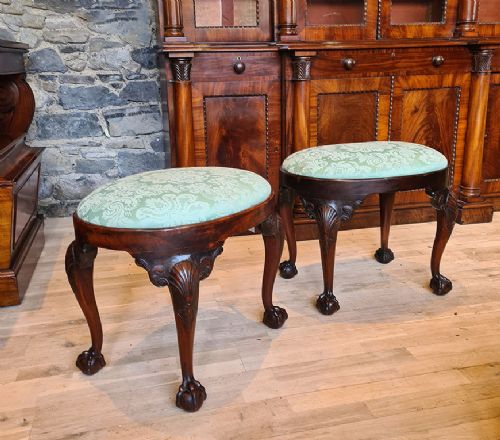
Quality rests primarily in the timber selection and the precision of the frame joinery. Superior pieces display well-figured mahogany grain, hand-carved details like cabriole legs, and sturdy structural joints that remain tight after generations of use.
The standard of upholstery and the retention of original hardware, such as brass castors or working piano stool mechanisms, also distinguish finer examples. Retaining period textiles or high-grade replacement fabrics enhances the visual harmony of the finished piece.
C. Hindley & Sons·Jas Shoolbred
The Padded Mahogany Bench Glossary
- Cabriole leg
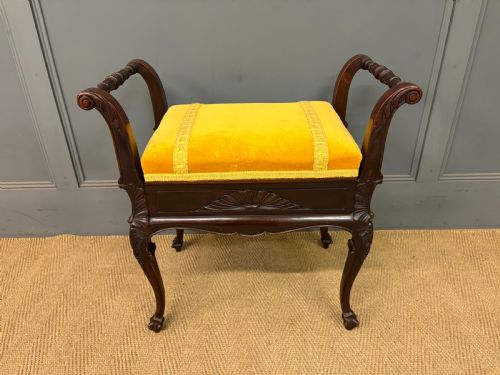
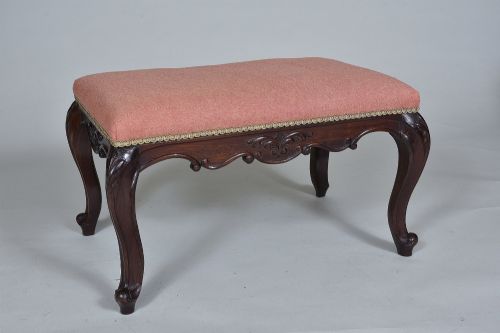
- A furniture leg that curves out and then narrows inward, resembling an animal's curving leg. This form appears frequently on Victorian and eighteenth-century revival stools.
- Duet piano stool
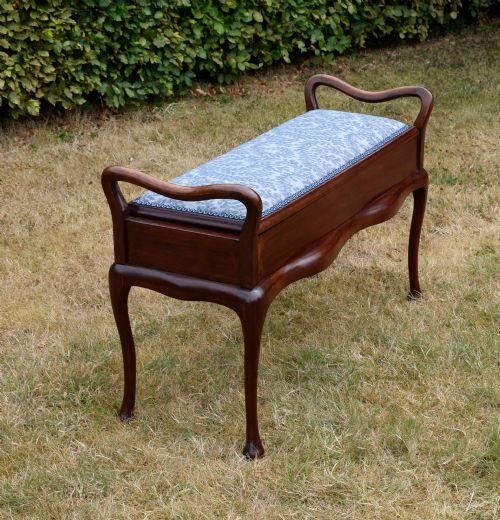
- A wide seat designed for two people playing a piano side by side, often featuring a hinged top for storing sheet music. These emerged in various forms around the turn of the twentieth century.
- Window seat
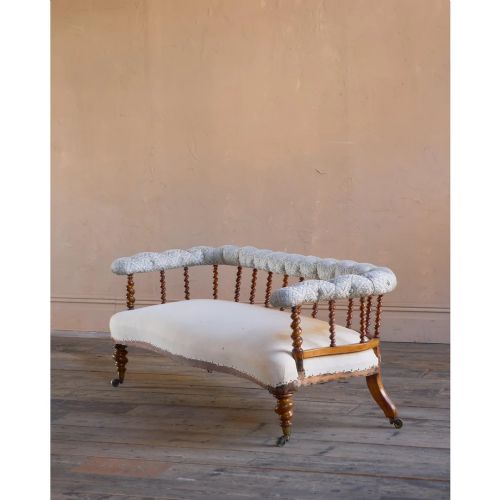
- A long, narrow upholstered bench designed to fit into a bay window recess. They often feature arms at both ends and showcase Regency or Edwardian styling.
- Cross stretcher
- Wooden supports running diagonally between the legs of a stool to provide extra stability. They are typical of dressing table stools and various period seating forms.
Padded Mahogany Bench: Frequently Asked Questions
Where should I place a padded mahogany bench?
These benches suit numerous locations throughout the house, functioning effectively at the foot of a bed, beside a dressing table, or beneath a window. Their compact proportions also allow them to sit comfortably in hallways or living rooms as occasional seating.
Larger versions, such as settees or duet piano stools, work well in longer corridors or paired with specific musical instruments. Selecting the right placement depends entirely on the physical dimensions and height of the particular piece.
Can I use these benches for daily seating?
Most of these pieces were built for regular domestic utility using durable mahogany and traditional joinery. They easily withstand daily use provided the frame joints remain secure and sound.
If the internal padding or fabric shows signs of wear, modern professional reupholstery restores full comfort without altering the antique wooden structure underneath.
What is the difference between a footstool and a window seat?
A footstool is a low, backless piece designed primarily to support seated feet or provide casual low seating. They usually feature simple square, tapering, or cabriole legs.
A window seat is taller, longer, and frequently includes low arms or back rails intended for sitting upright by a window. They serve as distinct pieces of primary furniture rather than supplementary footrests.