






Padauk Wood Furniture
Padauk wood furniture brings dense timber and heavy carving into a room, offering durability and deep red colour.
Padauk Wood Furniture
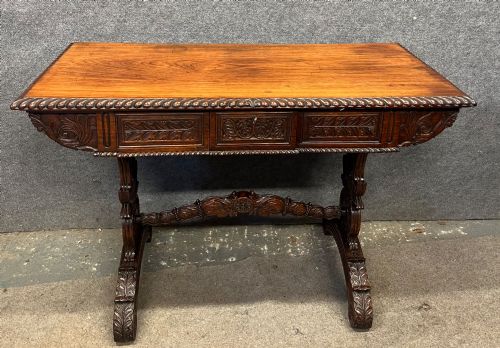
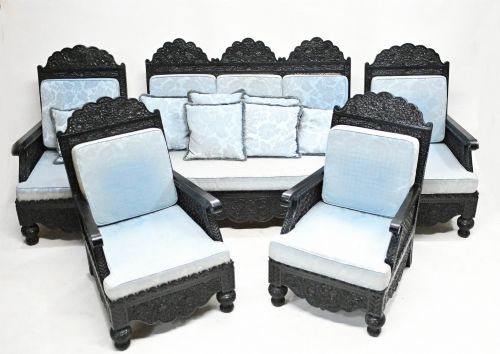
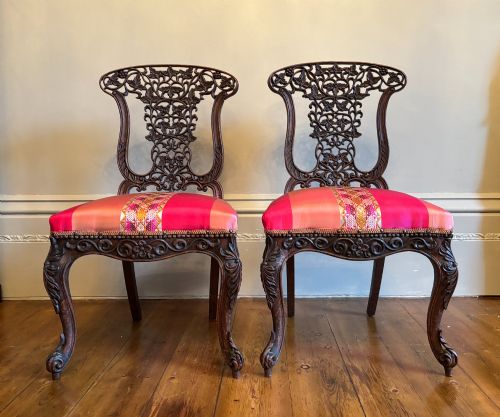
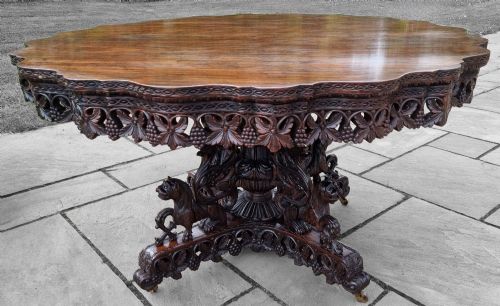
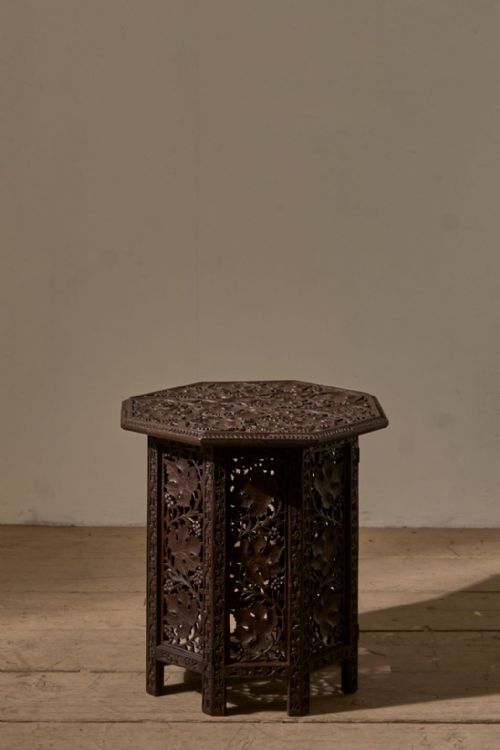
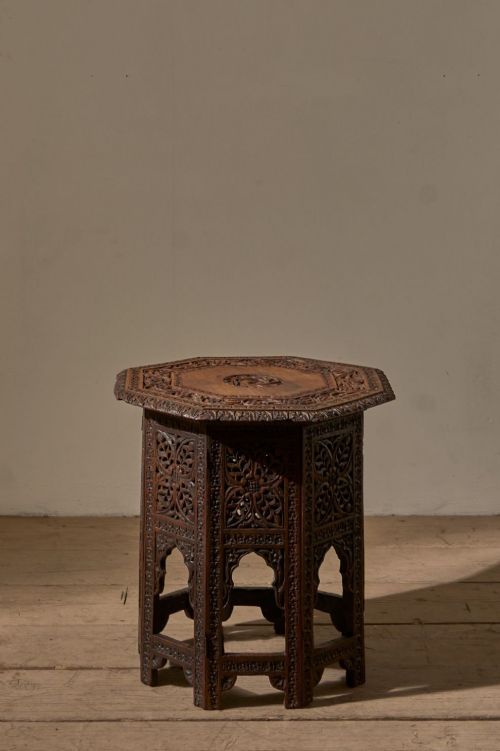
Padauk wood furniture encompasses practical forms like side tables, desks, sideboards, and armchairs produced across the eighteenth and nineteenth centuries. You are most likely to meet Anglo-Indian and Burmese pieces featuring dense tropical hardwood and intricate hand-carved decoration.
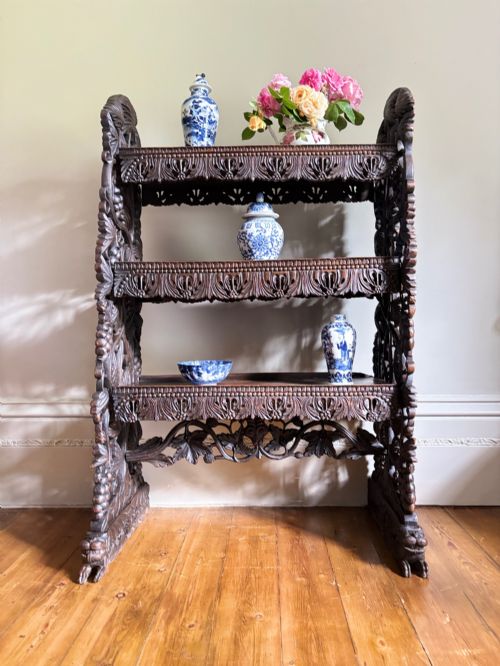
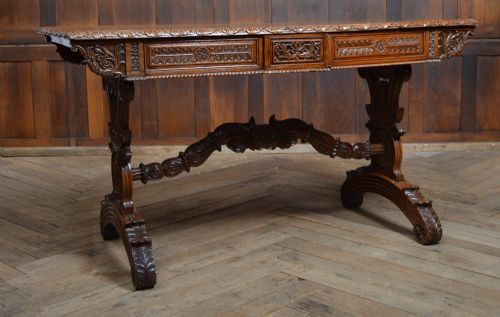
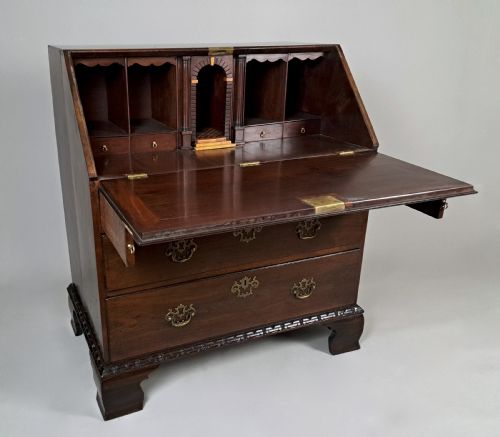
Makers utilised the heavy timber for domestic utility and colonial display, resulting in sturdy library tables, Davenport writing desks, and modular shelving units. These items often incorporate brass mounts or marble tops alongside regional stylistic motifs.
The objects span Georgian Chippendale through to Victorian Gothic Revival periods, reflecting trade and colonial history in their construction. Regional workshops shaped the dense wood into elaborate sideboards, circular tables, and multi-tiered buffets.
Materials and construction
Makers constructed these items primarily from padauk wood, a heavy hardwood known for its deep red or brown tone and high density. Workshops also incorporated secondary timbers like teak and rosewood alongside brass handles, hinges, and occasional marble inserts.
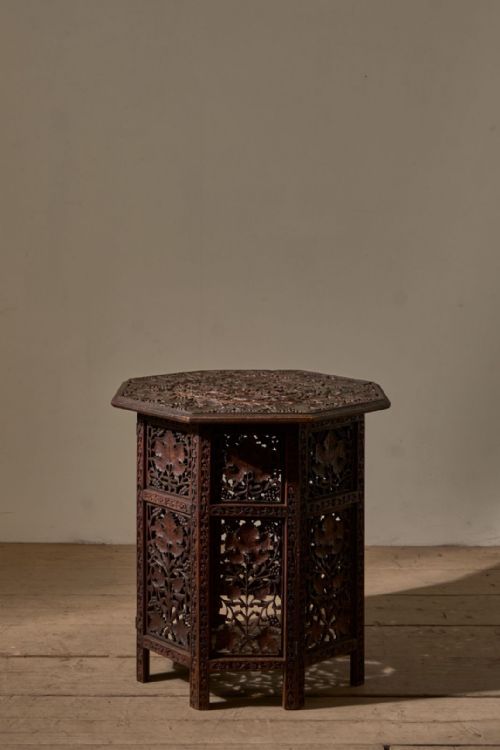
Craftsmen applied deep relief carving to surfaces, producing dragon and leaf designs on tables, desks, and cabinet doors. Joinery methods included traditional framing and panel construction suitable for heavy tropical hardwoods transported across long distances.
Padauk Wood Furniture Retail Price Guide 2026
Typical asking prices for padauk wood furniture among the pieces listed under this phrase on Sellingantiques today, from the lower quarter to the upper quarter. They describe what is for sale here now, not the wider market.
Listings feature nineteenth-century padauk wood pieces alongside eighteenth-century examples, including side tables, desks, and multi-tiered buffets.
Quality variations
The standard of a piece depends largely on the depth and crispness of the hand-carved detail across the padauk wood surface. Finer examples display deeply undercut foliage or figurative motifs that retain sharp edges without splintering the dense grain.
Proportion and structural integrity also separate ordinary production from superior items, particularly in large sideboards, partners desks, and multi-tiered buffets. The integration of quality secondary materials, such as heavy brass hardware and sound marble tops, indicates higher workshop standards.
The Padauk Wood Furniture Glossary
- Padauk
- A dense tropical hardwood prized for its durability and rich red-brown coloration. It darkens over time when exposed to light.
- Anglo-Indian
- A descriptive term for items made in India during the British colonial period, often combining local carving styles with European furniture forms.
- Partners desk
- A large double-sided writing table designed for two people to work opposite one another, typically fitted with drawers and cupboards on both faces.
- Davenport
- A compact form of small writing desk featuring a sloping, hinged top for writing and a set of side drawers accessed from a seated position.
- Military chest
- A sectional chest of drawers constructed in two or more parts with brass corners and recessed carrying handles for ease of transport during travel.
Padauk Wood Furniture: Frequently Asked Questions
What is padauk wood?
Padauk is a dense, heavy tropical hardwood native to regions including India and Burma. It is known for its natural strength and deep red colour.
Over time, exposure to light deepens the initial bright red hue into a rich, dark brown with reddish undertones.
How do I care for padauk furniture?
Maintain padauk wood furniture by keeping it away from direct heat sources and sudden humidity changes to prevent movement in the dense timber.
Dust regularly with a dry cloth and apply occasional light wax feeds appropriate for hardwoods to preserve the surface sheen.
Where were these pieces made?
The pieces originate primarily from workshops in India and Burma during the nineteenth century under colonial administration. Makers produced them for both local expatriate use and export to Britain.
Regional hubs developed distinct carving styles, ranging from deep botanical relief to mythical animal motifs.
How do I identify Anglo-Indian furniture?
Anglo-Indian furniture combines traditional British forms like sideboards or library tables with dense, intricate indigenous carving. The timber is almost exclusively tropical hardwood such as padauk or teak.
Hardware often includes heavy brass mounts, drop handles, and bracket feet suited to colonial trade.