




Pad Foot Lowboy
A pad foot lowboy is a compact, elegant table with deep roots in eighteenth-century domestic life.
Pad Foot Lowboy
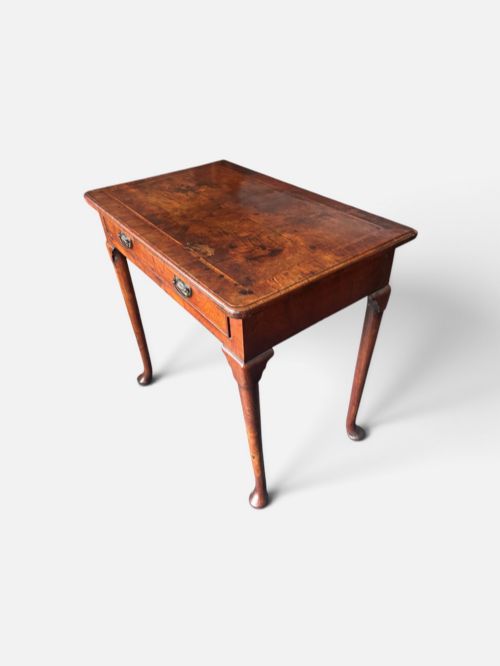
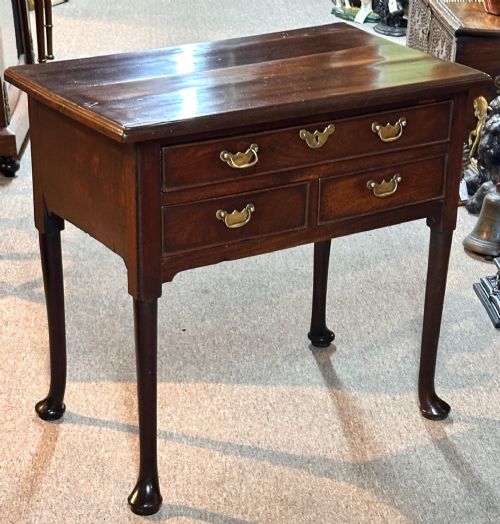
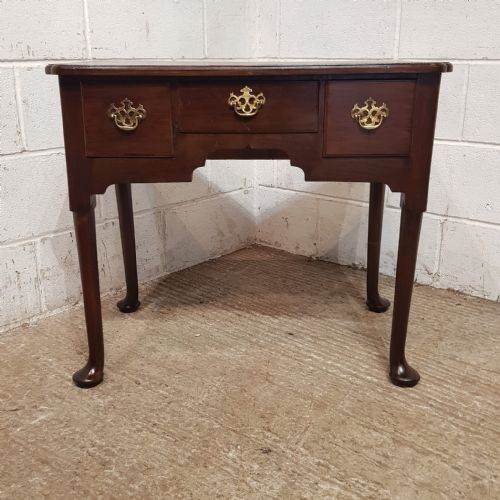
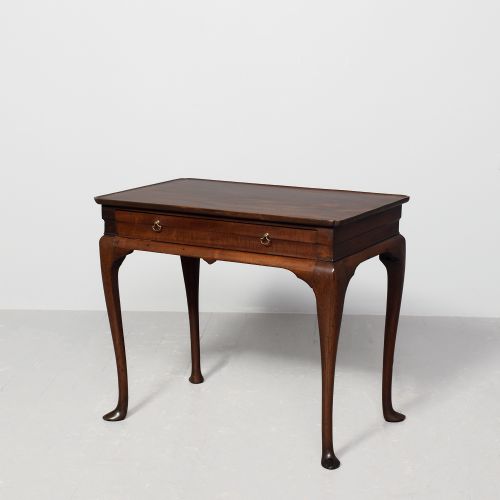
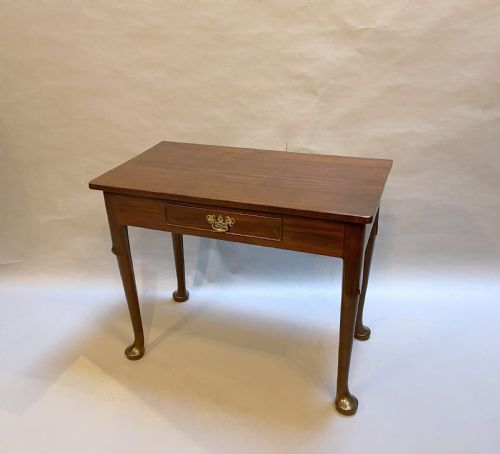
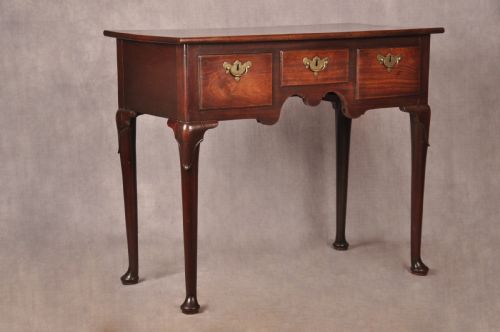
When you search for a pad foot lowboy, you find low-standing tables designed primarily for dressing or small-scale writing tasks in eighteenth-century rooms. The pieces appearing here span the Georgian and Queen Anne eras, typically offering single or multiple drawers beneath a timber top.
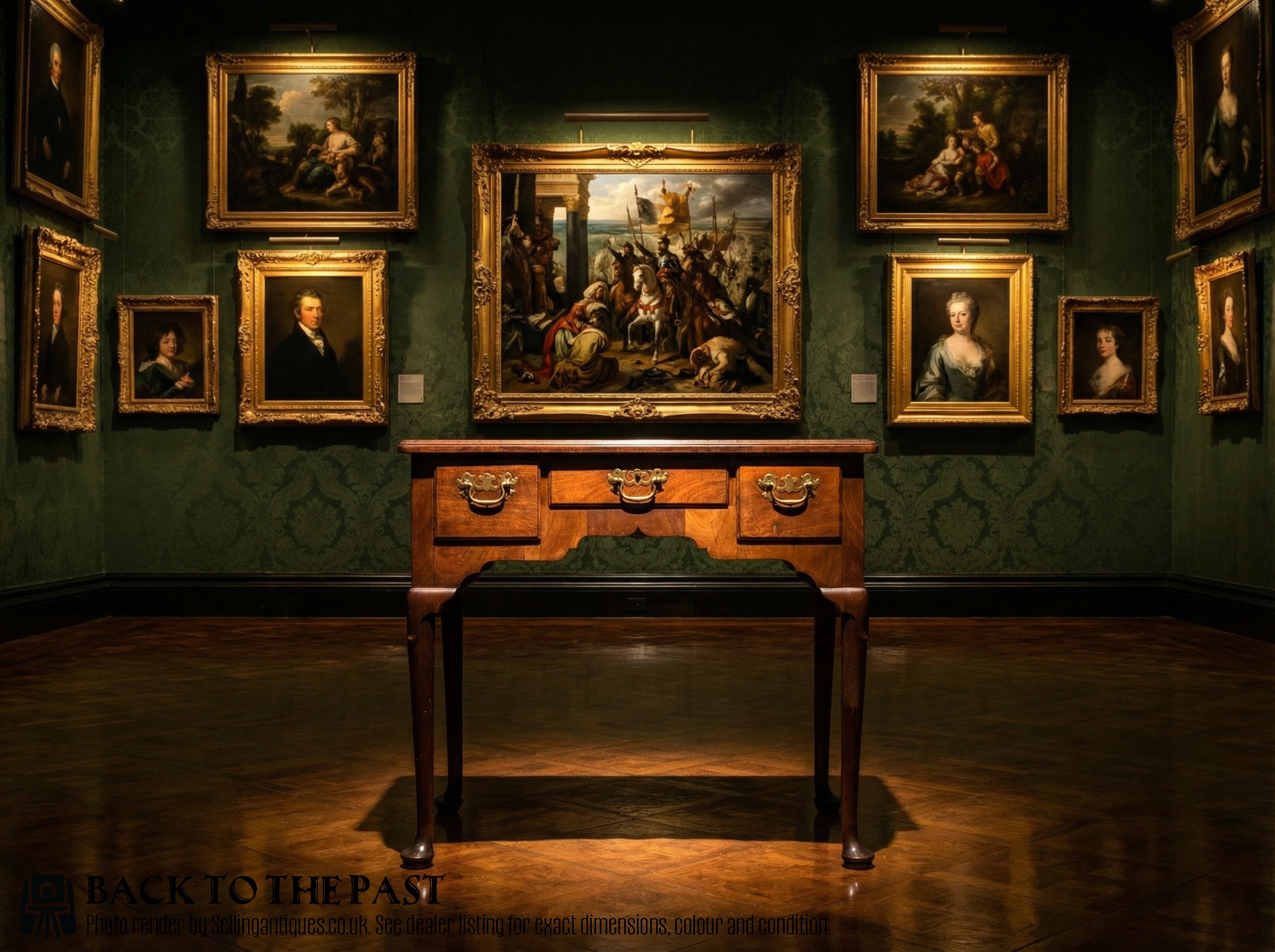
Most examples you meet on this page rely on sturdy structural timber and cabriole legs terminating in simple pad feet. They function equally well today as hall tables, compact desks, or bedside furniture in traditional interiors.
How they were made
Cabinetmakers constructed these tables using solid native and imported hardwoods like mahogany, oak, walnut, and cherrywood, often selecting burr walnut or Cuban mahogany for finer surfaces. Brass handles and escutcheons punctuate the drawer fronts, secured with traditional joinery methods appropriate to the period.
The characteristic cabriole leg requires skilled shaping from a solid blank of timber, flowing downward into a rounded pad foot without excessive ornamentation. Side tables and dressing tables of this build rely on pegged mortise and tenon joints to maintain stability over centuries of use.
What varies in quality
The distinction between standard examples and the finest pieces lies in the choice of timber figure, such as richly grained burr walnut or dense Cuban mahogany. Superior execution shows in the crispness of the cabriole curve and the harmonious proportions of the drawer configuration.
Secondary woods used inside the drawer construction and the retention of original brass hardware also influence the standing of a piece. Subtle details in the turning of the pad foot and the crispness of edge mouldings separate everyday utilitarian items from accomplished cabinet work.
The Pad Foot Lowboy Glossary
- Pad foot
- A simple foot shape where the leg terminates in a flattened, rounded pad resting directly on the floor. This feature appears commonly on cabriole legs of the eighteenth century.
- Lowboy
- A small kneehole-free table with drawers, built during the eighteenth century for use in bedrooms or reception rooms. It serves as a dressing table or writing surface.
- Cabriole leg
- A furniture leg that bends outward in a convex curve and tapers inward in a concave arc, mimicking the natural shape of an animal's leg. It typically ends in a pad, claw, or hoof foot.
- Cuban mahogany
- A dense, dark timber imported from the West Indies during the eighteenth century, prized for its rich grain and heavy weight. Cabinetmakers utilised it for high-status furniture.
- Escutcheon
- A flat plate of brass or other metal surrounding a keyhole to protect the surrounding wood. These fittings add decorative detail as well as functional reinforcement.
Pad Foot Lowboy: Frequently Asked Questions
What is a pad foot lowboy?
A pad foot lowboy is an eighteenth-century table featuring low proportions, one or more drawers, and cabriole legs ending in rounded pad feet.
Cabinetmakers originally designed these versatile items for bedrooms as dressing tables or for reception rooms as small side tables.
How were lowboys used historically?
These tables served primarily for personal grooming, holding mirrors, cosmetics, and brushes in private chambers. They also functioned as compact writing desks or auxiliary surfaces for correspondence in parlours.
Their modest footprint allowed them to fit easily against walls where larger desks would overwhelm the space.
Where should I place a lowboy?
A lowboy suits narrow hallways, entrance spaces, or living rooms as an accent table beneath a mirror or painting. Its shallow depth also makes it a practical alternative to a bulky bedside table.
In a study, it provides a dedicated surface for a laptop or small writing materials.
How do I identify a Georgian lowboy?
Look for structural hallmarks of the eighteenth century, such as hand-cut dovetails on the drawer sides and pegged frame construction. Native timbers like oak and walnut or imported mahogany point directly to this historical period.
The presence of cabriole legs and pad feet further anchors the piece in the reigns of George II or George III.