
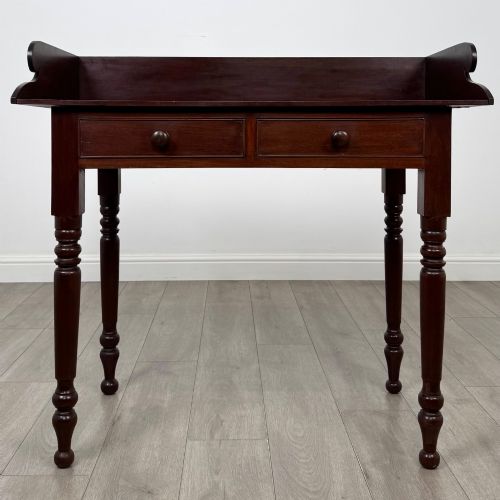
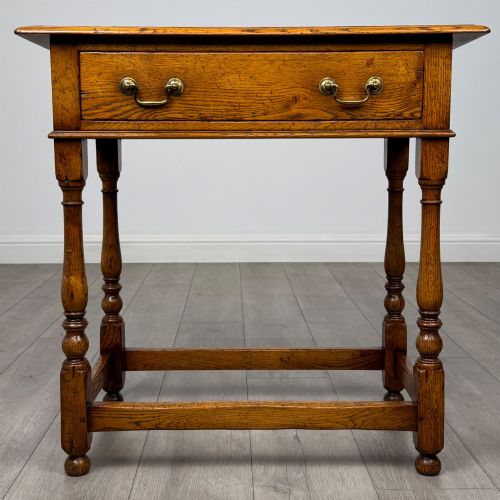
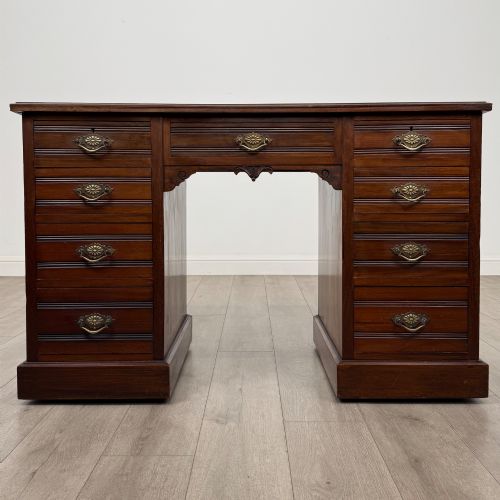
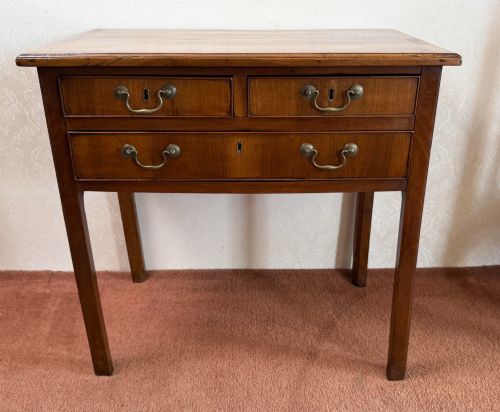

Traditional Wooden Writing Table
A traditional wooden writing table offers a dedicated workspace, bringing period character and warm timber tones to a room.
Traditional Wooden Writing Table
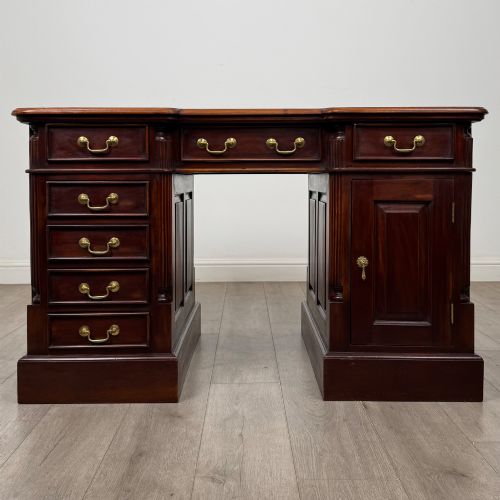
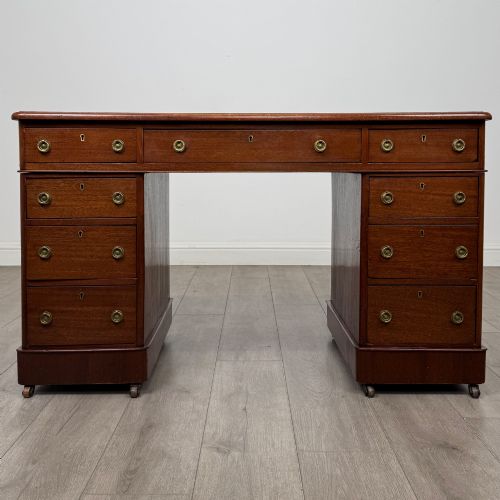
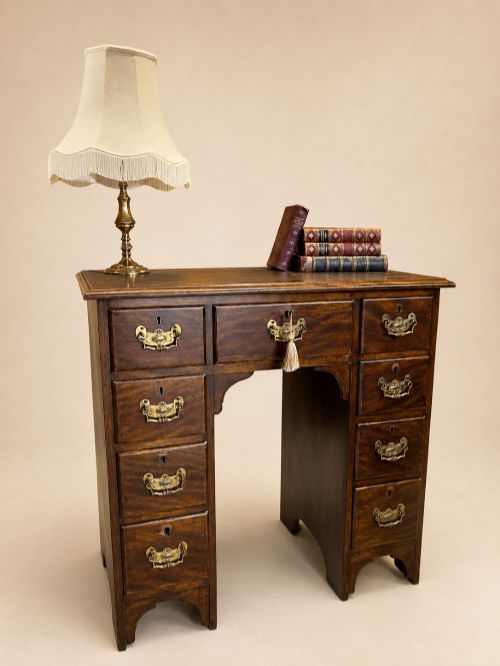
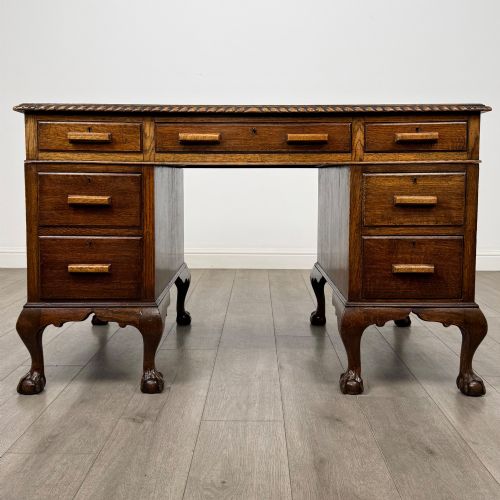
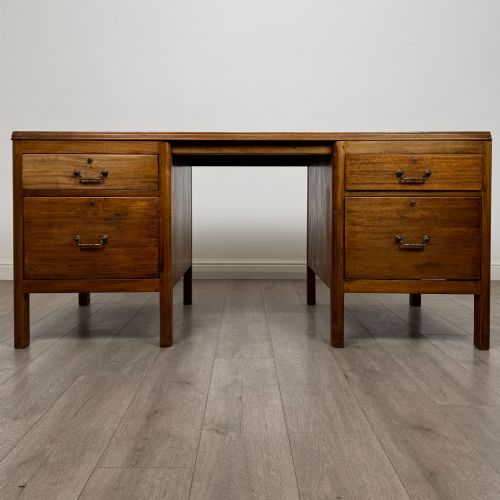
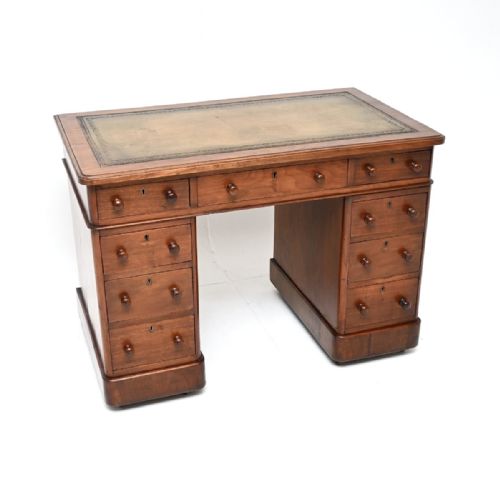
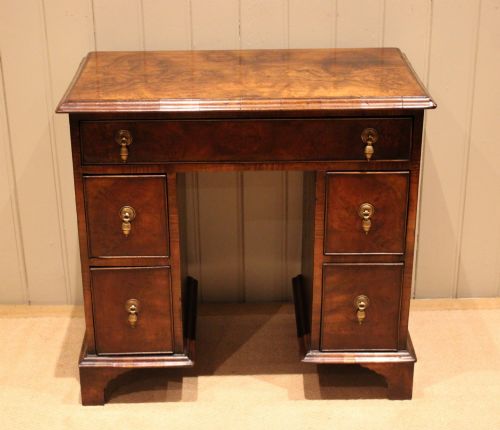
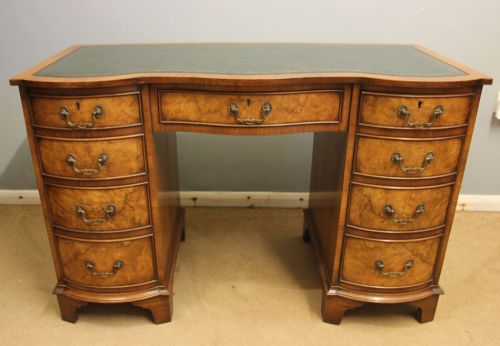
A traditional wooden writing table encompasses pedestal desks, kneehole desks, and side tables designed for correspondence and study. These pieces span from the Georgian and Victorian eras through the Edwardian period and into the twentieth century, reflecting shifting domestic habits.
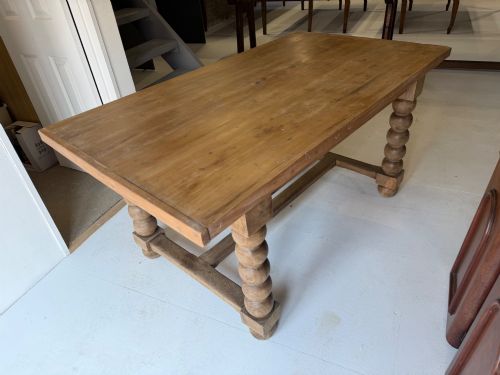
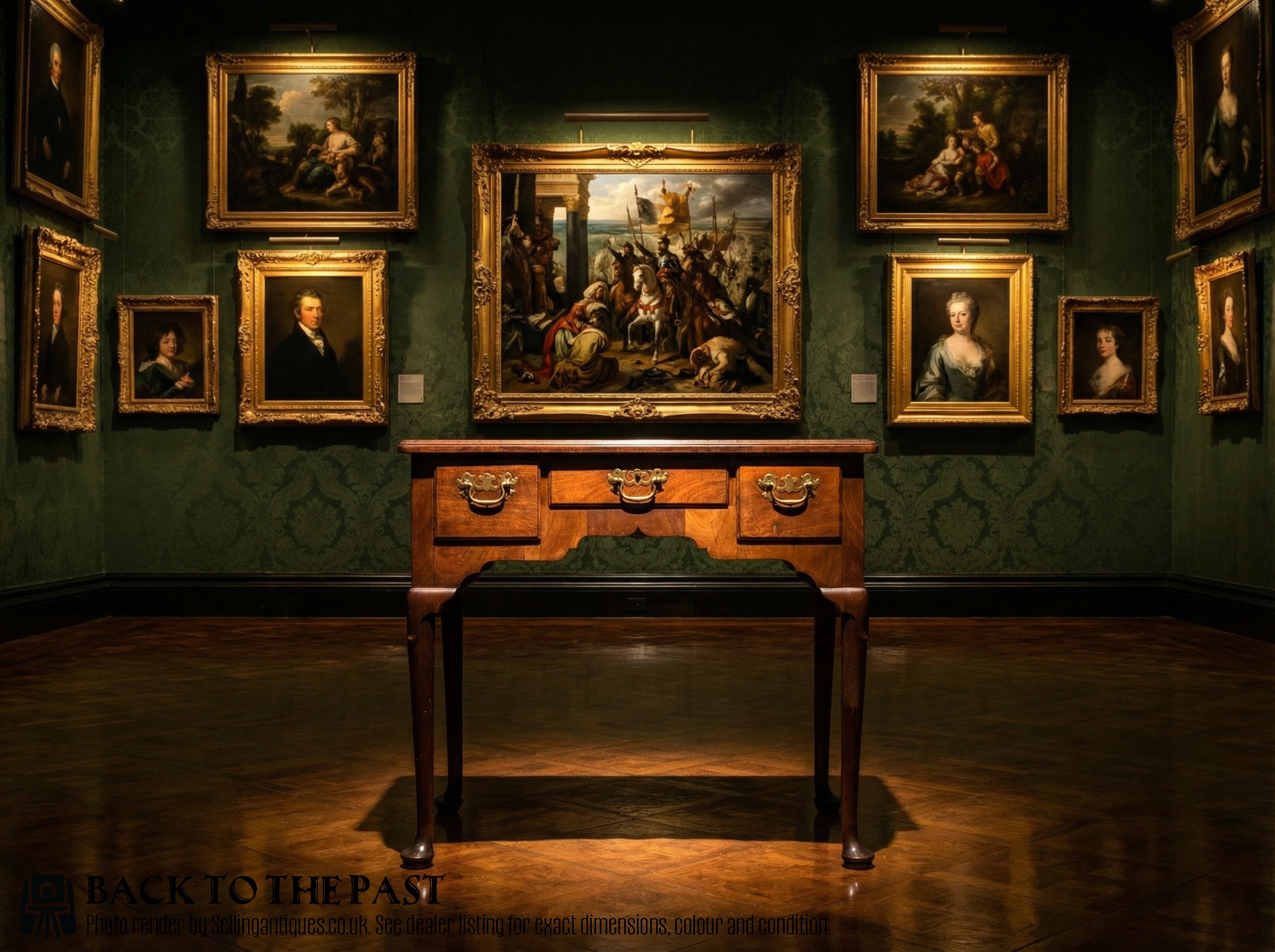
Mahogany and oak form the backbone of these selections, alongside walnut and burr walnut variants. The listings feature freestanding writing tables alongside larger library tables and compact lowboys.
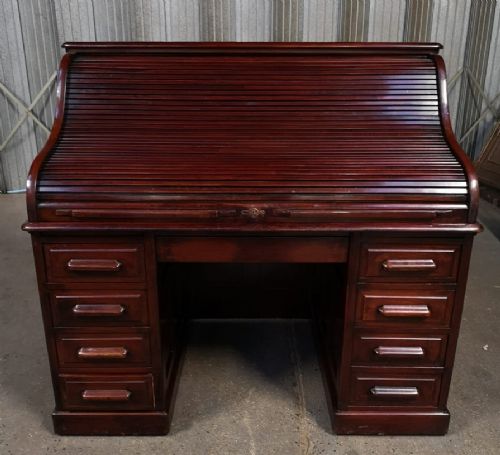
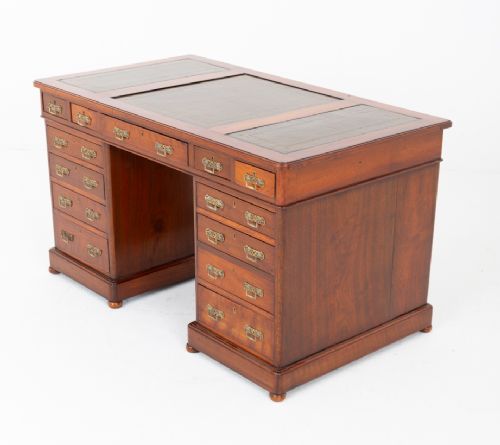
Victorian and Edwardian examples predominate, frequently incorporating fitted drawers, leather surfaces, and pedestal configurations. Smaller proportions and tambour cylinders appear among the earlier Georgian items.
Materials and construction
Cabinetmakers utilised solid timbers and veneers, pairing dense hardwoods like mahogany and oak with softer woods such as pine and beech for secondary framing. Burr walnut surfaces showcase decorative grain patterns selected for visible desk tops.
Insets of tooled leather provide a durable writing surface, while brass handles, key escutcheons, and castors add functional detail to drawers and pedestals.
Traditional Wooden Writing Table Retail Price Guide 2026
Typical asking prices for traditional wooden writing table among the pieces listed under this phrase on Sellingantiques today, from the lower quarter to the upper quarter. They describe what is for sale here now, not the wider market.
Listings span multiple periods from the eighteenth century through the Edwardian era, featuring mahogany, oak, walnut, and pine.
Build and finishing
Construction standards depend on the choice of timber and the precision of the joinery in the drawer linings and pedestal structure. Superior examples maintain stability and smooth operation across multiple drawers without sagging.
The choice of secondary woods and the preservation of original hardware distinguish workshop output, alongside the crispness of carved details or the grain selection in veneered walnut surfaces.
Maple and Co
The Traditional Wooden Writing Table Glossary
- Pedestal desk
- A heavy freestanding desk featuring two banks of drawers supporting a central writing surface. These often incorporate inset leather tops.
- Lowboy
- A small dressing or side table with one or more rows of drawers beneath the top surface. Eighteenth-century examples frequently stand on slender cabriole or straight legs.
- Tambour
- A flexible shutter made of narrow vertical strips of wood glued to canvas, allowing a cylinder desk top to slide open. This mechanism conceals interior compartments and pull-out writing slides.
- Kneehole desk
- A compact desk configuration featuring a recessed central space for the user's legs, flanked by pedestals of drawers.
- Carlton house desk
- A fitted writing table with a curved superstructure of small drawers and compartments surrounding the rear and sides of the writing surface.
Traditional Wooden Writing Table: Frequently Asked Questions
How do I clean a leather desk top?
Use a soft, dry cloth to remove dust from the leather surface, avoiding harsh chemical cleaners that can strip the original finish.
Conditioners formulated specifically for antique leather help maintain suppleness and prevent cracking over time.
What is the difference between a writing table and a pedestal desk?
A writing table generally stands on four legs with shallow drawers beneath the top, offering an open undercarriage.
By contrast, a pedestal desk incorporates enclosed stacks of drawers on both sides, providing greater storage capacity and a heavier physical presence.
How do I identify a Victorian desk?
Victorian desks frequently utilise solid mahogany or walnut, often featuring turned wooden knobs or brass handles alongside inset leather writing surfaces.
Construction details such as hand-cut dovetails in the drawer boxes support dating to the nineteenth century.
Will these desks fit in a modern room?
Many traditional writing tables, particularly Edwardian and smaller nineteenth-century examples, feature compact proportions suited to home office spaces.
Freestanding designs allow placement away from walls, making them versatile for contemporary floor plans.