




Chippendale Kneehole Table
A chippendale kneehole table is a compact writing desk or dressing chest offering central recessed cupboards flanked by small drawers, valued for its proportion and joinery.
Chippendale Kneehole Table
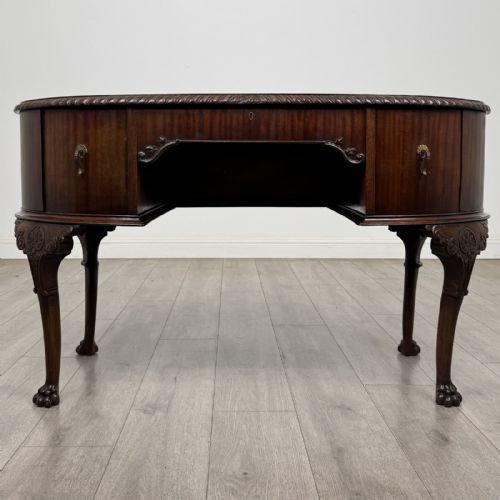
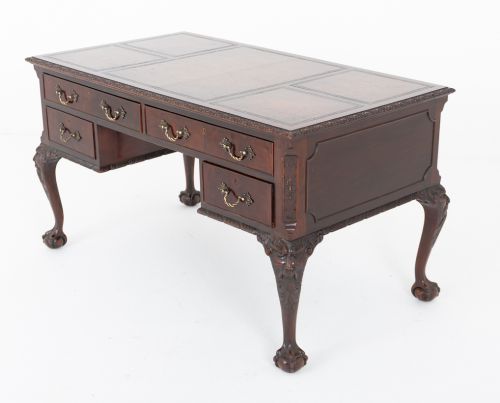
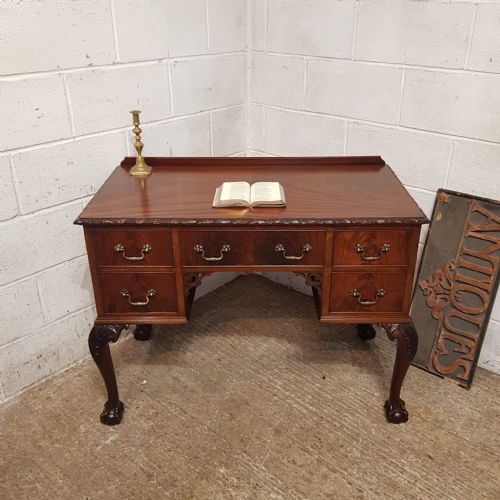
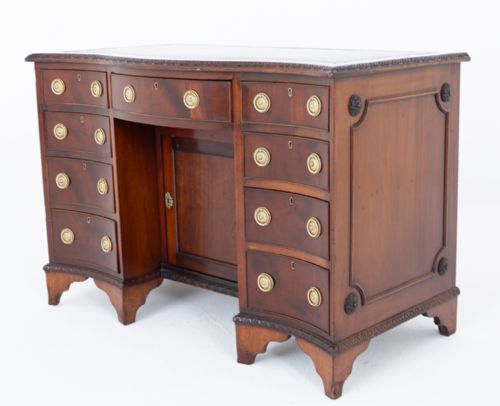
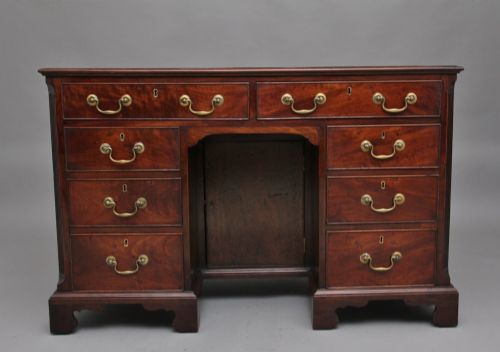
A chippendale kneehole table typically takes the form of a pedestal desk, writing desk, lowboy, or dressing chest with a central kneehole space. Buyers on this page frequently encounter examples from the eighteenth century alongside revival interpretations from the Edwardian period and nineteen hundred.
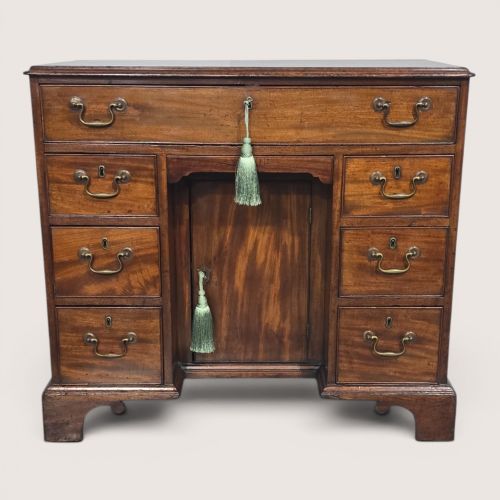
The layout relies on a central recessed recess, often containing a small concealed cupboard door, flanked by banks of multiple drawers. These pieces served various domestic functions in Georgian households, operating as writing desks, dressing tables, or side tables.
Surviving pieces range from authentic mid-eighteenth-century Georgian examples to later Chippendale revival interpretations produced around nineteen hundred. Mahogany remains the dominant timber across these periods, though walnut and oak also appear in the listings.
Materials and Construction
Makers utilised solid mahogany, flame mahogany veneer, Cuban mahogany, walnut, burr walnut, and oak for these tables. Timber selection dictated the visual character, particularly when employing figured flame veneers on drawer fronts or tops.
Brass hardware, including pull handles and escutcheons, punctuate the timber surfaces. Construction methods incorporate traditional dovetail joinery for the drawers and framed carcases to support the pedestal configuration.
Stylistic details derive from Georgian and Chippendale design traditions, occasionally incorporating Gothic revival or Chinese Chippendale motifs within the carved ornamentation and fretwork.
Chippendale Kneehole Table Retail Price Guide 2026
Typical asking prices for chippendale kneehole table among the pieces listed under this phrase on Sellingantiques today, from the lower quarter to the upper quarter. They describe what is for sale here now, not the wider market.
Many kneehole desks conceal a tiny central cupboard door that opens to reveal secret inner compartments for hiding private correspondence.
Distinctions in Quality
Quality rests on the selection of timber and the execution of carved details such as bracket feet, blind fretwork, or cockbeaded drawer edges. Superior examples display dense, well-figured mahogany or Cuban mahogany with consistent grain patterns across the primary surfaces.
The integrity of the internal carcase construction and the retention of original brass drawer furniture distinguish better pieces from altered or heavily restored examples. Proportions and crispness of carving separate genuine eighteenth-century work from later revival interpretations.
Druce and Co
The Chippendale Kneehole Table Glossary
- Kneehole desk
- A writing desk or dressing table featuring a central recessed space for the legs, flanked by pedestals of small drawers. This compact form gained popularity during the Georgian period.
- Lowboy
- A small side table or dressing table with one or more rows of drawers beneath the flat top, standing on four legs. These tables often match the timber and decorative vocabulary of larger desks.
- Cockbeading
- A narrow, raised strip of wood projecting around the edges of drawer openings. This decorative moulding provides structural edge protection and a neat finish.
- Escutcheon
- A protective plate surrounding a keyhole, commonly cast in brass on these tables. They prevent wear to the surrounding timber from repeated use of the key.
- Serpentine front
- A furniture front curving outward at the centre and inward toward the ends. This undulating contour requires skilled woodworking and careful timber selection.
Chippendale Kneehole Table: Frequently Asked Questions
What is a chippendale kneehole table?
A chippendale kneehole table is a wooden desk or dressing table featuring a central recessed kneehole compartment flanked by multiple small drawers. These pieces date from the eighteenth century onwards and follow Georgian design principles.
The form prioritises utility and proportion, serving as a functional writing space or dressing station. Their compact footprint made them suitable for smaller chambers within period homes.
How do I date a kneehole desk?
Dating relies on examining timber species, construction methods, and stylistic cues such as hardware and leg design. Eighteenth-century pieces typically exhibit hand-cut dovetails and period-specific secondary timbers.
Revival pieces from the Edwardian era or around nineteen hundred often replicate earlier Georgian styles but reveal different construction techniques and machine-sawn timber characteristics upon closer inspection.
Were these used for writing or dressing?
These tables served multiple domestic purposes depending on their internal configuration and fitted accessories. Some incorporated mirror frames or compartments suited for dressing, while others functioned primarily as writing desks.
The central kneehole cupboard often concealed further small drawers or a safe space for private papers, reflecting the versatile nature of Georgian furniture.
What woods were used?
Mahogany is the primary timber found in these listings, including Cuban mahogany and flame mahogany veneers. Walnut, burr walnut, and oak also appear across various periods.
Makers selected these hardwoods for their durability and ability to take fine carved detail. Figured veneers were applied to prominent surfaces to enhance the visual appeal.