


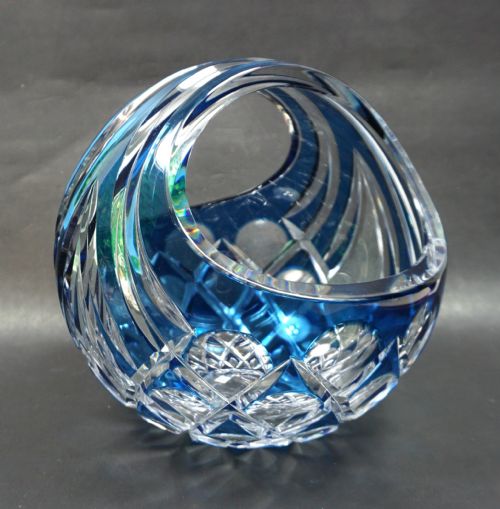
Overlay Glass Art Vase
An overlay glass art vase brings together contrasting layers of glass or delicate metal mountings to create striking visual depth.
Overlay Glass Art Vase
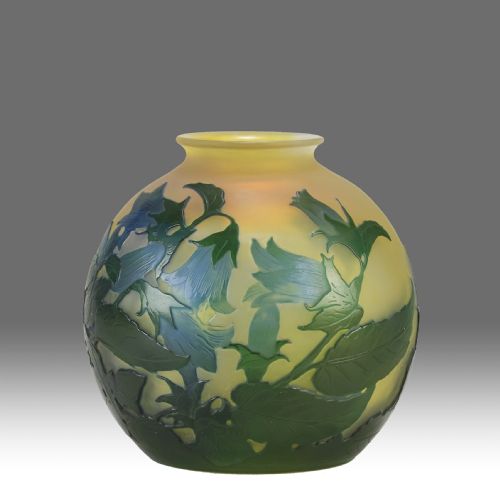
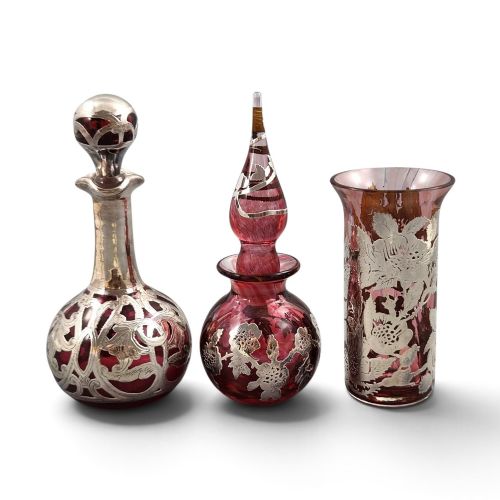
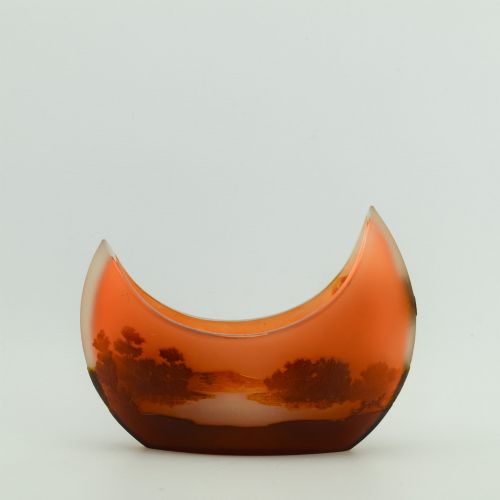
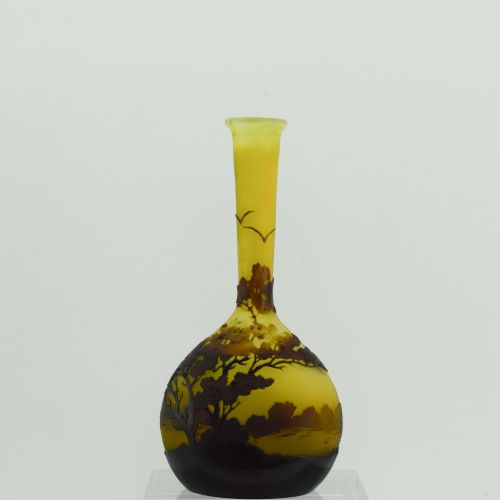
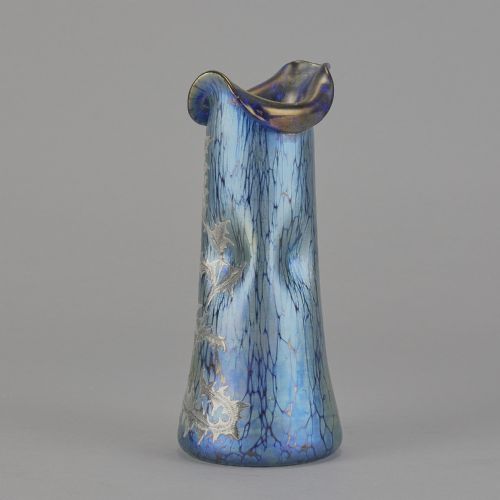
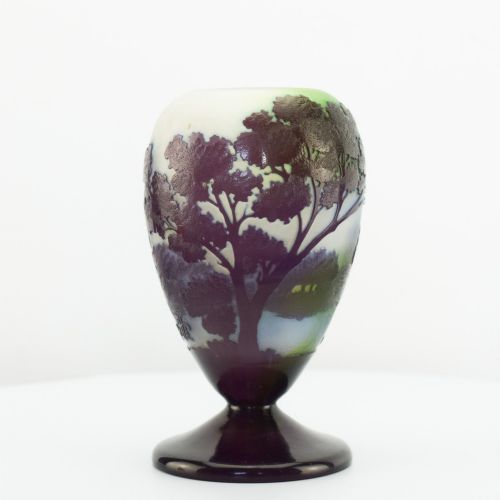
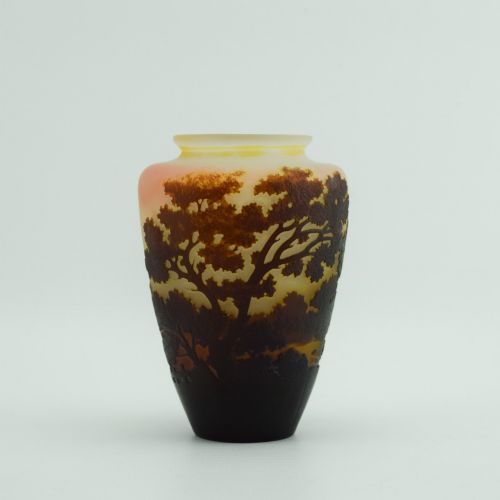
When you search for an overlay glass art vase, you encounter works defined by distinct exterior layers, whether carved cameo motifs or applied metal decorations. The pieces on this page span the Victorian era through the early twentieth century, taking forms from slender baluster vessels to broad landscape vases.
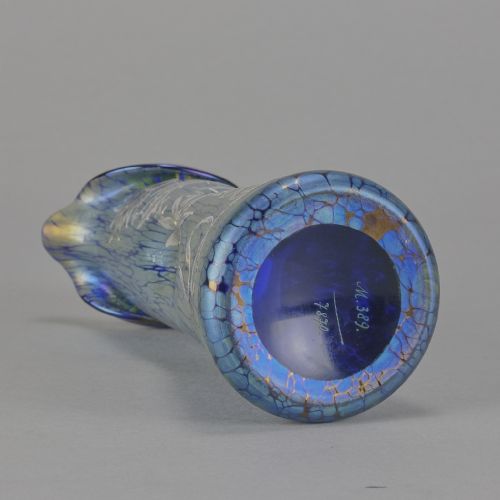
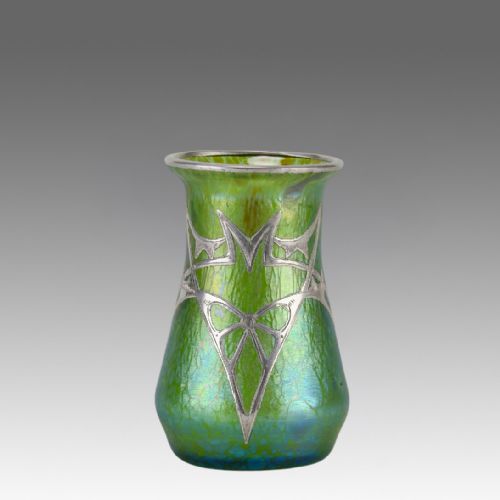
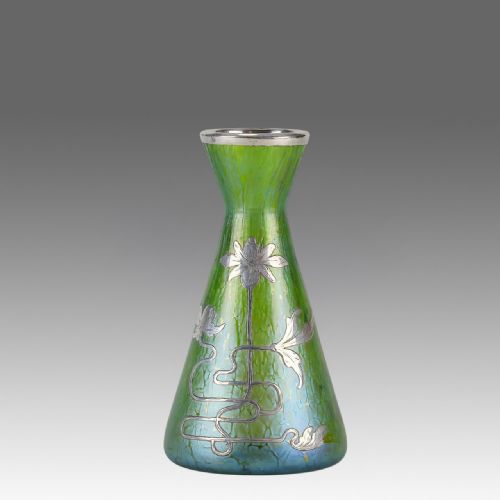
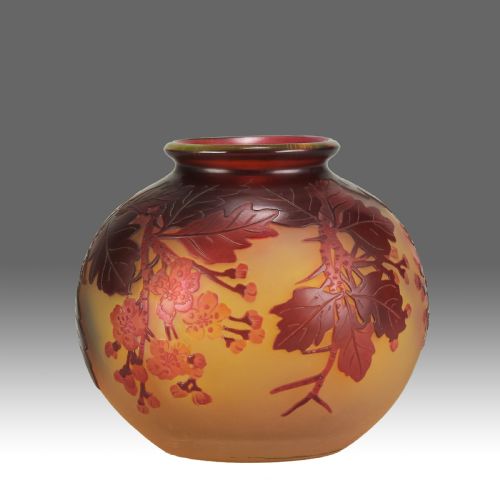
You are most likely to meet French cameo vessels featuring naturalistic botanical or pastoral scenes alongside Austrian iridescent glass decorated with gleaming silver mounts. These objects reflect the prominent design movements of their time, predominantly Art Nouveau and Secessionist styles.
Makers utilised contrasting colours and textures, layering opaque hues over translucent bodies or encasing glass in pierced metal work. Each overlay glass art vase demonstrates the ambition of European glasshouses to manipulate light and surface texture.
How they were made
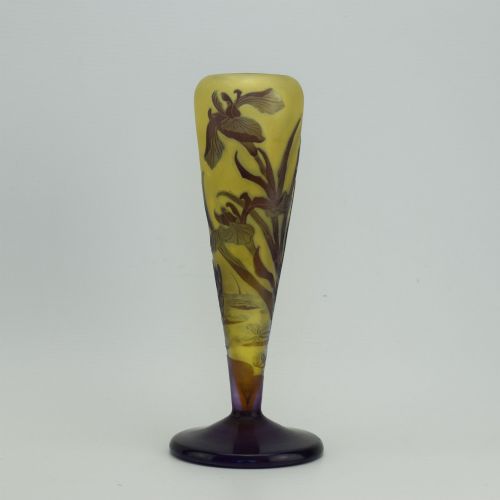
Maker workshops built these vessels by fusing multiple layers of molten glass together before cutting back the outer stratum to reveal the design beneath. Acid etching often assisted this process, dissolving unwanted glass layers to leave crisp botanical or landscape reliefs.
Alternatively, artisans mounted molten or cooled glass within intricate sterling silver or pewter frameworks, binding the metal directly to the contours of the vessel. Iridescent finishes and metallic infusions were achieved through the application of specialised chemical vapours during the cooling stage.
Several pieces combine delicate aquatic plants with whimsical silver beetles creeping across shimmering iridescent surfaces.
What varies in quality
The sophistication of the carving distinguishes exceptional cameo pieces, where the cutter leaves varying depths of colour to suggest shadow and perspective within a floral or landscape design. Precision in acid etching also separates standard production from superior examples, dictating the sharpness of edges in multi-layered motifs.
For mounted vessels, the weight and intricacy of the silver or pewter overlay determine the standard of the piece, alongside the brilliance of the underlying iridescent or coloured crystal body.
Emile Gallé·Johann Loetz·Val St. Lambert·Daum Frères·Thomas Webb and Sons
The Overlay Glass Art Vase Glossary
- Cameo Glass
- Glass vessels created with two or more distinct layers of colour fused together, allowing carvers to cut away the exterior layer to expose the contrasting background.
- Silver Overlay
- A decorative technique where liquid silver or thin metal sheets are applied to a glass surface, often etched with floral or geometric patterns.
- Iridescent Glass
- Glass treated with metallic salts while hot to produce a shimmering, rainbow-like sheen across the surface.
- Acid-Etched
- A method utilising hydrofluoric acid to eat away exposed glass surfaces, creating textured designs or removing outer layers in cameo production.
- Phänomen
- A distinctive Loetz glass technique featuring combed iridescent threads pulled into feather or wave patterns across the body.
Overlay Glass Art Vase: Frequently Asked Questions
How do I clean an overlay glass art vase?
Wash the glass gently using lukewarm water and mild soap, taking care to avoid harsh scrubbing brushes that might scratch the surface.
Pat the piece dry immediately with a soft cloth, and treat any silver mountings with a specialised silver polishing cloth without letting polish touch the glass.
Were these vases used for flowers?
Many of these vessels served as decorative display objects rather than functional flower holders, particularly delicate cameo and silver-mounted pieces.
Larger production vases from Belgian and Bohemian glasshouses were robust enough for everyday domestic floral arrangements.
How can I tell Art Nouveau from Art Deco pieces?
Art Nouveau examples feature flowing, organic lines inspired by plants, insects, and natural landscapes with asymmetrical compositions.
Art Deco items typically display more geometric, stylised forms with cleaner symmetry and structured architectural motifs.
What is the difference between cameo and silver overlay?
Cameo glass involves carving directly into an outer layer of coloured glass to form raised designs from the body itself.
Silver overlay consists of a separate metal casing applied permanently to the exterior of a finished glass vessel.