



Emile Galle Cameo Glass
Emile galle cameo glass pieces are celebrated Art Nouveau vessels featuring botanical and landscape motifs created through acid-etching.
Emile Galle Cameo Glass
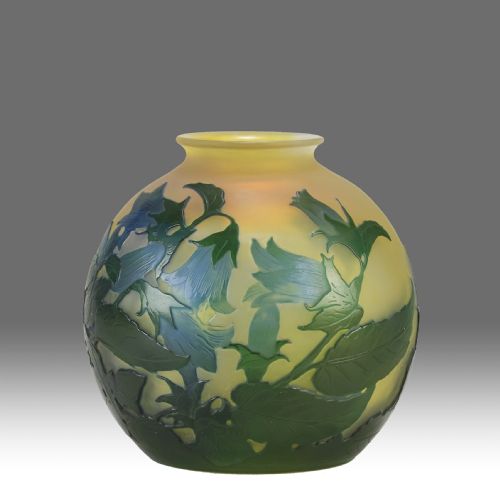
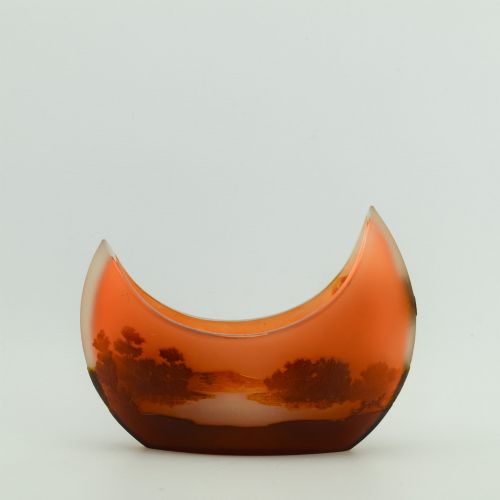
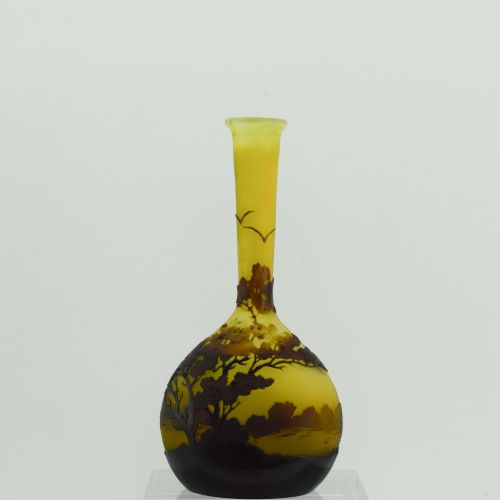
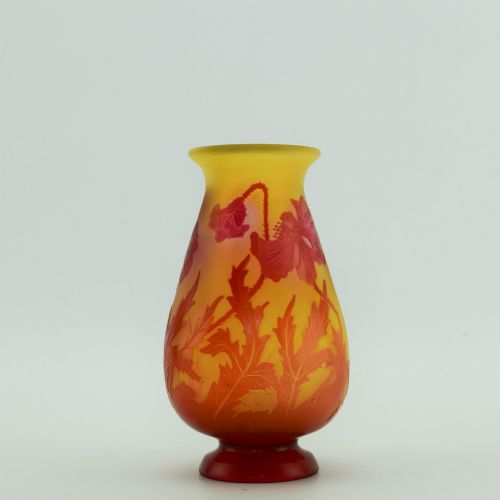
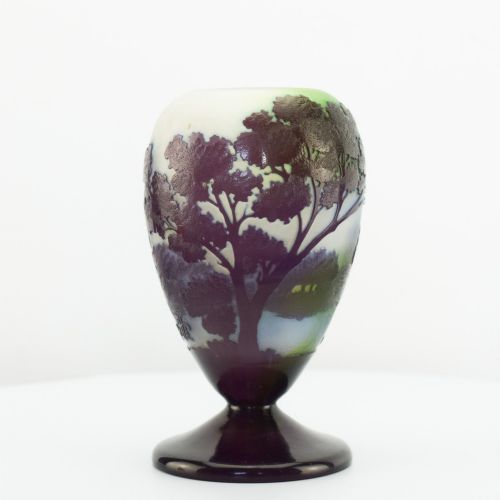
When you search for emile galle cameo glass, you are looking at Art Nouveau vessels produced in France during the early twentieth century. The selection centres principally on vases in various forms, such as banjo, crescent, and footed shapes, alongside occasional boxes.
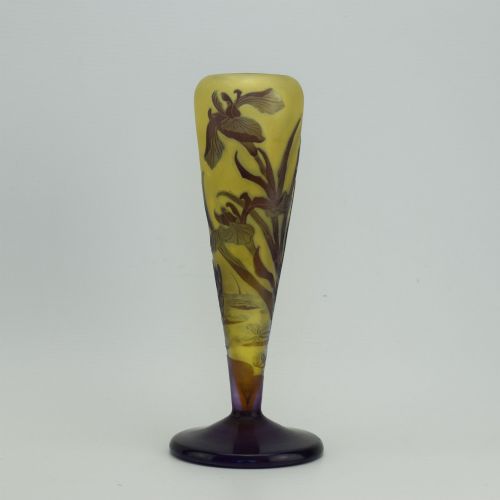
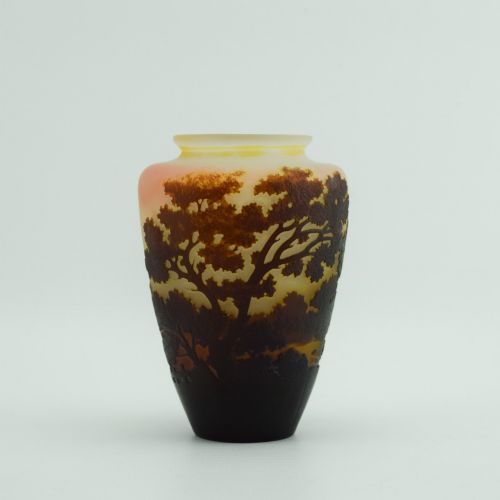
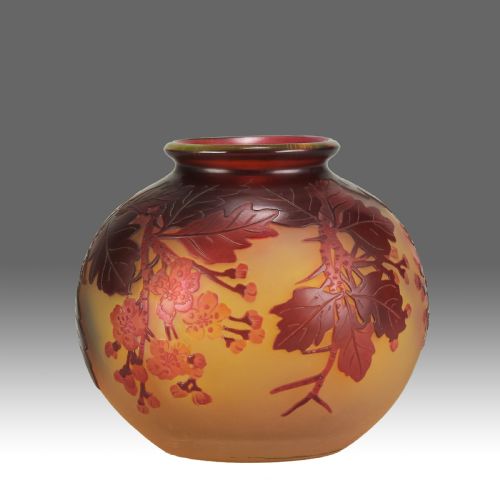
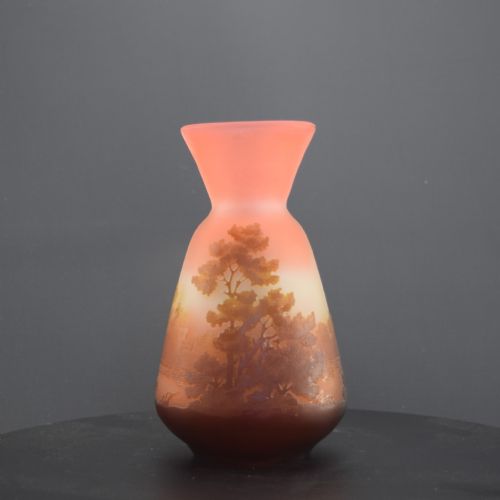
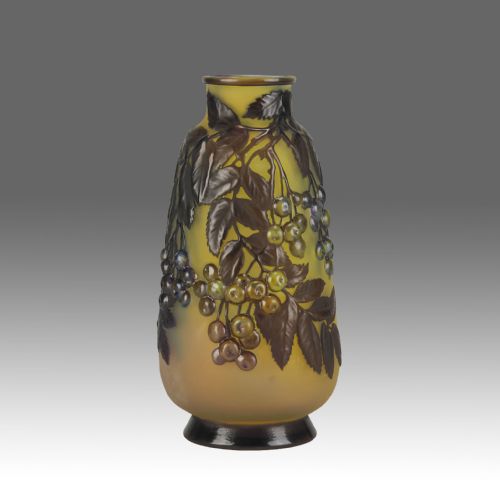
Botanical subjects dominate the pieces available, featuring floral and plant designs including cornflowers, hydrangeas, poppies, and aquatic plants. Landscape scenes depicting trees, foliage, and regional views like the Vosges also appear frequently across the periods.
The objects date from 1900 through to 1930, capturing the evolution of glassmaking techniques during the Art Nouveau era. Vases range in scale from large showpieces to more modest forms, utilising distinct colour palettes of brown, peach, orange, and delicate shades.
Materials and technique
Makers utilised blown glass as the foundational element, layering multiple colours of glass to build depth before shaping the vessel. Frosted glass and clear glass often serve as the base layer for subsequent coloured strata.
Acid-etched glass techniques involve applying resist materials and submerging the vessel in acid to eat away surface layers, revealing contrasting colours underneath. Etched glass and fire-polished finishes refine the surface texture and clarity of the final design.
Acorn and oak leaf motifs share shelf space with delicate cornflowers, cheerful poppies, and sprawling aquatic iris.
Assessing quality in the glassware
Quality rests in the precision and depth of the cameo carving, where successful acid-etching creates clean demarcations between the background and the raised botanical or landscape motifs. Finer examples display meticulous control over multiple glass layers, resulting in nuanced tonal shifts across shades of brown, peach, and orange.
The complexity of the form and design dictates the distinction between standard production and exceptional pieces. Banjo shapes, soufflé or blow-out techniques, and detailed aquatic or landscape compositions require advanced glasshouse skill, separating simpler floral vases from masterworks.
Emile Gallé
The Emile Galle Cameo Glass Glossary
- Cameo glass
- A form of glass art produced by layering contrasting colours of glass and carving or acid-etching away exterior layers to create a raised design. This technique allows intricate multi-coloured pictorial motifs to emerge.
- Acid-etched glass
- A method where hydrofluoric acid eats away exposed glass surfaces to create designs or frosted textures. It replaces manual wheel-carving with chemical precision.
- Soufflé
- A technique where hot glass is blown into a metal cage or mould to expand the vessel into a predetermined relief shape. It produces sculptural, swollen contours.
- Frosted glass
- Glass treated to develop a matte, translucent appearance that diffuses light softly. It frequently forms the atmospheric background of landscape designs.
- Fire-polished
- A finishing process where the glass surface is briefly reheated to melt away micro-scratches and impart a smooth gloss. This step restores lustre after acid treatment.
Emile Galle Cameo Glass: Frequently Asked Questions
What are emile galle cameo glass vases?
These vessels are decorative Art Nouveau glass objects created in France during the early twentieth century. They combine layered coloured glass with acid-etching techniques to display detailed plant and landscape motifs.
Collectors prize them for their artistic representation of natural forms, ranging from delicate aquatic scenes to rich floral arrangements.
How do I date an emile galle cameo glass piece?
Dating relies on stylistic clues, signatures, and known production periods spanning from 1900 to 1930. Earlier pieces often reflect pure Art Nouveau botanical curves, while later examples incorporate varied landscape subjects.
Examining the specific type of floral motif and vessel shape helps narrow the decade of manufacture within the broader twentieth-century timeline.
How should I display these glass pieces?
Position them in spaces with stable shelving and indirect natural light to highlight the layered colours of the cameo glass. Adequate spacing allows the translucent qualities and etched details to be fully appreciated from multiple angles.
Avoid direct, intense sunlight to protect the softer frosted and coloured glass tones over long periods.
What is a banjo vase?
A banjo vase is a specific elongated glass form featuring a rounded body and a slender, narrow neck resembling the stringed musical instrument. This profile was utilised by the workshop to frame vertical landscape or botanical designs.
The distinct silhouette provides a unique canvas for tall floral stems and winding tree motifs.