
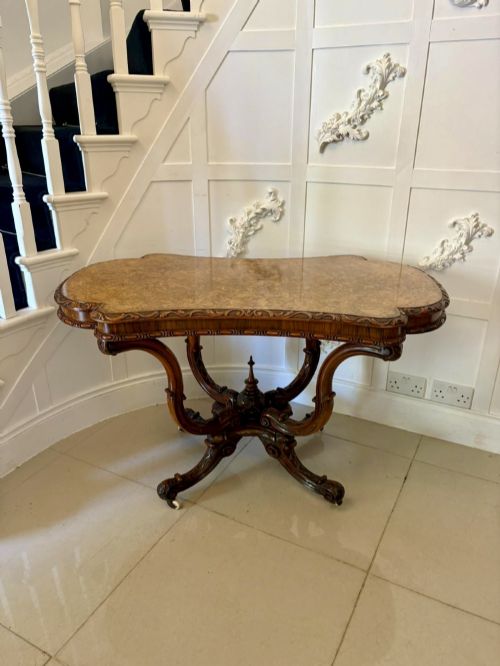

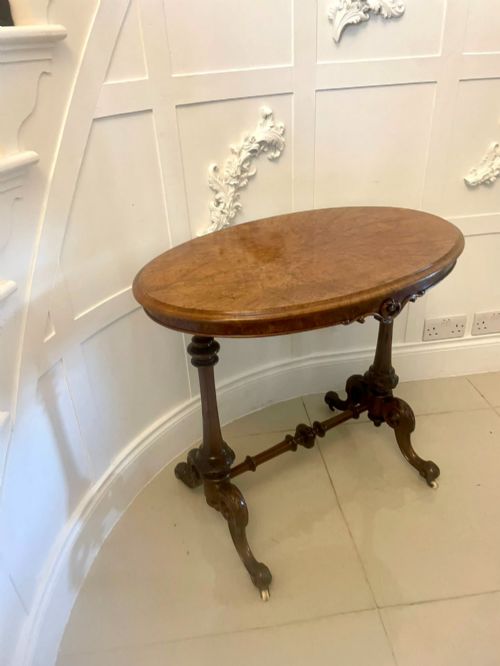


Oval Walnut Occasional Table
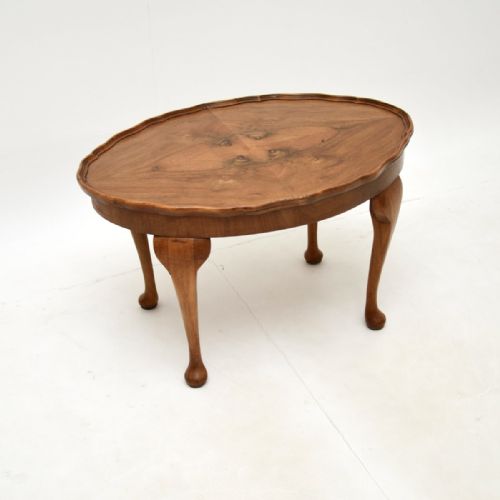
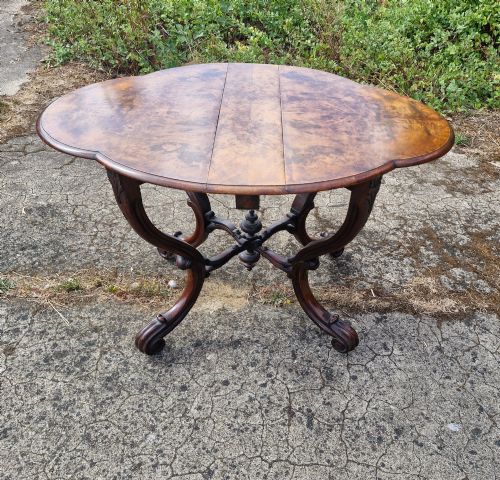
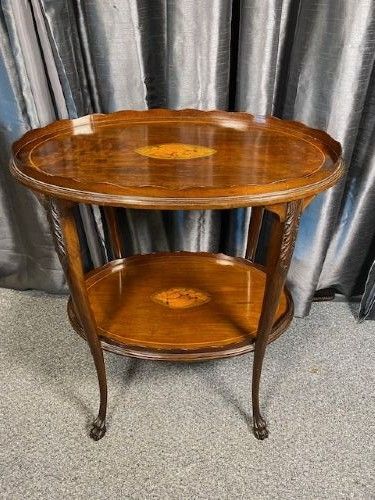
An oval walnut occasional table brings warm figured wood and curved nineteenth-century lines into a room as a lamp, centre or side stand.
Oval Walnut Occasional Table
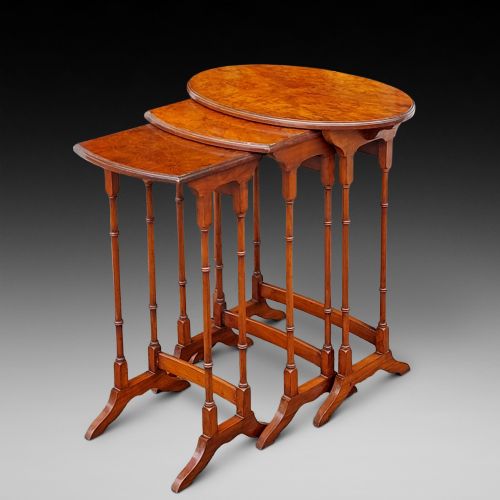
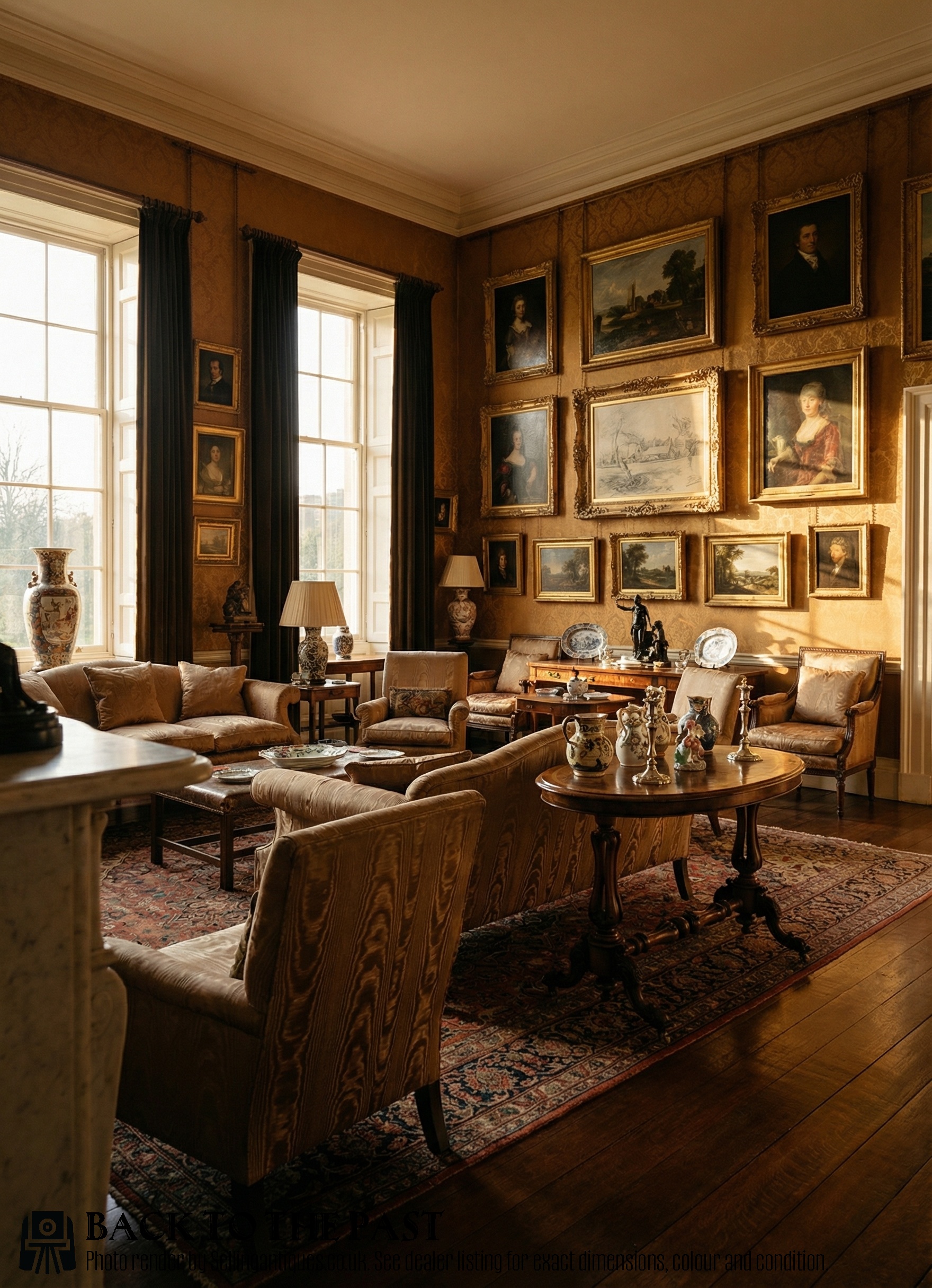
An oval walnut occasional table appears most frequently in Victorian and Edwardian guises, spanning lamp tables, centre tables and smaller tea or wine stands. The search phrase covers a broad range of nineteenth-century and early twentieth-century formats, including tilt-top designs, nesting sets and Sutherland tables.
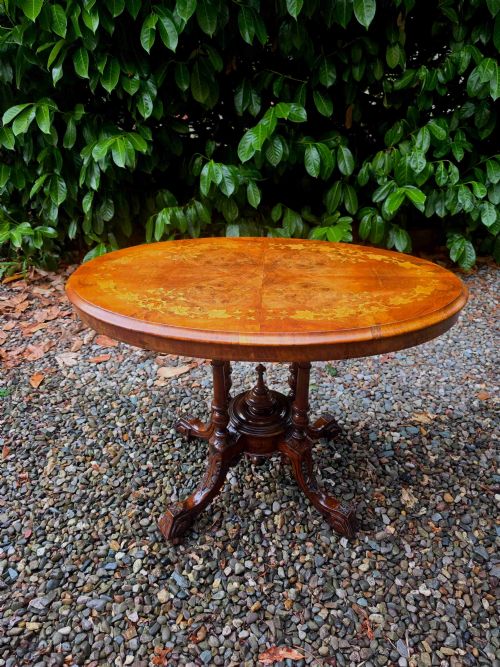
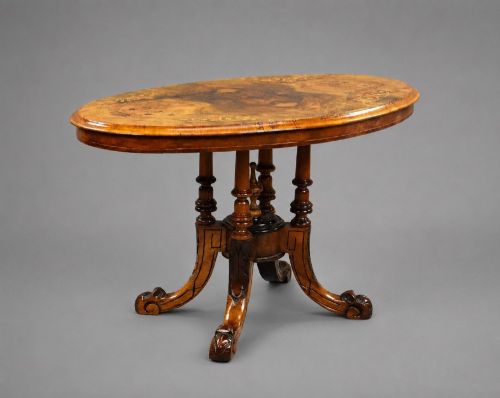
Makers utilised these versatile shapes for principal reception rooms and boudoirs alike, resting them on pillar-and-tripod bases or four-legged frames. Many examples display marquetry or boxwood stringing across the top, functioning as decorative display surfaces as well as practical furniture.
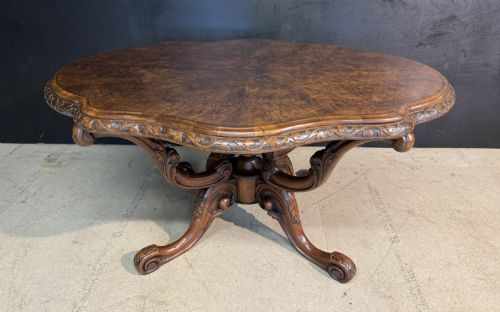
Buyers encountering these pieces on the market will find that Victorian burr walnut versions dominate the selection, often featuring carved pedestals or inlaid floral motifs. Edwardian and later interwar adaptations tend toward lighter frames and satin walnut variations.
Materials and construction
Cabinetmakers relied on solid walnut and decorative walnut veneers, particularly burr walnut, to create highly figured tops with rich grain patterns. They frequently applied boxwood and floral marquetry inlay to contrast against the dark brown tones of the primary timber.
Secondary structural elements often included brass fittings, ceramic castors and carved wooden pedestals that provided stability to the central pillar or leg assemblies. Joinery techniques ranged from traditional mortise and tenon frames to scissor actions and tilt-top mechanisms.
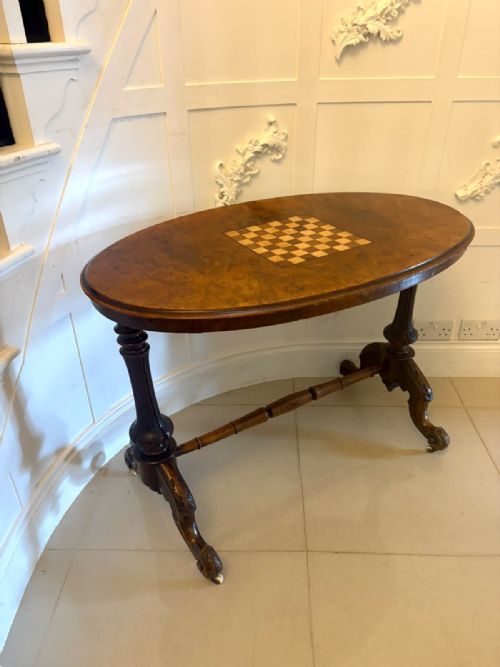
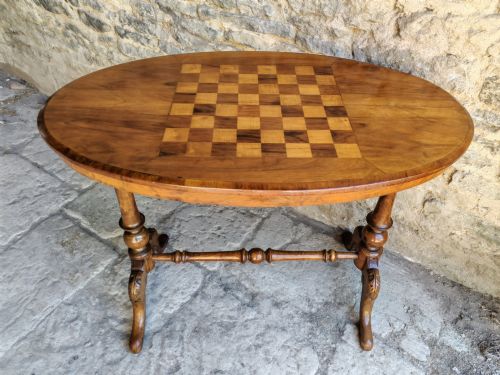
Some Victorian tables incorporate secret chess boards built directly into the surface for unexpected parlour games.
Assessing craftsmanship
Quality rests primarily on the depth and movement of the burr walnut figuring across the oval top, alongside the precision of any boxwood or floral marquetry inlay. Superior examples display seamless veneer matching and crisp hand-carved detailing on the base or pillar.
Structural integrity also dictates value, distinguishing tables with sturdy, wobble-free tripod or four-column bases from those with loose joints or heavy past repairs. The crispness of marquetry work and the retention of original brass hardware further separate standard production items from finer workshop pieces.
Gillows·Charles Topino
The Oval Walnut Occasional Table Glossary
- Burr walnut
- A specialised wood cut from walnut tree growths, producing intricate, swirling grain patterns highly prized for tabletops.
- Marquetry
- Decorative patterns formed by fitting together thin pieces of wood veneer and other materials onto a structural surface.
- Sutherland table
- A narrow drop-leaf table with deep folding leaves supported by swing legs, designed to save space when stored.
- Boxwood inlay
- Contrasting pale yellowish wood inserted into channels within the darker walnut surface to create geometric or floral borders.
- Tilt-top
- A mechanism allowing the tabletop to pivot vertically on its central pillar for compact storage against a wall.
Oval Walnut Occasional Table: Frequently Asked Questions
What is an oval walnut occasional table used for?
These tables serve as versatile surface stands for lamps, books, or decorative objects within a living space.
Historically, owners placed them centrally in Victorian reception rooms or beside seating arrangements for convenience.
How do I distinguish Victorian from Edwardian pieces?
Victorian examples tend to feature heavier carved pedestals, darker burr walnut veneers, and dense floral marquetry.
Edwardian tables often display lighter satin walnut finishes, simpler inlaid borders, and more slender, refined frames.
Are tilt-top tables stable?
Original tilt-top mechanisms rely on a brass catch or wooden peg to lock the horizontal surface securely in place.
When properly adjusted, they remain stable for everyday use while offering the historic flexibility of vertical storage.
How do I care for walnut veneer?
Walnut benefits from occasional polishing with traditional beeswax and protection from direct sunlight to preserve the rich colour.
Avoiding excessive moisture prevents the delicate veneers and boxwood inlay from lifting over time.