






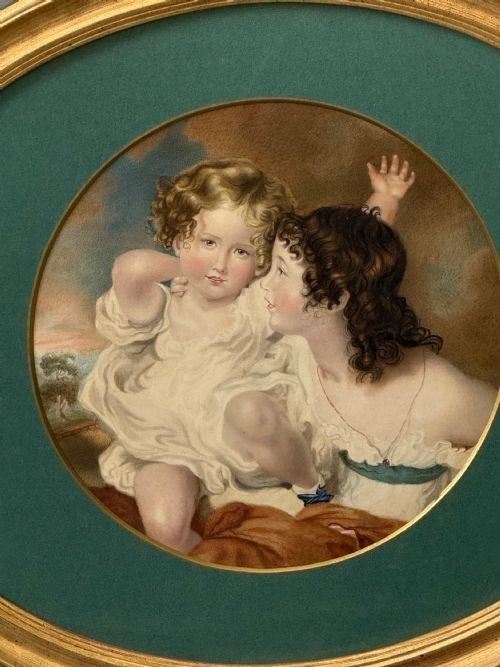
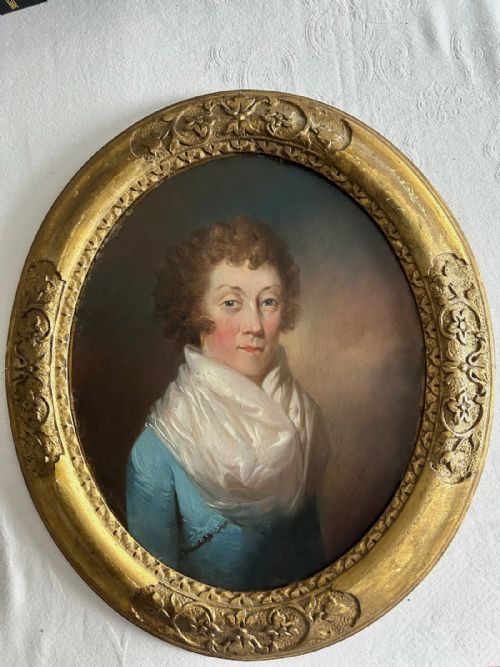


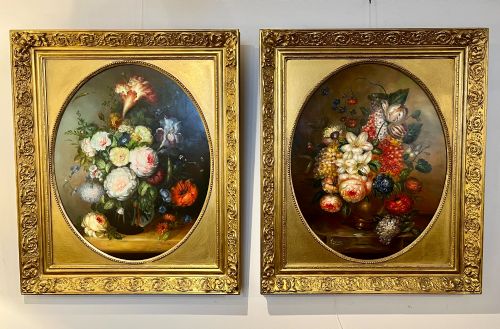
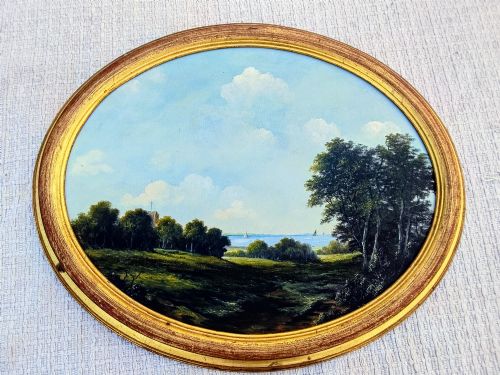
Oval Gilt Frame Painting
When you search for an oval gilt frame painting, you are looking at centuries of portraiture and still life bound by curved moulding.
Oval Gilt Frame Painting
An oval gilt frame painting brings together historical portraiture and decorative art encased in curved wooden borders finished with gold leaf. The items found here span from the seventeenth century through the nineteenth century, encompassing Georgian, Regency, and Victorian periods.
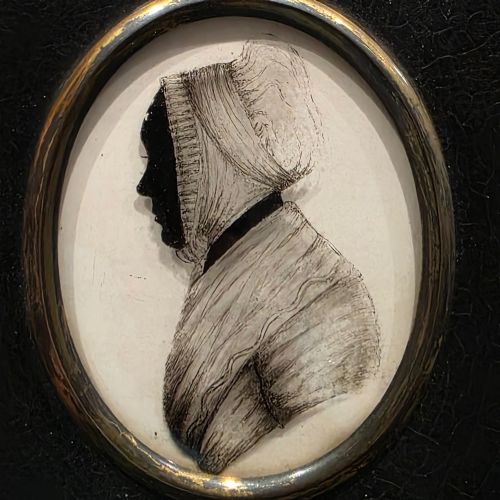
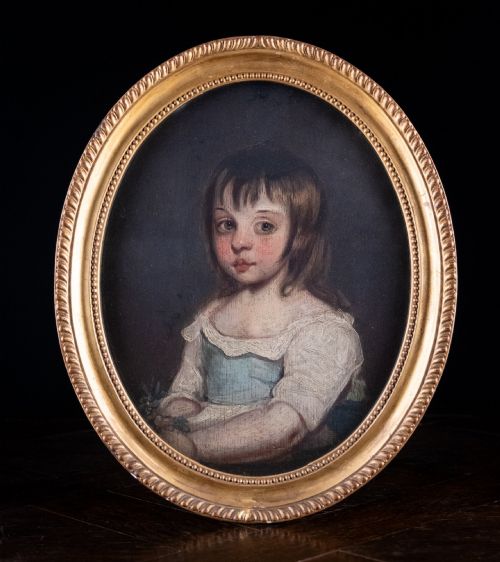
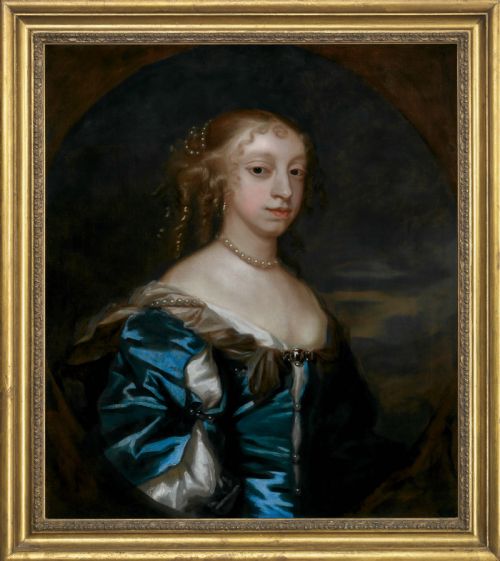
Most examples present oil on canvas or oil on board, alongside delicate watercolour and pastel portraits, reverse-painted silhouette miniatures, and later glazed portrait prints. Subjects range from aristocratic figures and country gentlemen to children and intimate family studies.
The curved format alters the balance of a composition, drawing the eye toward the centre and softening the corners of formal portraiture. These works appear in domestic interiors as wall art and fine art pieces, framed in giltwood or carved wood.
How they were made
Artists painted primarily in oil on canvas or wood panels, utilising layered pigments to build depth in skin tones and drapery, while miniaturists worked on paper or prepared surfaces. Frames were constructed from wood and coated with gesso before the application of fine gilt or gold leaf.
The construction of curved frames required specialised joinery to shape wooden segments into a continuous oval without splitting the grain. Gilders applied gold leaf by hand over prepared bole, burnishing the surface to achieve varying degrees of reflection.
Oval Gilt Frame Painting Retail Price Guide 2026
Typical asking prices for oval gilt frame painting among the pieces listed under this phrase on Sellingantiques today, from the lower quarter to the upper quarter. They describe what is for sale here now, not the wider market.
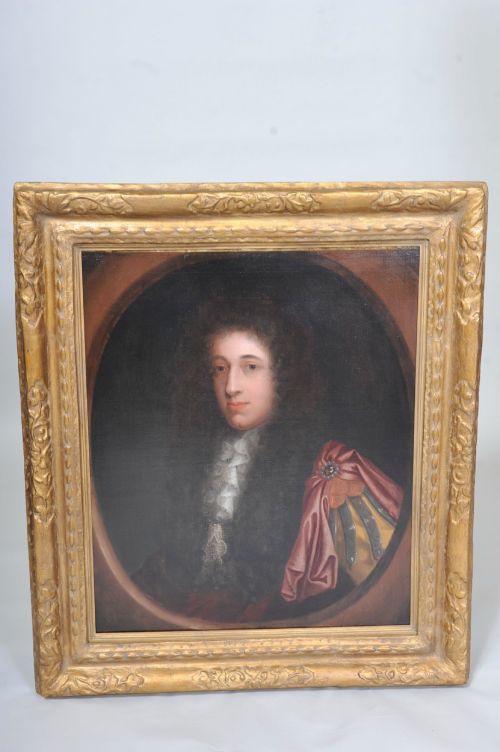
Several gentlemen in the collection maintain an air of stern authority while sporting surprisingly elaborate periwigs.
What varies in quality
Quality rests in the precision of the artist's brushwork and the anatomical accuracy of the portraiture, where subtle handling of light brings depth to the subject's expression. Lesser works display rigid lines and flat planes, whereas accomplished pieces capture individual character through delicate tonal shifts.
The craftsmanship of the framing sets apart superior examples, particularly where carved ornamentation remains crisp beneath the gilt layer. Frames that retain their original gilding without heavy overpainting demonstrate higher preservation value.
James Sharples·Sir Godfrey Kneller·Michael Dahl·Thomas Murray·John Scougall·John Russell·Arthur Percy Dixon
The Oval Gilt Frame Painting Glossary
- Giltwood
- Wood that has been coated with gold leaf or a metallic substitute. This finish provides the characteristic metallic sheen seen on historical frames.
- Portrait miniature
- A small, highly detailed painting depicting a person. These were often executed on vellum, card, or ivory.
- Reverse painting
- A technique where the artist paints on the back of a glass pane so the image is viewed through the front. This method protects the pigment from atmospheric damage.
- Gesso
- A plaster-like mixture applied to wood before gilding. It provides a smooth surface for laying down gold leaf.
Oval Gilt Frame Painting: Frequently Asked Questions
How do I date an oval frame?
Dating relies upon the construction techniques of the wood and the composition of the gesso beneath the gold leaf. Earlier frames often feature hand-carved wooden mouldings rather than moulded composition ornament.
Examining the backing boards, fixings, and nails provides further clues to the age of the assembly. Stylistic shifts in the moulding profile also correspond to specific periods from the seventeenth century onward.
Were these paintings originally oval?
Some canvases were painted directly onto an oval stretcher, while others were later cut down from rectangular formats to fit a decorative frame. This practice was common in the eighteenth and nineteenth centuries when oval portraits suited domestic wall arrangements.
Closer inspection of the canvas edges and stretcher corners reveals whether the format is original to the creation of the artwork. Both original ovals and later adaptations appear across historical collections.
How should I hang an oval painting?
Hanging requires secure wall fixings matched to the weight of the giltwood frame, which can be surprisingly heavy due to the dense wooden core and plaster gesso. Utilising a two-point hanging system prevents the frame from tilting out of alignment.
Position the centre of the painting at eye level to replicate historical display practices. Avoid placing gilt frames in direct sunlight or near heat sources that might dry out the wood.
What is a silhouette miniature?
A silhouette miniature is a small profile portrait, often painted in black pigment or cut from paper, capturing the outline of a sitter's face. During the Georgian and Regency periods, artists developed reverse-painted glass techniques to add fine detail.
These pieces were typically housed in compact oval frames intended for personal transport or intimate domestic display. They offer a direct record of individuals from eras before widespread photography.