
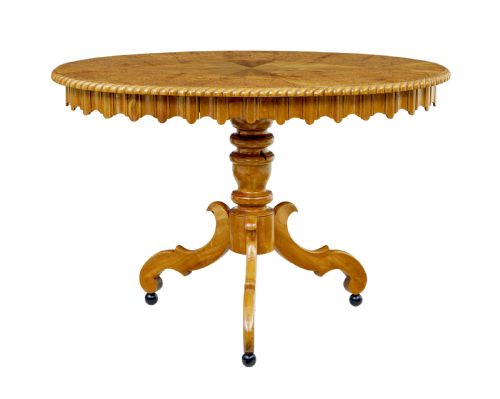
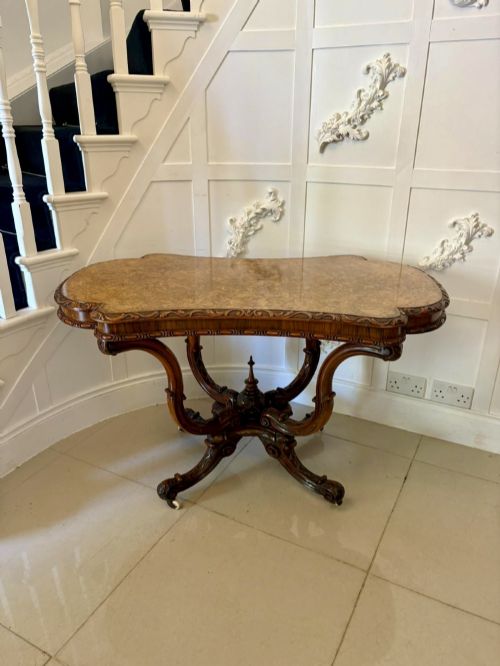
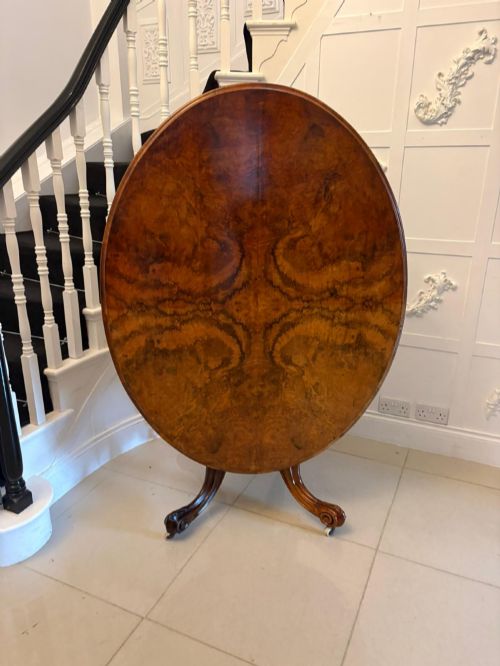

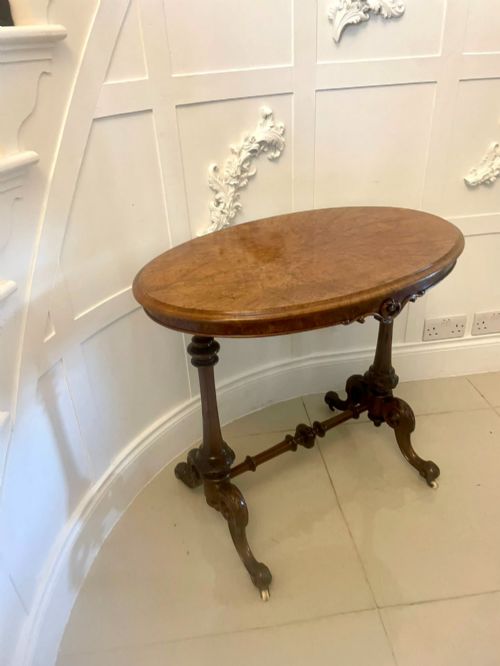
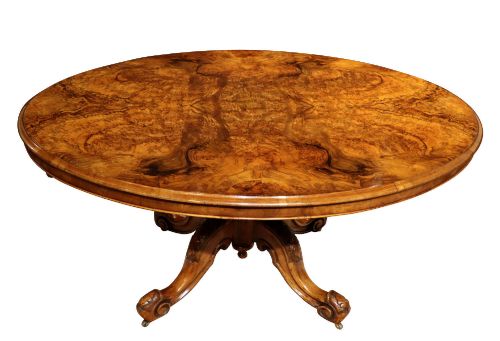
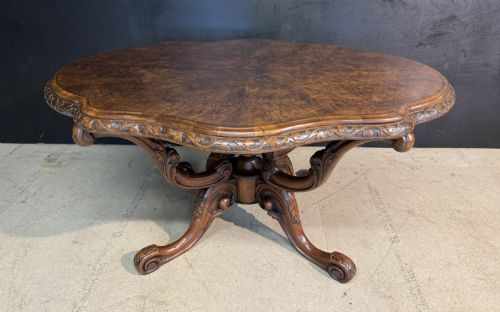
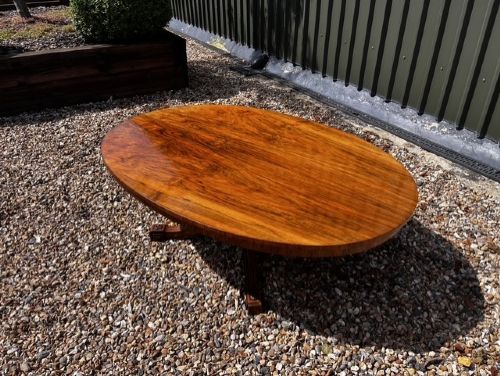
Oval Carved Centre Table
An oval carved centre table brings weight and presence to a room, offering a generous freestanding surface shaped by historic craftsmanship.
Oval Carved Centre Table
An oval carved centre table is a freestanding piece designed to sit in the middle of a room rather than against a wall, presenting finished woodwork from every angle.
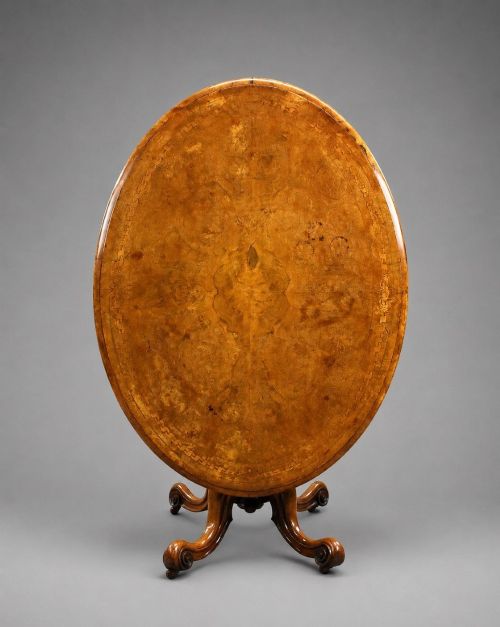
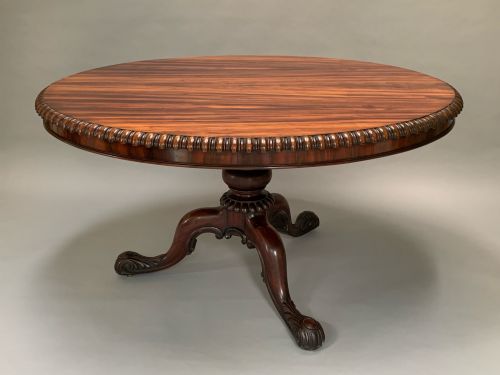
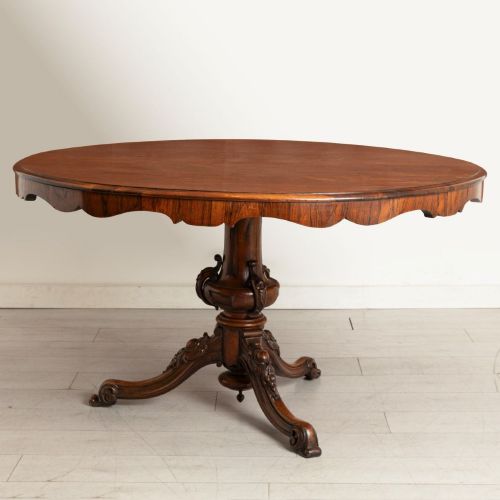
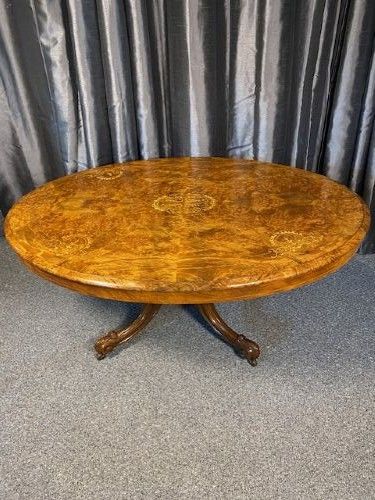
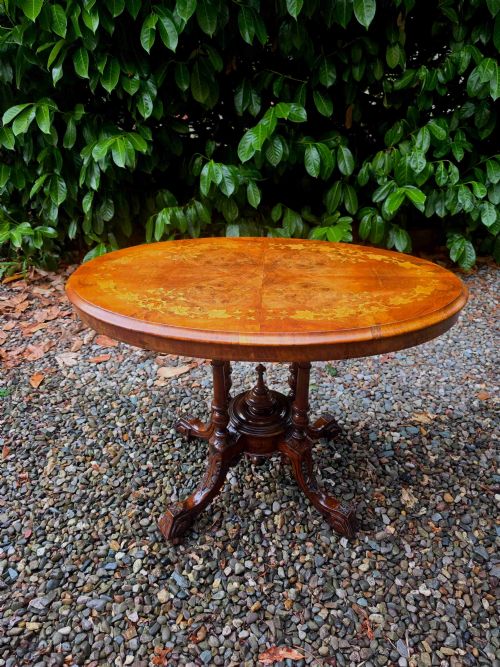
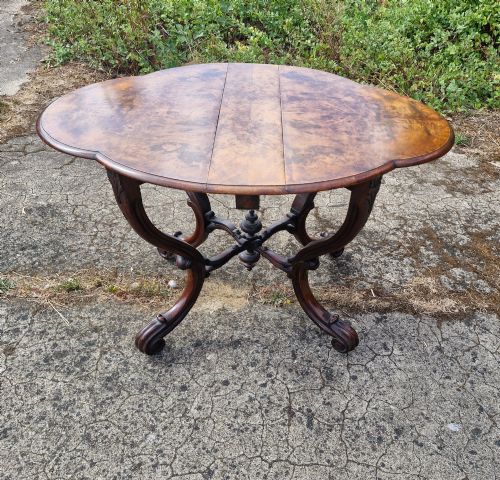
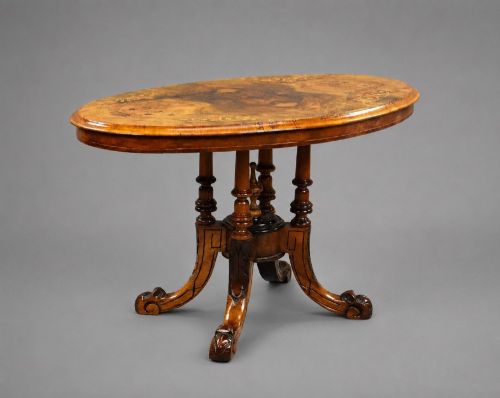
The pieces grouped under an oval carved centre table span the Victorian era, William IV period, and mid-nineteenth century, frequently taking the form of loo tables, tilt-top dining tables, and occasional coffee tables.
Burr walnut and mahogany dominate the offerings, often enhanced by boxwood inlay, marquetry, and solid carved pedestals or quadrapod bases.
How they were made
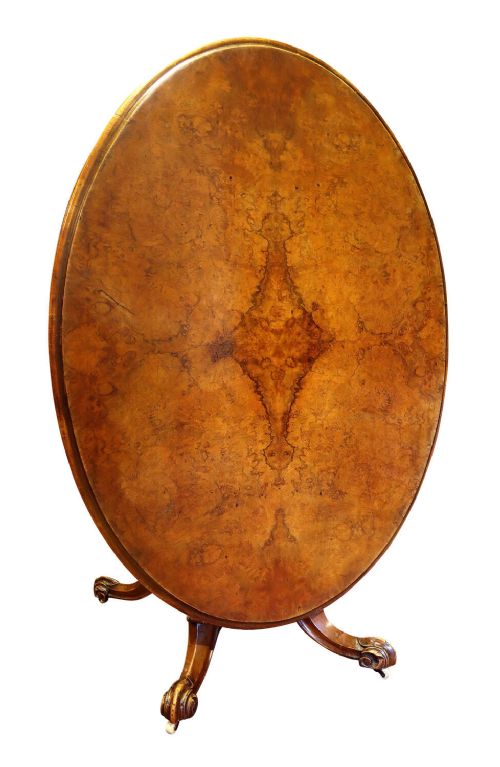
Cabinet makers utilised dense timbers such as burr walnut, mahogany, and rosewood, often applying highly figured veneers over secondary woods to create striking grain patterns on the top.
Bases and pedestals relied on solid turned and carved timber, supporting the heavy tops through tilt-top mechanisms, quadrapod legs, or scissor actions.
Detailing involved delicate boxwood inlay, marquetry, and hand-carved ornamentation along the rims, pedestals, and feet.
Listings feature nineteenth-century pieces constructed from burr walnut, mahogany, rosewood, and satinwood, with styles ranging from French Louis XVI to William IV.
What varies in quality
The depth and crispness of the hand-carving on the pedestal and base distinguish finer examples from simpler production pieces.
The choice and matching of burr walnut or figured mahogany veneers dictate the visual impact of the top, alongside the precision of any boxwood inlay or marquetry work.
The structural integrity of the tilt-top mechanism or pedestal support determines how well the table functions day to day.
Gillows·Holland And Sons
The Oval Carved Centre Table Glossary
- Burr Walnut
- A timber harvested from the wart-like growths on walnut trees, yielding complex, swirling grain patterns highly prized for Victorian table tops.
- Loo Table
- A large round or oval nineteenth-century table designed for the card game loo, frequently featuring a tilt-top mechanism for storage.
- Tilt-Top
- A hinged table top that can be rotated to a vertical position when not in use, allowing the piece to stand flat against a wall.
- Quadrapod
- A four-legged pedestal base providing stability for large dining and centre tables.
- Marquetry
- The art of applying pieces of veneer to a structure to form decorative patterns and pictures.
Oval Carved Centre Table: Frequently Asked Questions
How do I use a centre table?
As the name suggests, a centre table is built to stand independently in the middle of a room rather than pushed against a wall. They function well as large lamp tables, occasional surfaces, or intimate dining spots.
Because the timber and carving extend all the way around the perimeter, they work best where foot traffic can circulate freely. Pairing them with low seating or placing them beneath a central ceiling rose highlights their original purpose.
What is burr walnut?
Burr walnut is derived from the abnormal growth on a walnut tree, where grain grows in a chaotic, swirling pattern rather than straight lines. Cabinet makers sliced this wood into thin veneers to cover large table tops with dramatic, repeating patterns.
This material is softer and more prone to movement than straight-grained timber, requiring careful handling and stable indoor humidity. Its rich honey and chocolate tones make it one of the most recognisable finishes of the Victorian period.
How do I date a Victorian table?
Dating these pieces relies on combining the timber choice, the style of the base carvings, and construction methods. Tables from the 1850s and 1860s often display heavy carved walnut pedestals and elaborate boxwood inlay, while later Victorian examples lean towards simpler coffee table formats.
Checking beneath the top for stamp marks, screw types, and secondary woods can also narrow down the decade of production. Examining how the pedestal meets the platform base reveals much about the manufacturing period.