



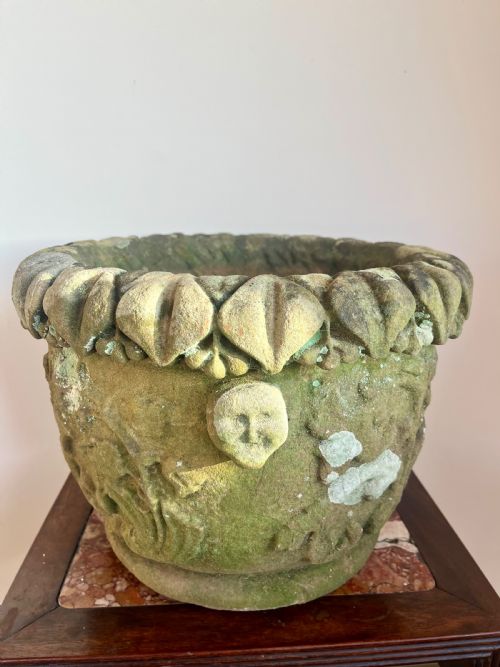


Outdoor Stone Planter
An outdoor stone planter anchors a garden scheme, bringing immediate architectural weight and holding planting through the seasons.
Outdoor Stone Planter
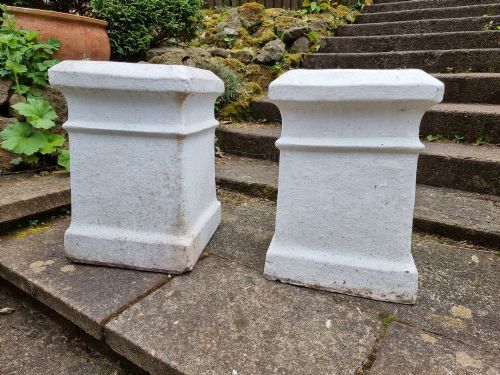
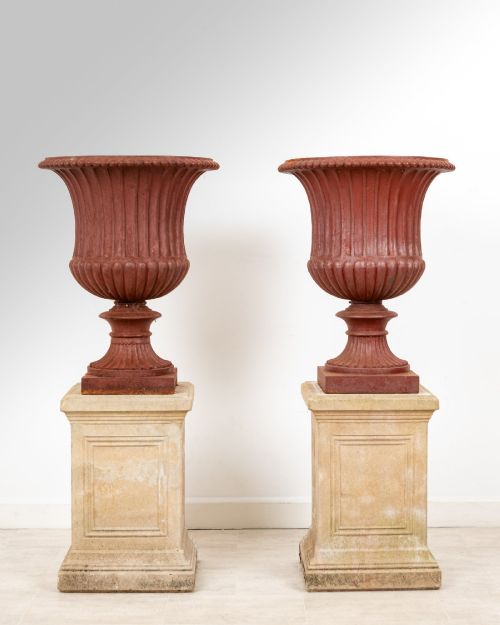
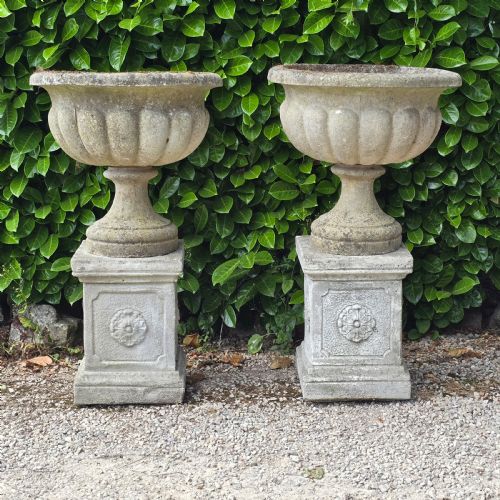
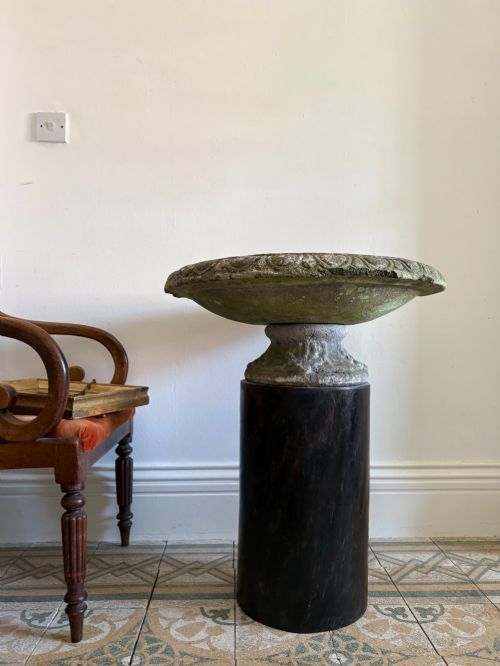
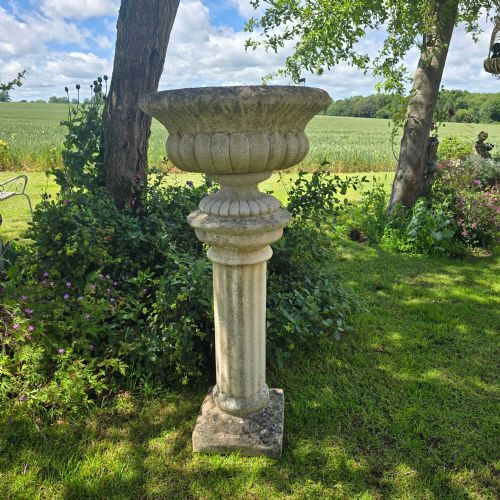
An outdoor stone planter is a heavy vessel designed for garden flora, ranging from compact troughs to monumental campana urns raised on pedestals and plinths. When searching for an outdoor stone planter, buyers encounter substantial pieces shaped from natural carved marble and stone, alongside durable moulded compositions.
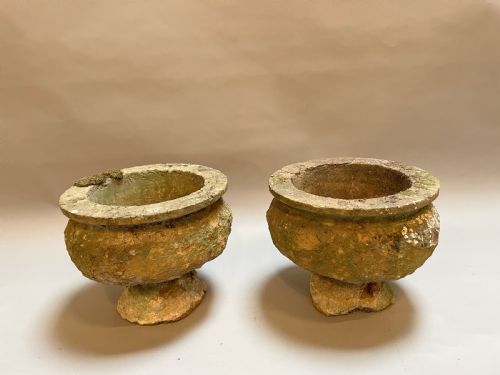
The selections span centuries of design, with Victorian, Neoclassical, and Gothic Revival pieces appearing frequently alongside simpler twentieth-century forms. Many vessels arrive paired, offering symmetrical focal points for pathways, terraces, and lawn edges.
How they were made
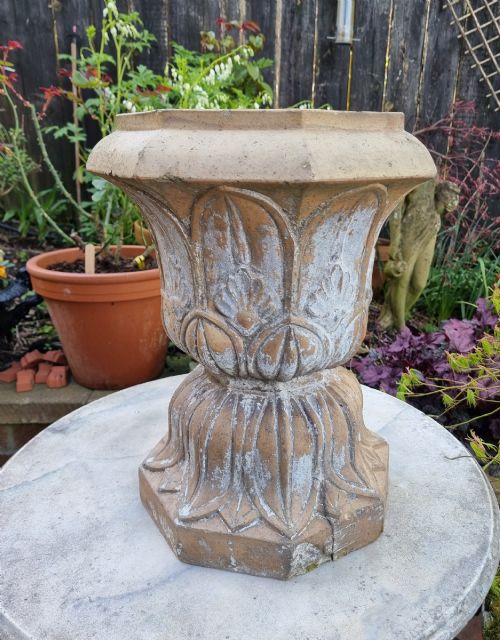
Makers shaped these vessels from heavy natural materials, employing hand-carved marble and stone alongside durable composite, reconstituted, and cast stone mixes. Terracotta and salt-glazed clays provided alternative moulded bodies, while robust metal elements such as cast iron appeared on campana urns and structural pedestals.
Surface finish and material integrity developed through exposure to the elements, resulting in natural patination and weathering across the stone and terracotta bodies. Carved details on handles and rims required skilled stonemasonry, whereas composite stone items relied on precise casting techniques.
One extraordinary outdoor stone planter incorporates reclaimed stone salvaged from the Houses of Parliament after wartime bomb damage.
What varies in quality
Quality rests upon the crispness of the original modelling and the depth of hand-carved detail found on handles, foliage, and rims. Superior examples display harmonious proportions between the vessel body and its supporting plinth or pedestal.
The integrity of the material dictates longevity, with dense natural stone and well-fired terracotta ageing gracefully compared to softer compositions. Genuine age and organic weathering elevate a piece, setting genuine period examples apart from later utility items.
Andrew Handyside
The Outdoor Stone Planter Glossary
- Campana urn
- A bell-shaped garden vessel with an everted rim and a footed base, often mounted on a matching pedestal. This classical silhouette remains a staple of formal garden design.
- Reconstituted stone
- A durable composite material made from crushed stone or aggregate mixed with cement and binders, moulded to resemble natural carved stone.
- Plinth
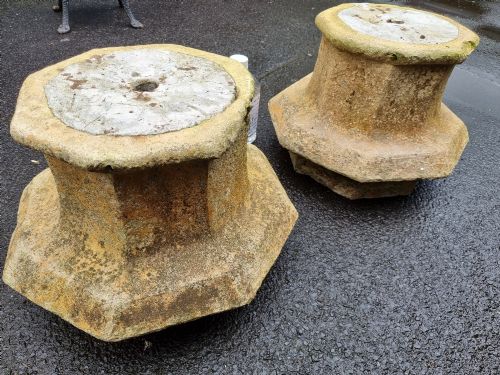
- A heavy rectangular or square block base that elevates an urn or planter above ground level. It provides architectural presence and improves drainage.
- Terracotta
- A porous, unglazed baked clay varying in tone from buff to deep red. It allows plant roots to breathe while developing a rich patina over decades outdoors.
- Salt glaze
- A vitreous coating formed on pottery by throwing common salt into the kiln during high-temperature firing. This creates a dense, durable surface finish resistant to frost.
Outdoor Stone Planter: Frequently Asked Questions
How do I choose the right size outdoor stone planter?
Match the scale of the vessel to the surrounding architecture and open garden space so the piece commands attention without overwhelming the planting beds.
Consider the ultimate height when combined with a pedestal or plinth, ensuring the proportion suits your pathways or terrace dimensions.
Can an outdoor stone planter stay outside in winter?
Natural stone, cast stone, and thick terracotta handle seasonal frost well, particularly when well-weathered and placed on feet or plinths to prevent water pooling beneath.
Ensure adequate drainage holes remain clear so expanding ice does not crack the vessel walls during freezing temperatures.
What is the difference between natural stone and composite stone?
Natural stone vessels are hewn directly from quarried blocks using traditional masonry tools, displaying unique geological variations and hand-carved surfaces.
Composite and reconstituted stone items are cast in moulds using aggregate mixtures, offering consistent historical silhouettes and reliable structural density.
How do I clean a weathered outdoor stone planter?
Gently brush away loose debris and accumulated soil using a soft-bristled brush, preserving the organic patination that develops over decades of exposure.
Avoid harsh chemical cleaners and high-pressure washers, which strip away the aged surface character and weaken the stonework.