



Ornate Wooden Plant Table
An ornate wooden plant table brings architectural timber and carved detail straight into a room, offering a raised stage for greenery.
Ornate Wooden Plant Table
An ornate wooden plant table is designed to hold plants and jardinieres, bringing natural timber and decorative carving into interior spaces. When you search for this phrase, you encounter forms that span several distinct periods and regional decorative traditions.
The pieces listed on this page appear in various timber varieties and styles, including Victorian and Edwardian examples alongside Regency and 19th Century items. Forms range from planter stands and jardiniere tables to carved oriental stands.
You are most likely to meet walnut and mahogany structures, often embellished with inlay, alongside carved hardwood and Anglo-Indian designs. These tables serve as decorative pedestals and planter supports in period settings.
How they were made
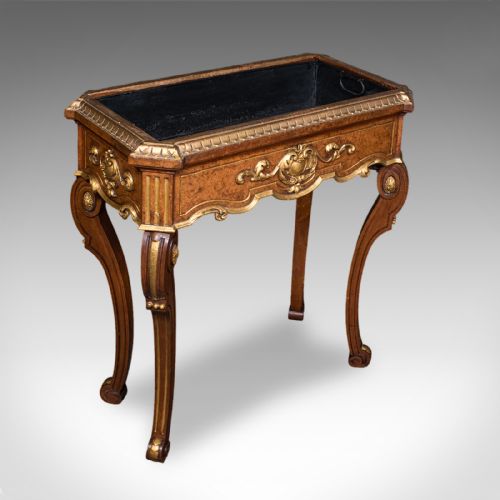
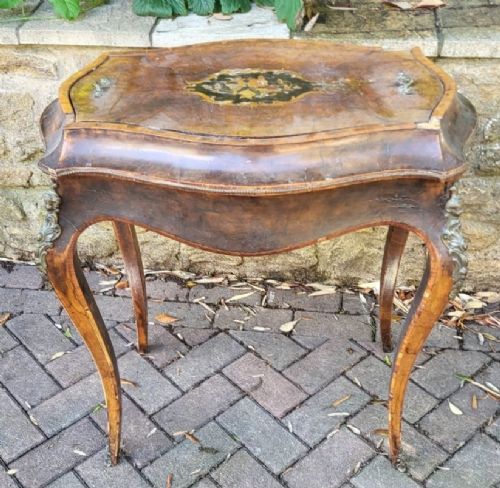
Timbers such as walnut, burr walnut, mahogany, and hardwood form the primary structural and decorative bodies of these pieces. Cabinet makers utilised rich grains, applying intricate inlay work and detailed hand-carved motifs to the wood.
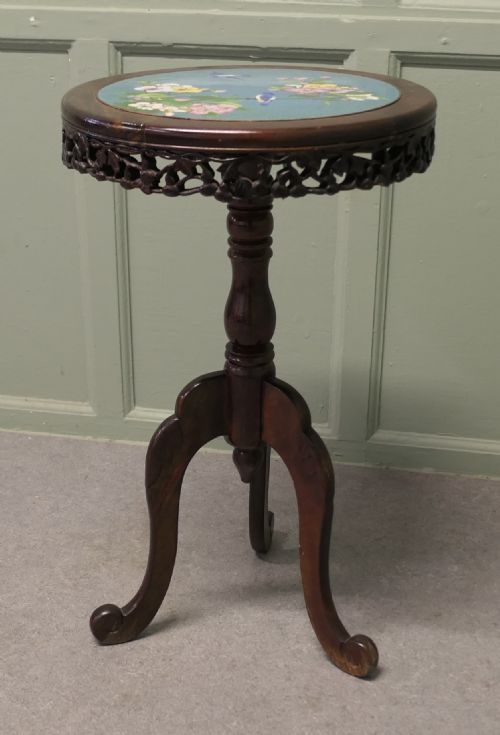
Metal elements including brass and ormolu integrate into the designs, particularly around planter liners, mounts, and structural accents. Cloisonné work and metal detailing further enrich specific styles like Chinoiserie tables.
Construction techniques combine traditional joinery with surface ornamentation, varying from French Rococo Revival curves to Anglo-Indian carved relief work. Lift-off lids and fitted liners are incorporated into the jardiniere and planter forms.
Listings feature walnut, burr walnut, mahogany, and teak materials across Victorian, Edwardian, and Regency periods.
What varies in quality
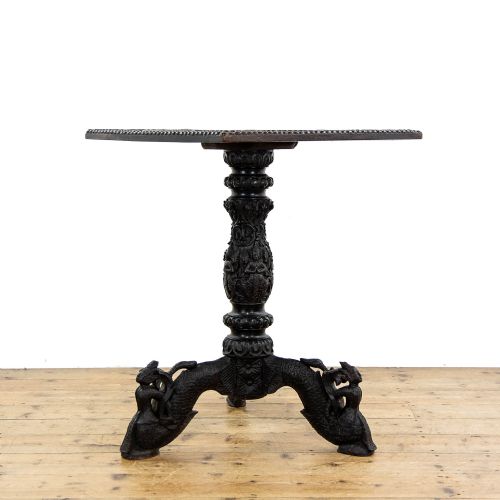
The standard of carving and inlay work dictates much of the visual distinction across these tables. Crisp, deep relief carving in hardwood separates finely executed oriental and Anglo-Indian pieces from simpler productions, while precise wood inlay demonstrates superior cabinet making.
The selection and treatment of timber significantly influence the character of each piece. Figured woods like burr walnut display rich natural patterning that elevates the overall presence of the furniture, compared to plain timber surfaces.
The Ornate Wooden Plant Table Glossary
- Jardiniere
- A decorative pot or stand for holding flowers and plants. These often feature waterproof liners or lift-off tops.
- Burr walnut
- Timber taken from the wart or growth on a walnut tree, showing a swirling, highly figured grain pattern. Cabinet makers prize it for decorative veneer work.
- Ormolu
- Gilded bronze or brass mounted onto furniture as decorative trim. It provides a bright metallic contrast against dark timber.
- Cloisonné
- An ancient technique for decorating metalwork objects with coloured glass paste placed within wire compartments. It appears on decorative table surfaces.
- Anglo-Indian
- Furniture made in India by native craftsmen for British residents during the colonial period, typically featuring dense carved foliage.
Ornate Wooden Plant Table: Frequently Asked Questions
What is a jardiniere table?
A jardiniere table is a specialised piece of furniture designed to hold potted plants and flowers inside an integrated tray or well. They often feature removable lids or liners to protect the wood from moisture.
These tables functioned as practical indoor garden displays in period homes, allowing greenery to sit at table height in reception rooms.
How do I style a plant table?
You can place a plant table in a corner, beside a window, or as a focal point in a hallway to display potted ferns or flowering plants. The elevated surface draws the eye upward and breaks up flat room layouts.
Pairing the timber tone with existing antique furniture helps the piece integrate naturally into a room scheme without overwhelming the space.
How do I identify a Victorian plant stand?
Victorian plant stands often display revival styles such as Rococo curves, dark walnut or mahogany timbers, and intricate inlaid details. Their proportions and joinery reflect mid-to-late nineteenth-century manufacturing methods.
Examining the underside, timber ageing, and hardware fixings helps confirm the period of manufacture.
What is Chinoiserie?
Chinoiserie is a European decorative style that reflects Chinese artistic traditions, popular in various forms throughout the eighteenth, nineteenth, and early twentieth centuries. It frequently incorporates motifs of birds, flowers, and landscapes.
Tables in this style combine European furniture forms with oriental decorative techniques like cloisonné or painted ornamentation.