



French Rococo Jardiniere
A French rococo jardiniere brings exuberant botanical display indoors through curved timber, gleaming mounts and chased metal.
French Rococo Jardiniere
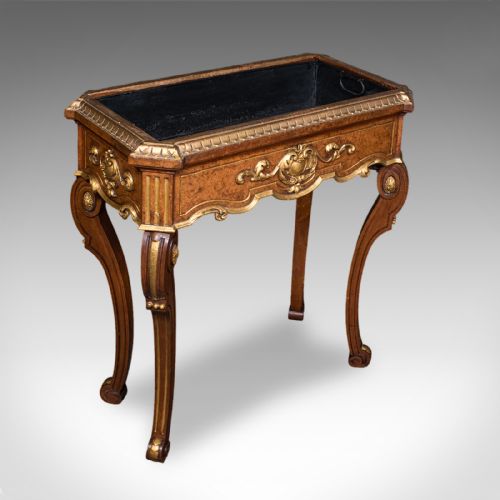
A French rococo jardiniere is essentially an elaborate plant stand, planter, or wine cooler designed to hold flowers or potted greenery inside a grand interior. When searching this phrase, a buyer encounters freestanding tables, centrepieces, and side stands created for decorative display in reception rooms.
The versions most commonly met on this page span the Victorian era, the mid-nineteenth century around eighteen-fifty and eighteen-eighty, and the broader nineteenth century. These objects typically take the form of jardiniere tables or planter stands equipped with waterproof liners or deep basins.
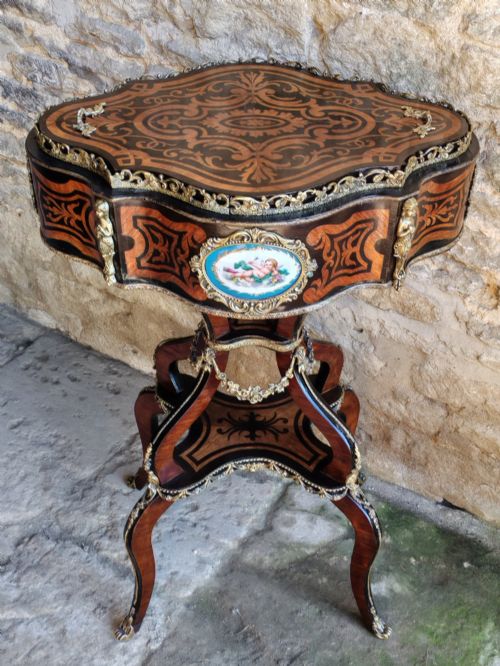
Stylistically, the pieces draw heavily upon French Rococo Revival, Napoleon III, Louis XV style, and French chateau aesthetics. Makers channel these historical motifs through serpentine forms, asymmetrical scrollwork, and organic floral carving.
How they were made
Makers constructed the carcases of these jardinieres using timber frames veneered in figured woods such as kingwood, walnut, rosewood, burr walnut, and satinwood, frequently enhanced by intricate marquetry. Giltwood and carved walnut also appear prominently among the structural materials, providing a rich, textured foundation for the design.
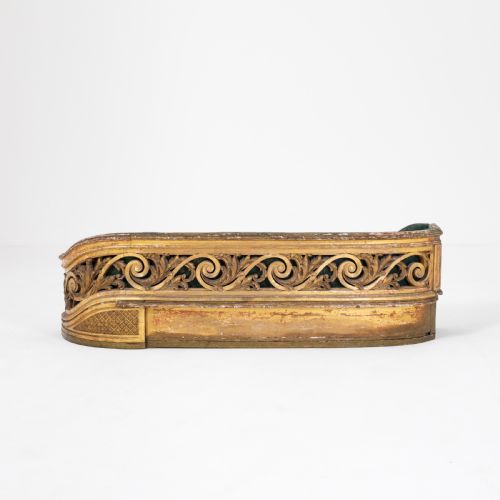
Gilt metal mounts, brass, ormolu, and bronze define the decorative hardware and liners of these pieces, echoing the characteristic asymmetry of the rococo revival. These cast and chased metallic elements frame the wooden bodies and accentuate the sweeping, curved contours of the stands.
The site records nineteenth-century planter stands alongside centrepieces and wine coolers from eighteen-fifty onwards.
What varies in quality
Quality in a French rococo jardiniere rests upon the crispness of the carving and the weight and chasing of the metal mounts. Finer examples display deeply sculpted acanthus leaves, fluid scrollwork, and precisely fitted veneers that follow every serpentine turn of the wood.
The choice of timber and the complexity of the marquetry further separate standard production from superior pieces. Workshops utilising figured burr walnut, kingwood, or satinwood with detailed gilt bronze fittings achieved a much higher level of visual depth than those relying on simpler brass and plain walnut.
The French Rococo Jardiniere Glossary
- Ormolu
- Gilt bronze ornamentation applied to furniture and decorative objects. This technique involves coating cast bronze with a finely ground gold-mercury amalgam and heating it to drive off the mercury.
- Marquetry
- Decorative veneer work arranged in pictorial or geometric patterns on a wooden surface. Craftsmen cut thin pieces of contrasting timber and assemble them to create elaborate surface designs.
- Jardiniere
- An ornamental stand, bowl, or table designed to hold growing plants or cut flowers. These objects often include a metal liner to protect the surrounding wooden structure from moisture.
French Rococo Jardiniere: Frequently Asked Questions
What is a jardiniere table?
A jardiniere table combines a decorative occasional table with a built-in waterproof well or basin designed to display live plants indoors.
These pieces function simultaneously as elegant surface furniture and as ornamental planters for parlours and drawing rooms.
How were these stands used?
Original owners placed these stands in reception rooms to bring living greenery and fresh floral arrangements directly into formal living spaces.
Some versions with deeper wells also doubled as wine coolers during dining occasions by holding ice and bottles.
How do I identify the period?
Nineteenth-century pieces often reflect revival styles such as Napoleon III or Louis XV through heavy gilt metal mounts and serpentine walnut carcases.
Examining the construction methods, secondary framing timbers, and the hand-chasing of the bronze mounts helps confirm nineteenth-century manufacture.