
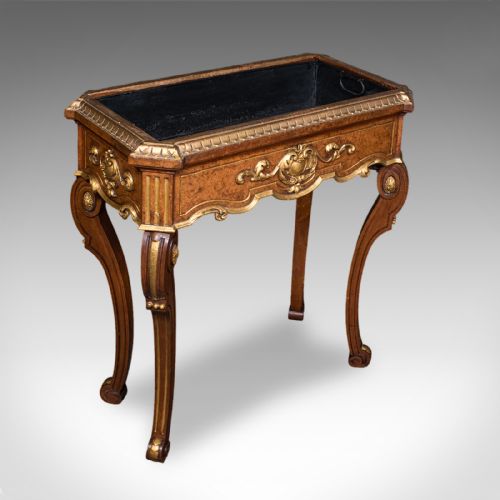
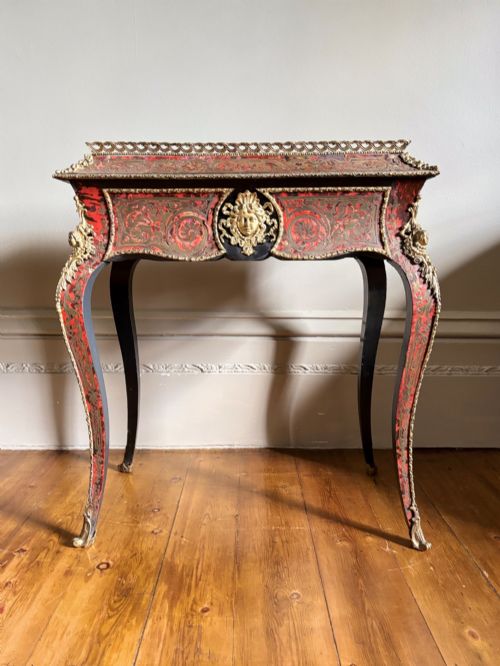


Nineteenth Century Jardiniere Table
A nineteenth century jardiniere table brings living greenery directly into the principal rooms of a house, combining a functional plant stand with decorative display.
Nineteenth Century Jardiniere Table
A nineteenth century jardiniere table combines a decorative display surface or container with the sturdy construction of a plant stand, designed to house potted plants and floral arrangements indoors. These pieces frequently appear in French styles like Napoleon III and French Rococo Revival, alongside English iterations from the Regency, William IV, and Victorian periods.
The primary forms on this page include jardiniere stands, side tables, planter tables, and centrepieces, often featuring removable metal liners to catch water from the plants. Walnut, mahogany, and burr walnut serve as the dominant timbers, frequently paired with marble tops or intricate marquetry inlay.
What varies in quality
The refinement of the marquetry and the precision of the brass or ormolu mounts separate exceptional examples from standard production pieces. Finely cast metalwork and crisp, detailed wood inlay demonstrate the hand of a skilled workshop.
The choice of materials dictates the standing of the piece, with dense burr walnut, figured mahogany, and thick inset marble representing superior craftsmanship. Original metal liners and sound structural joinery indicate careful preservation and high initial manufacture.
Period styles represented across the inventory span Georgian, Regency, William IV, Victorian, and Napoleon III eras.
The Nineteenth Century Jardiniere Table Glossary
- Jardiniere
- A decorative container or stand for holding plants and flowers, often manufactured from ceramic, metal, or wood. These vessels form the central function of the tables listed here.
- Ormolu
- Gilt bronze mounted on furniture or decorative objects, popular in French nineteenth century design. This technique provides bright metallic highlights against dark hardwoods.
- Marquetry
- Inlaid wood veneers arranged in decorative patterns or pictures on a furniture surface. Craftsmen utilise various coloured timbers to create intricate floral or geometric designs.
- Boulle
- A style of marquetry using brass and tortoiseshell inlaid into cabinetwork, named after a French royal cabinetmaker. It appears on elaborate nineteenth century pieces.
Nineteenth Century Jardiniere Table: Frequently Asked Questions
What is a nineteenth century jardiniere table used for?
These tables were originally designed to hold potted plants, ferns, and floral arrangements inside nineteenth century reception rooms and parlours.
The waterproof liners protected the fine wood surfaces from moisture while allowing greenery to decorate living spaces.
Can I use these tables as standard side tables?
Many of these pieces feature removable inserts or solid marble tops that convert the plant stand into a functional lamp table or surface for drinks.
Be mindful of the weight restrictions and surface materials when placing items other than plants upon them.
How do I identify French styles from English ones?
French pieces often display ornate gilt metal mounts, kingwood veneers, and elaborate marquetry typical of Napoleon III and Rococo Revival aesthetics.
English examples from the Regency and Victorian eras generally favour heavier mahogany or walnut construction with simpler lines and brass gallery details.