
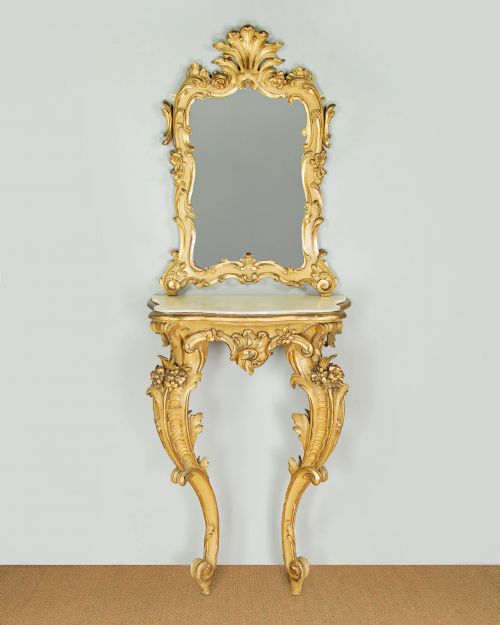


Ornate Wall Table
An ornate wall table brings theatrical presence to a hallway, often paired with a matching mirror to anchor the room.
Ornate Wall Table
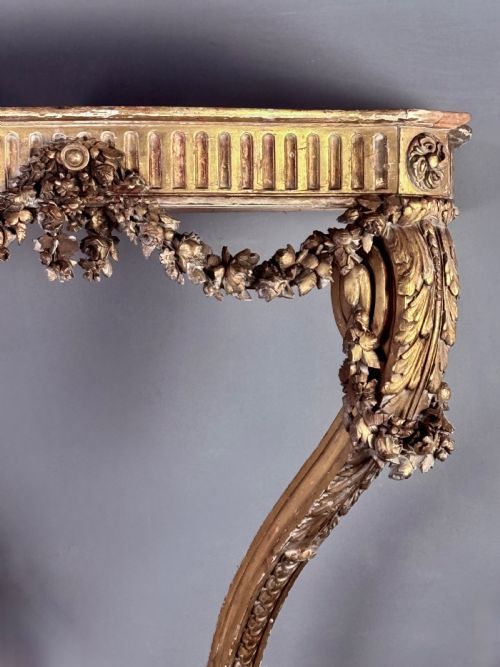
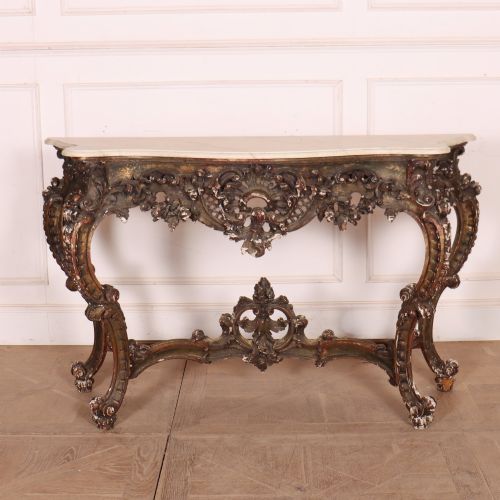
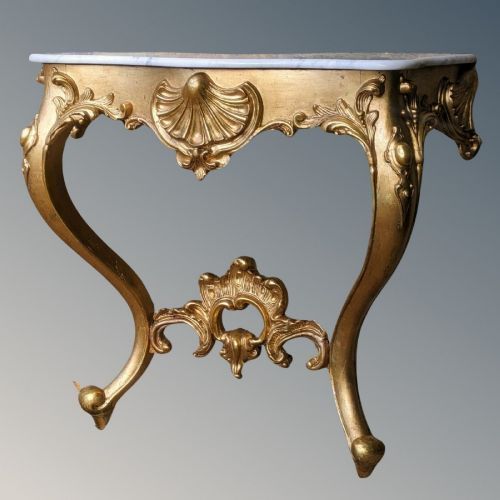
When you search for an ornate wall table, you encounter console tables designed to mount against a wall or rest on sturdy front legs while securing to the structure behind them. These items frequently appear from the eighteenth and nineteenth centuries, carrying heavy ornamentation suited for formal reception rooms.
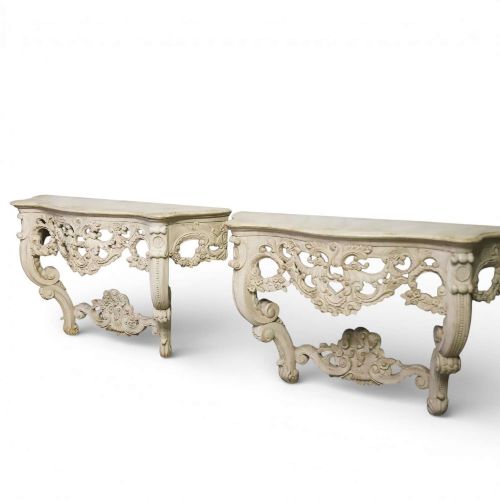
The versions most common on this page lean heavily into French Rococo and Baroque revivals, displaying elaborate carvings, serpentine fronts, and integrated mirror sets. Many examples incorporate heavy marble tops resting on carved wooden frames.
Alongside standard console tables, listings include side tables and pier tables designed for specific architectural gaps between windows. These forms prioritize decorative impact over everyday utility, reflecting grand interior design traditions.
Materials and construction
Craftsmen shaped these tables primarily from solid hardwoods like walnut, rosewood, and carved wood, building complex substrates to receive thick applications of gesso and gold leaf. Giltwood surfaces required meticulous priming and sizing before artisans laid delicate gold leaf sheets across the carved relief.
Heavy white Carrara and coloured marble slabs formed the tops, cut to follow the serpentine or rectilinear contours of the wooden frame below. These stone tops added substantial weight, demanding robust joinery and wall fixings to support the heavy load safely.
Watch for watchful putti and fierce rams guarding the edges of your mahogany.
Judging quality and craftsmanship
The depth and crispness of the hand-carving dictate the artistic merit of the piece, separating fluid, deeply undercut foliage from shallow, mechanical moulding. Master carvers created naturalistic asymmetry in Rococo examples, whereas lesser pieces show rigid symmetry and repetitive stamping.
The integrity of the original gilding and the quality of the marble slab establish the preservation standard. Tables retaining their original fire-gilt or gold leaf surfaces over gesso display greater visual cohesion than later overpainted or stripped alternatives.
Felix-Alfred Ternisien
The Ornate Wall Table Glossary
- Console table
- A table designed to be fixed against a wall, frequently supported by front legs with the rear secured to the masonry. These pieces often feature elaborate apron carvings beneath the top.
- Giltwood
- Timber that has been coated with gold leaf over a prepared gesso ground. This finish provides a bright, reflective surface characteristic of formal antique furniture.
- Gesso
- A plaster mixture applied to wood surfaces to create a smooth base for gilding and fine carving. It allows artisans to shape intricate relief details before applying gold leaf.
- Pier table
- A low table specifically designed to stand against the wall beneath a pier glass or wall mirror. They serve as focal points in traditional drawing rooms.
- Serpentine front
- A furniture front characterised by a curving line that bulges outward in the centre and recesses inward at the sides. This contour requires precise joinery and stonework.
Ornate Wall Table: Frequently Asked Questions
How do you secure an ornate wall table?
Most antique console tables were built to rely partially on the wall for stability, using brackets or fixings attached to the rear frame.
Installers anchor the upper structure directly into wall studs or masonry to ensure the heavy marble top remains stable and secure during daily use.
Why do many tables include matching mirrors?
Makers designed console tables and wall mirrors as unified sets to maximise light distribution and visual symmetry in formal nineteenth-century interiors.
Placing the mirror directly above the table creates a balanced architectural focal point that reflects natural light across the room.
Are marble tops original to these tables?
Original marble tops were cut specifically to match the unique serpentine or rectilinear profile of each wooden base. Examining the underside reveals matching grain alignment and historical wear consistent with the age of the frame.
Replacements often show modern machine cutting marks or lack the accumulated patination found on antique stone.
How do I care for giltwood surfaces?
Giltwood requires gentle maintenance using a soft, dry ostrich feather duster to remove surface debris without disturbing delicate leaf layers. Avoid liquid cleaners, polishes, and modern chemical sprays, which can dissolve the ancient gesso and gold leaf bindings.