

Ornate Gold Framed Landscape
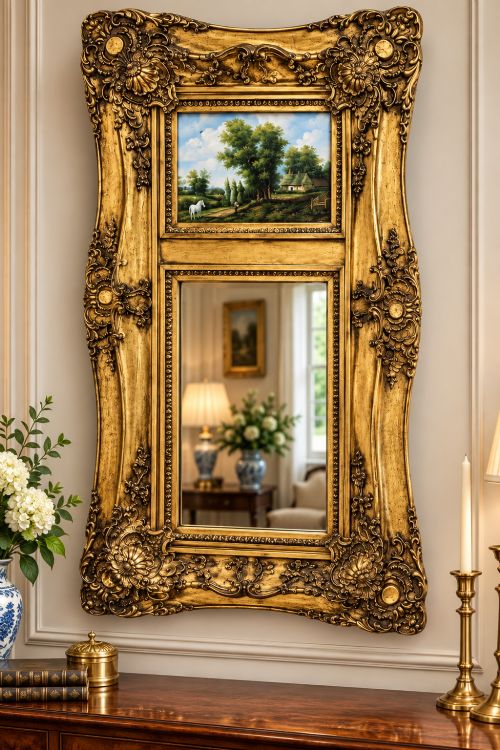
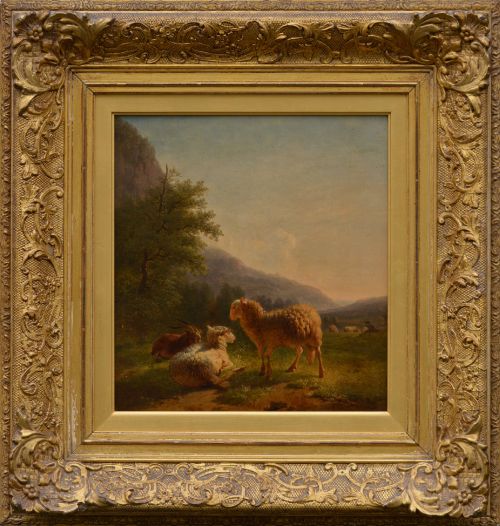
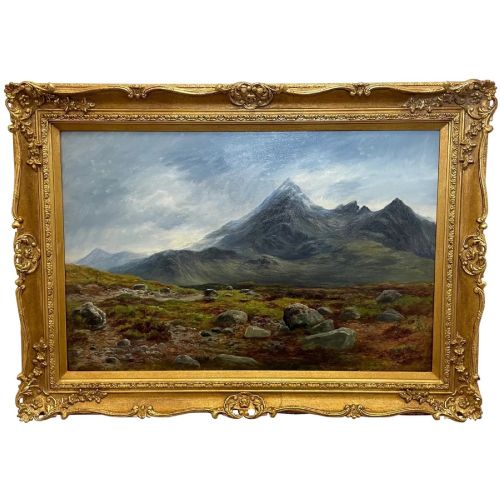
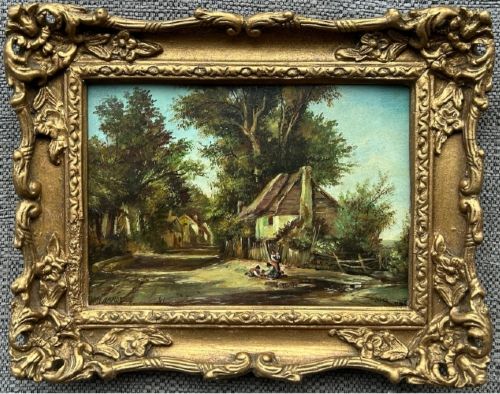
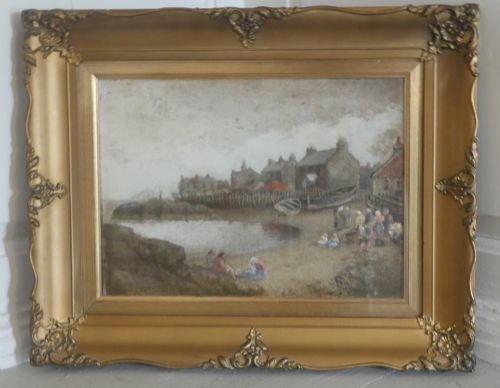
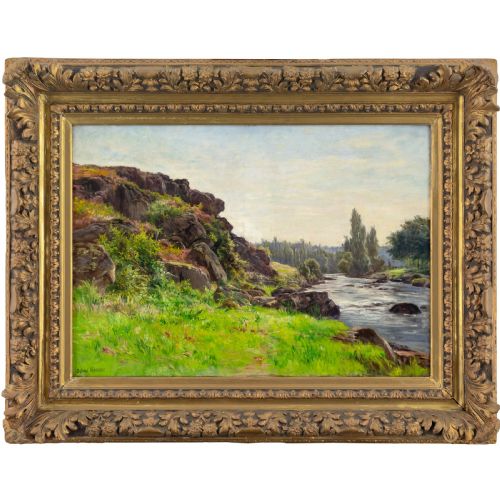
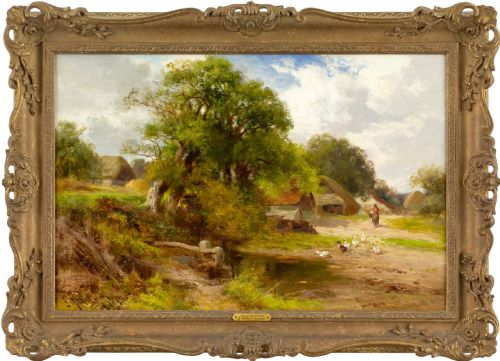
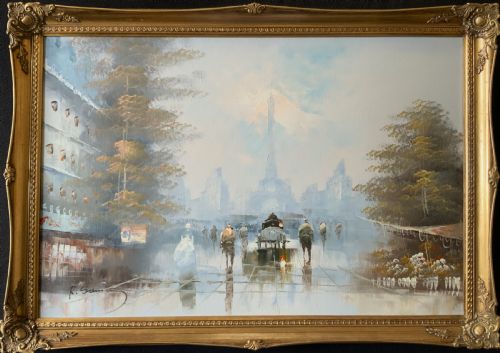
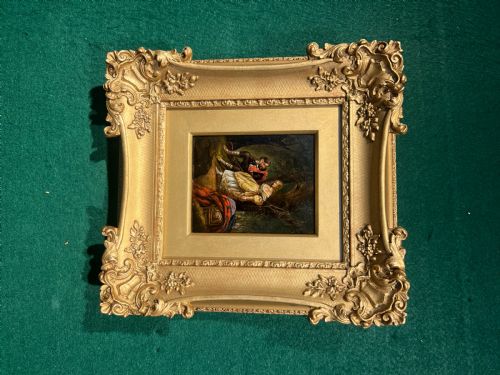
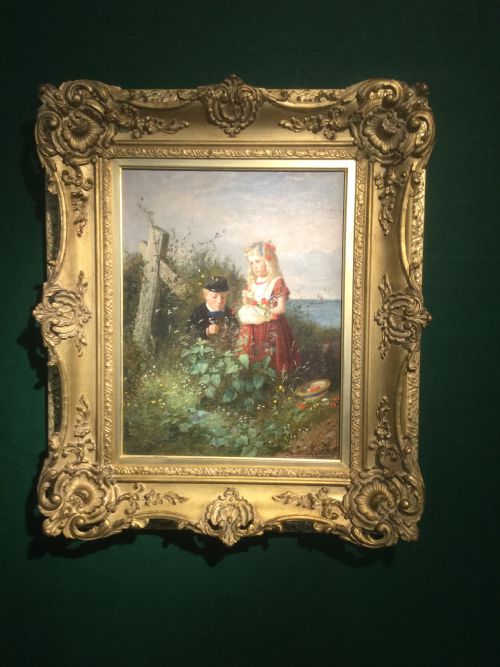
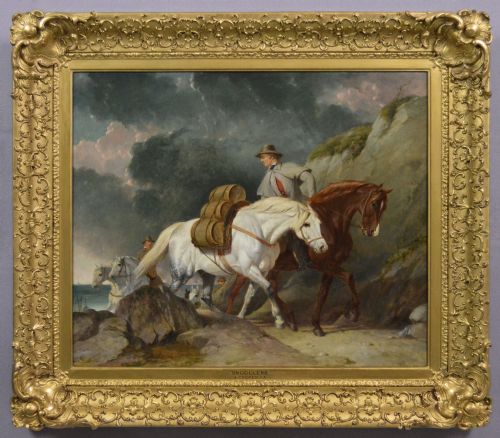
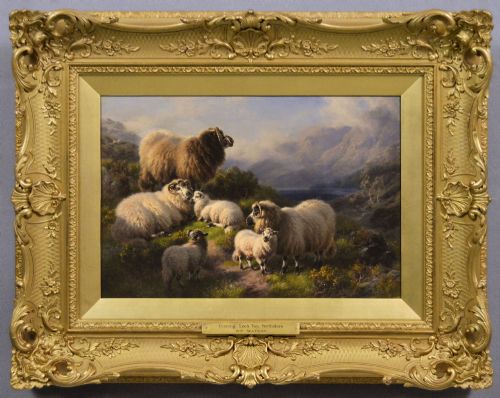
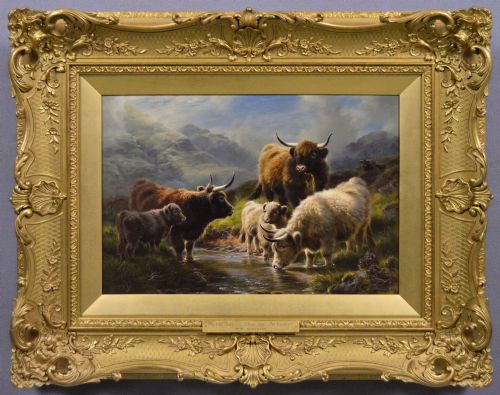
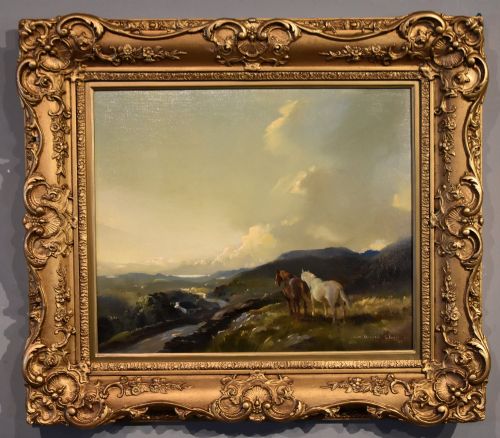
An ornate gold framed landscape brings together oil paint on canvas and gilded wood to capture scenes of the countryside, riverbanks and mountains.
Ornate Gold Framed Landscape
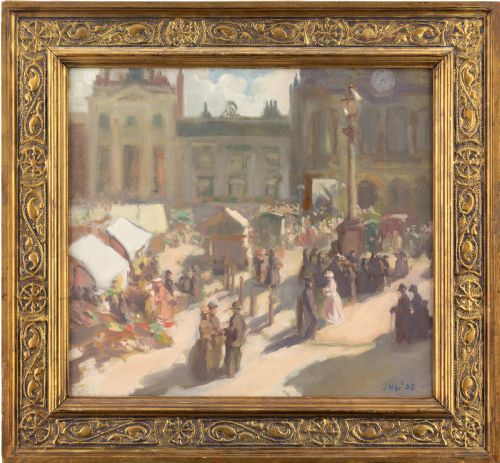
An ornate gold framed landscape typically presents a pastoral, maritime or mountainous view executed in oil paint upon canvas or panel. Buyers searching for an ornate gold framed landscape will encounter Victorian, Impressionist and Dutch School compositions produced across the nineteenth and twentieth centuries.
The selections span rural cottages, Scottish highland scenes, and Parisian street views housed within elaborate surrounds. These items combine pictorial depth with heavy metallic embellishment, reflecting the aesthetic preferences of 19th Century Romanticism and subsequent artistic movements.
Materials and construction
The physical objects rely on oil paint applied to canvas, board or panel, paired with structural supports of wood and gesso. Artisans built up the decorative surrounds using gesso applied over a wooden base, which was then finished with gold leaf or giltwood to achieve a brilliant metallic sheen.
Painters utilised layered pigments to build atmospheric depth in skies and water, while frame makers sculpted floral and scroll motifs into the wet gesso. This combination of fine brushwork and heavy moulding ensures the visual weight of the frame complements the painted landscape within.
The periods represented span from the 1860s through the mid-twentieth century.
Assessing the pieces
Quality within an ornate gold framed landscape rests upon the harmony between the artistry of the painting and the craftsmanship of the mount. Superior examples display confident brushwork, secure canvas tension and deep, well-modelled gesso ornamentation that remains firmly adhered to the wooden substrate.
Lesser items may exhibit flat, mechanical paint application or replacement frames lacking the crisp detail of period mouldings. The relationship between the visual impact of the scenery and the integrity of the original gilt finish dictates the standing of each piece.
Eugène Verboeckhoven·William Beattie-Brown·William Howard Hardy·Gabriel Mathieu·John Horace Hooper·John Hodgson Lobley·Paul Désiré Trouillebert·Vernon DeBeauvoir Ward·William Henry Williamson·Johannes de Haas·William Arthur Breakspeare·André Prévot-Valéri·Pieter Cornelis Dommersen·Thomas Edward Roberts·John Frederick Herring Jnr·William Mellor·Henry John Yeend King·Stuart Lloyd·Adrian Van Porten·Clarence Henry Roe·Eugene Joseph Verboeckhoven·Frank Hider
The Ornate Gold Framed Landscape Glossary
- Gesso
- A plaster-like mixture applied to wood frames to create a smooth surface for gilding. This material is carved or moulded into intricate decorative patterns before gold leaf is applied.
- Giltwood
- Wood that has been coated with gold leaf or a gold-coloured finish. It provides the reflective, opulent border characteristic of these historical frames.
- Impressionism
- An art movement focusing on light, loose brushwork and everyday subject matter. Works from this tradition often capture shifting outdoor conditions in landscapes.
- Oil on Canvas
- Pigments bound in oil medium and painted upon stretched fabric. This technique allows for rich colour blending and durability over centuries.
Ornate Gold Framed Landscape: Frequently Asked Questions
How do I clean an antique gilt frame?
Gilt surfaces require very gentle dusting with a soft, dry brush to avoid disturbing the delicate gold leaf layer. Moisture and chemical cleaning agents can strip the gesso and should be strictly avoided.
For stubborn dust trapped within carved crevices, a dry cotton bud used with light pressure helps clear the recesses. Professional conservation is recommended if the gilding shows active flaking or detachment.
Are these paintings always signed by the artist?
Many works bear visible signatures or monograms, often placed in the lower corners of the canvas or panel. Others remain unattributed or are classified by school rather than bearing an individual master's hand.
Unsigned pieces frequently rely on stylistic markers, subject matter, and period framing techniques to indicate their origin and approximate date of creation.
What is the difference between gesso and carved wood frames?
True carved wood frames have their decorative patterns cut directly into the timber substrate by hand. Gesso frames utilise a moulded plaster mixture built up over a simpler wooden foundation to achieve high-relief ornamentation.
Both methods were common in the nineteenth century, though gesso allowed for rapid reproduction of elaborate scrollwork and floral motifs.
How should I hang a heavy framed landscape?
The substantial weight of wood, gesso, and canvas requires secure fixings anchored directly into wall studs or masonry. Standard picture wire should be inspected to ensure it matches the mass of the heavy surround.
Positioning the artwork away from direct sunlight and sudden temperature shifts protects both the oil paint and the underlying wooden frame from cracking.