
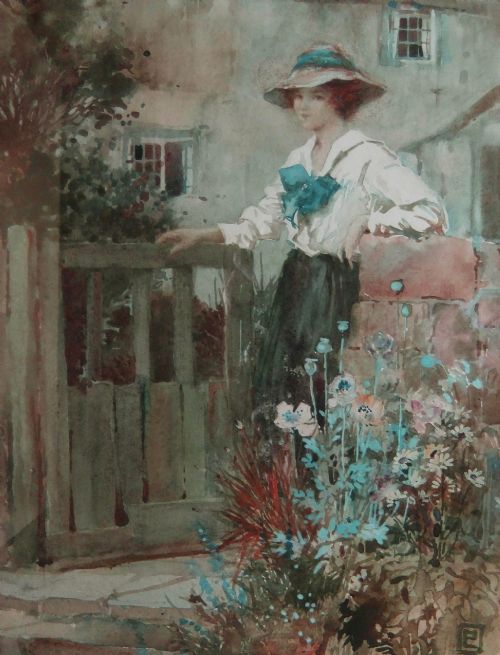


Impressionist Cottage Landscape
Impressionist cottage landscape works capture rural dwellings and gardens through loose brushwork and atmospheric light.
Impressionist Cottage Landscape
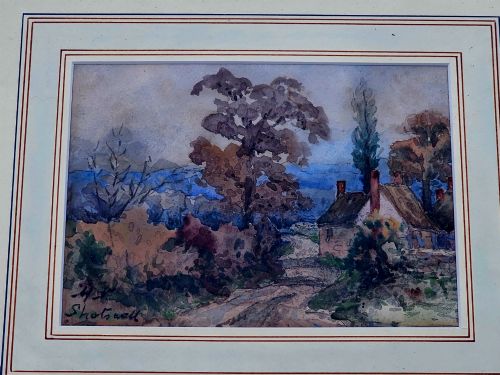
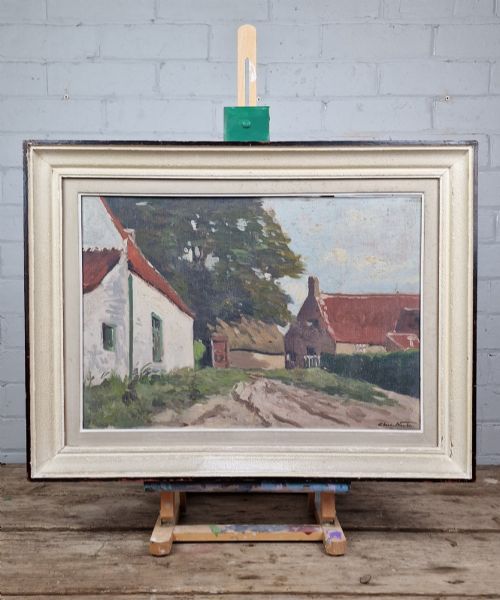
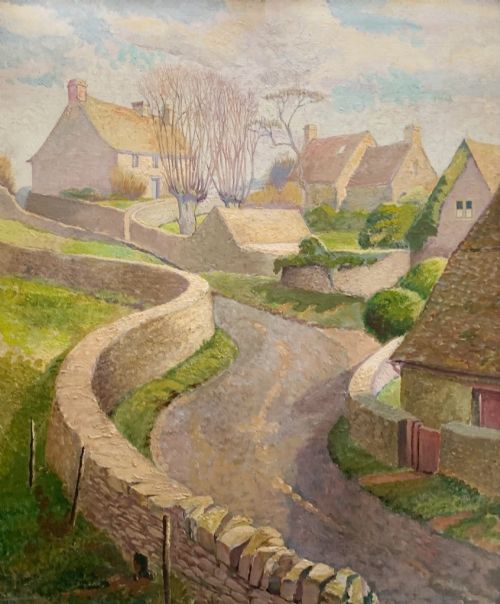
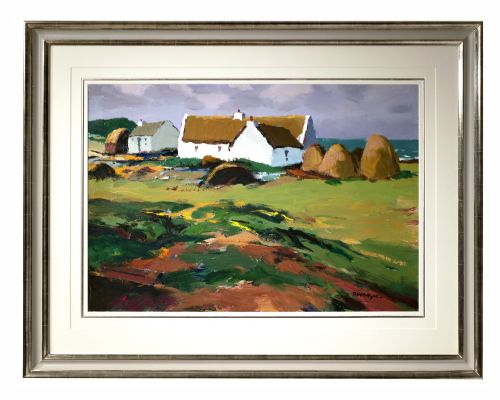
An impressionist cottage landscape depicts rural homes, gardens, and farmsteads through loose brushwork and atmospheric light. When searching for an impressionist cottage landscape, buyers encounter works spanning the nineteenth century through the mid-twentieth century.
The selection includes British Impressionism, Post-Impressionism, and Scottish Impressionism alongside continental European examples. Paintings range from intimate watercolor studies of walled gardens to larger oil works showing farmsteads and country lanes.
Common subjects feature specific regional views, from Yorkshire and Cumberland to French and Belgian countryside scenes. Artists focus on everyday rural architecture framed by seasonal foliage, apple blossom, or riverbanks.
Materials and methods
Artists utilised oil paint on canvas, board, and panel to build rich textures and vibrant colour relationships. Watercolours on paper provide lighter, more immediate impressions of gardens and cottage gates.
Mixed media appears alongside traditional oil and watercolour mediums, employing varied application techniques to capture natural light. Canvases and boards often display visible brushstrokes characteristic of impressionist and post-impressionist methods.
Listings feature canvases, boards, papers, and panels spanning Victorian times to mid-century modernism.
Quality variations
The strength of an impressionist cottage landscape rests in the confidence of the brushwork and the management of natural light across the scene. Stronger examples demonstrate a clear command of atmospheric perspective, rendering foliage, stone, and sky with economy and vitality.
Compositional balance separates routine topographical records from compelling artistic interpretations. Pieces with established provenance or attribution to recognised practitioners within British, Scottish, or continental schools carry distinct art historical interest.
Charles Houben·Donald McIntyre·Percy Lancaster·John Horace Hooper·Mario Pinetti·Reginald Grange Brundrit·Arthur Tucker·Owen Bowen·Ernest Higgins Rigg·Kershaw Schofield·Lilian Stannard·Helmut Reuter·John Falconar Slater·Robert Gemmell Hutchinson·Pierre Emmanuel Eugene Damoye·David Woodlock·Herbert Royle·T.B. Garvie·James William Stamper·William Greaves·Fred Lawson·George Frederick Nicholls·Yeend King·Amédée Degreef
The Impressionist Cottage Landscape Glossary
- British Impressionism
- A movement adopting French plein-air techniques to capture domestic light and landscapes using broken brushwork.
- Post-Impressionism
- An extension of impressionist methods emphasising symbolic colour and heavier painterly structure.
- Oil on Board
- A painting executed on a rigid wooden or composite board rather than stretched woven fabric.
- Watercolour
- A paint medium utilising water-soluble pigments applied to paper surfaces for translucent effects.
- Provenance
- The documented history of ownership associated with a work of art.
Impressionist Cottage Landscape: Frequently Asked Questions
What periods do these paintings cover?
The works span from the nineteenth century through the Victorian era and into the mid-twentieth century. Dates range from early nineteenth-century studies up to mid-century examples from the 1950s and 1960s.
Most pieces cluster around the late nineteenth and early twentieth centuries, reflecting the height of impressionist plein-air painting across Britain and Europe.
What surfaces were used for these artworks?
Artists painted on stretched canvas, wooden boards, panels, and heavy paper sheets. Oil paint appears frequently on canvas and board supports.
Watercolour paintings rely on paper surfaces, sometimes supported by board or card mounts for framing.
How should I frame an antique watercolour?
Watercolours require conservation framing behind glass to protect the paper and pigments from ultraviolet light and moisture. Acid-free window mounts keep the paper from touching the glass directly.
Keeping the work away from direct sunlight preserves the delicate washes characteristic of nineteenth and early twentieth-century pieces.
How do I identify regional British scenes?
Many paintings include titled inscriptions on the reverse, stretcher bars, or mounts noting specific locations like Yorkshire, Cumberland, or Leeds. Artist signatures and exhibition labels provide further clues to geographic origin.
Local architectural styles, such as northern stone cottages or southern walled gardens, also point to specific regions.