




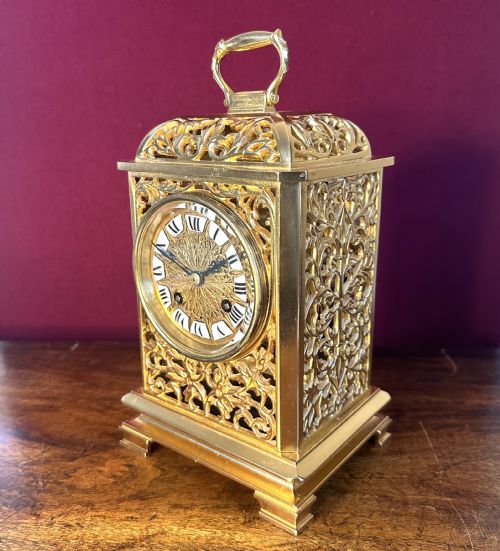


Ornate Gilt Desk Clock
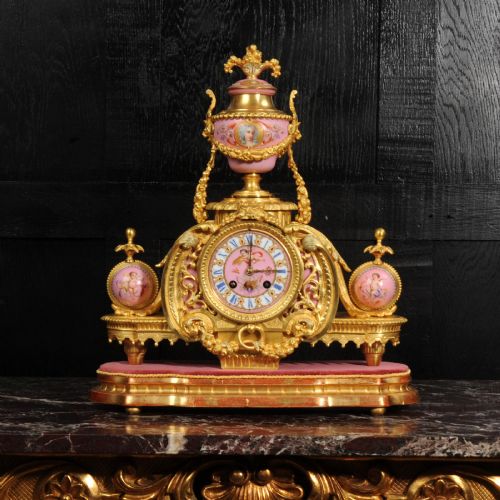
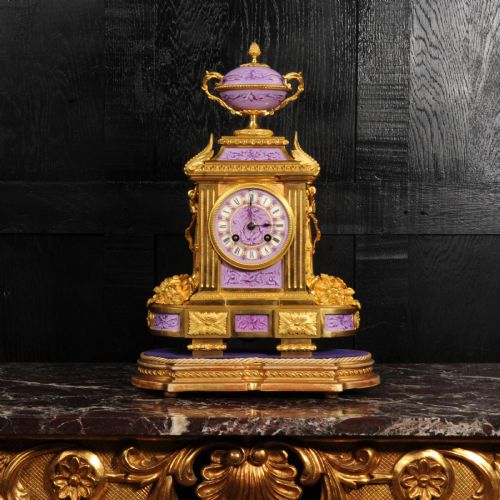
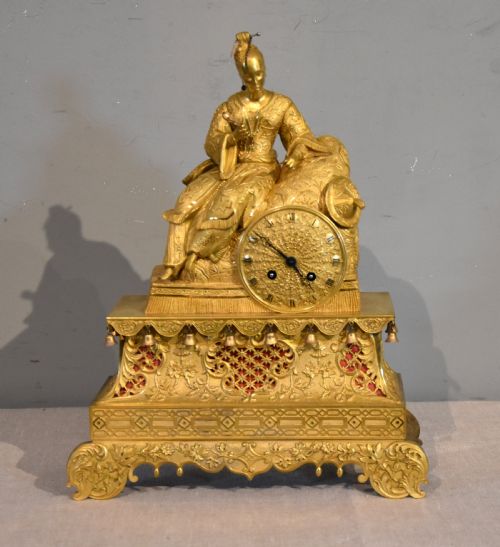
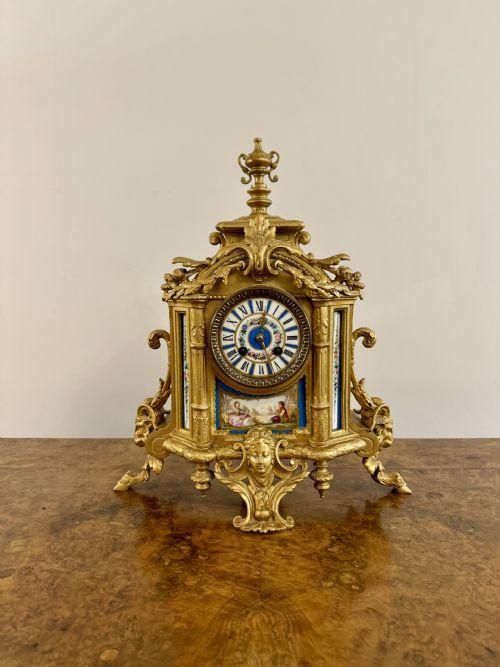
An ornate gilt desk clock brings together polished metal and intricate casting from the nineteenth century to sit upon a surface.
Ornate Gilt Desk Clock
An ornate gilt desk clock encompasses several forms designed for interior surfaces, ranging from heavy mantelpieces to compact portable timepieces. The selection leans heavily toward French production from the nineteenth century, reflecting styles from Rococo Revival and Second Empire aesthetics.
Buyers encounter carriage clocks housed in cast gilt cases alongside larger mantel clocks and porcelain-mounted designs. These pieces often incorporate decorative side panels, enamel dials, and architectural brass mounts that define their period character.
Materials and construction
Cases incorporate glass panels, marble bases, and cast decorative elements assembled to house mechanical movements. Engraved details and champlevé enamel work show the precise hand-finishing applied to these housings.
Listings for ornate gilt desk clocks span the Victorian era through the early twentieth century, featuring materials such as Sèvres porcelain, marble, and ormolu.
Judging the standard
Quality reveals itself in the crispness of the cast ornamentation and the depth of the gilding across the metal surface. Pieces displaying finely chased bronze work or hand-painted enamel details stand apart from simpler production.
The integration of materials, such as the alignment of porcelain plaques within an ormolu mount or the clarity of glass sides in a carriage clock, separates standard examples from the finest items.
Achille Brocot·William Payne·John Barwise·Samuel Marti·Henri Jacot·Luxor
The Ornate Gilt Desk Clock Glossary
- Ormolu
- Finely ground high-carat gold applied to a bronze base using a mercury amalgamation technique, or later electroplating. It provides a warm, lasting lustre characteristic of French nineteenth-century pieces.
- Carriage clock
- A small, portable spring-driven timepiece developed for travel, typically fitted with a carrying handle and glass panels. They often reside in brass or gilt cases.
- Champlevé
- An enamelling technique where troughs or cells are hollowed out in the metal surface and filled with vitreous enamel before firing. It creates decorative patterns across brass and gilt bronze.
- Rococo Revival
- A nineteenth-century design style drawing on eighteenth-century asymmetrical scrollwork, naturalistic shell motifs, and curving organic forms. It appears frequently on mantel clock cases.
- Twin fusee
- A mechanical movement using a conical pulley and chain to equalise the pull of the mainspring as it runs down. This mechanism supports accurate timekeeping.
Ornate Gilt Desk Clock: Frequently Asked Questions
How do I wind a mechanical desk clock?
Most mechanical desk and mantel clocks utilise a key inserted into the winding arbours on the dial or back plate. Turn the key gently until resistance indicates the mainspring is fully tensioned.
Take care not to overwind the mechanism, as this can damage the spring. Ensure you know whether the clock has a time-only movement or a striking train that requires a separate wind.
What is a crystal regulator clock?
A crystal regulator is a mantel clock featuring glass panels on all four sides supported by a brass or gilt frame. This design allows light to pass through the case and reveals the pendulum and movement.
These models commonly date from the late nineteenth and early twentieth centuries. They often feature enamelled dials and delicate mercury-filled pendulums designed to compensate for temperature changes.
How do I tell an original Victorian gilt clock from a later copy?
Examine the casting quality of the metal case, the weight of the bronze or brass, and the method of construction. Nineteenth-century pieces typically feature hand-chased details, traditional screw fasteners, and age-appropriate wear to the gilding.
The mechanical movement should show appropriate signs of age and maker stamps corresponding to the period. Modern reproductions often use lighter base metals and simplified casting techniques.
Where should I place a gilt brass clock in my home?
Position the clock on a stable, level surface away from direct sunlight, draughts, and damp areas. Mantelpieces, desks, and console tables offer suitable platforms depending on the size of the piece.
Because many nineteenth-century movements rely on a pendulum, the surface must remain flat to ensure the beat remains even and the clock keeps accurate time.