
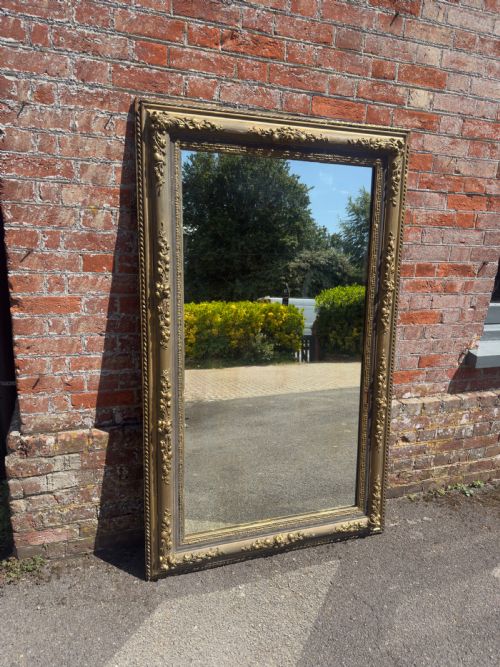


Ornate French Floor Mirror
An ornate french floor mirror brings height and reflected light to a room, drawing the eye with carved gilt frames and generous proportions.
Ornate French Floor Mirror
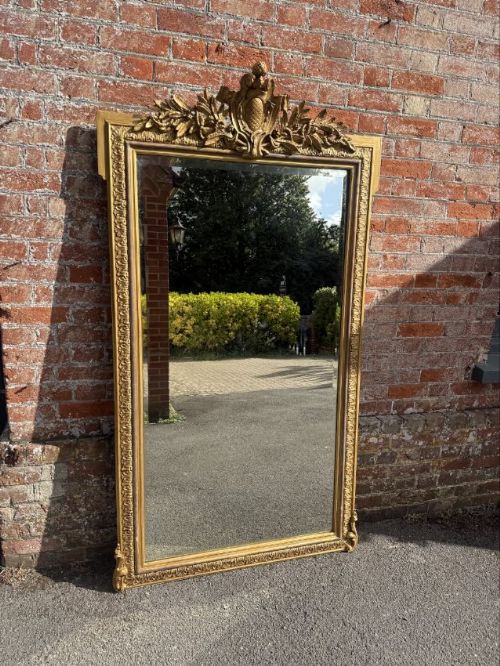
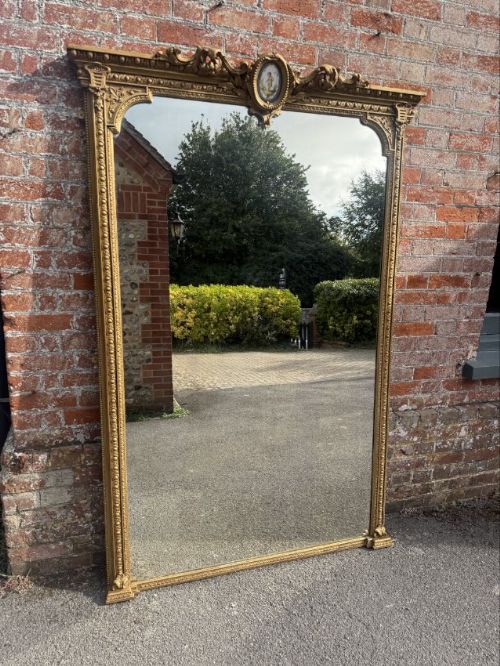
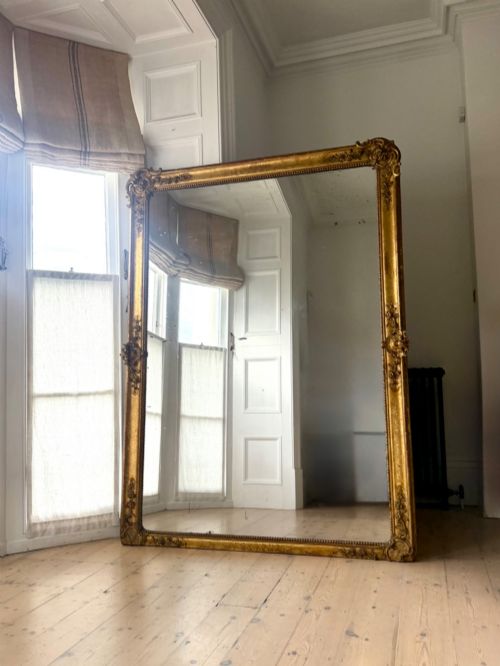
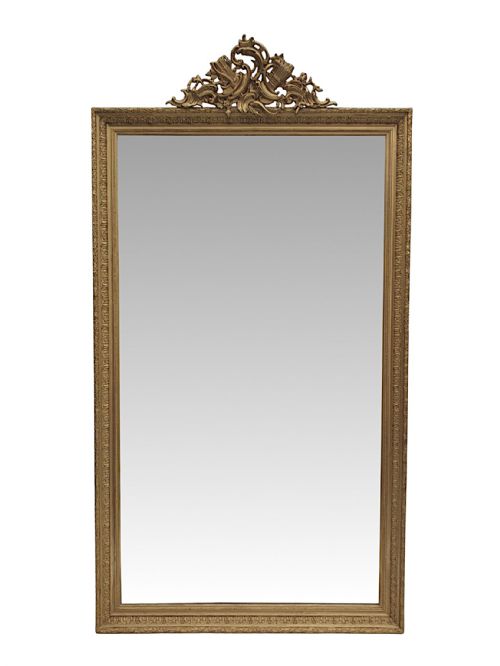
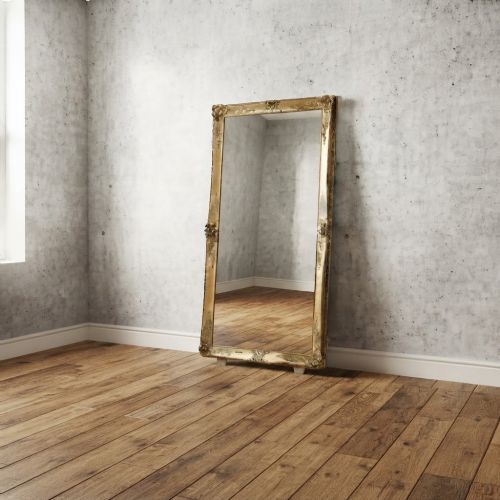
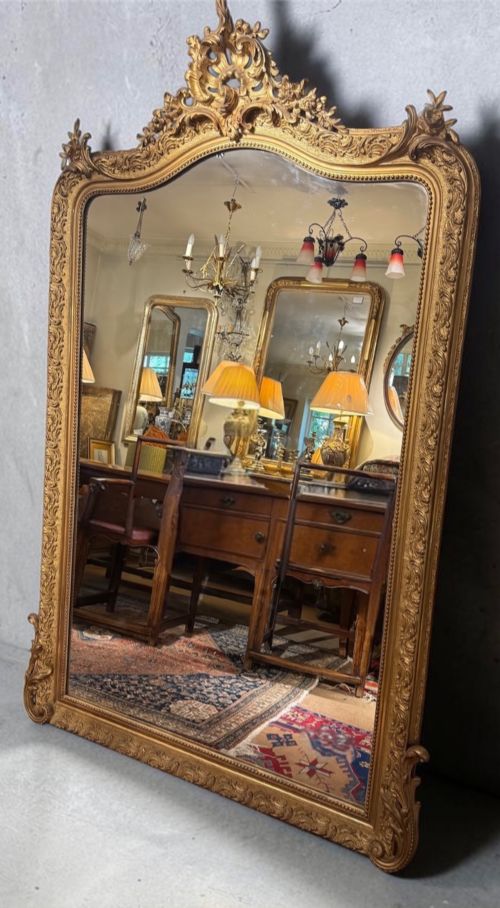
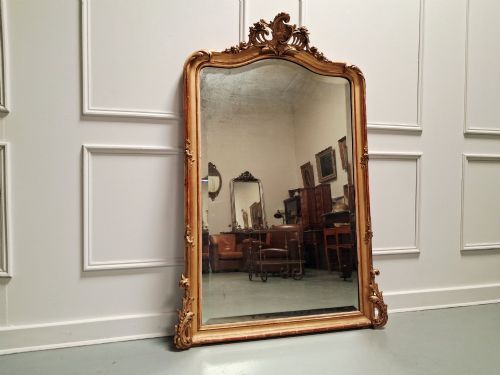
An ornate french floor mirror stands tall as a leaner or dressing glass, designed to reflect light and anchor a grand interior space. These pieces span the nineteenth and early twentieth centuries, appearing in styles from French Rococo and Louis XVI to Napoléon III and the French Chateau aesthetic.
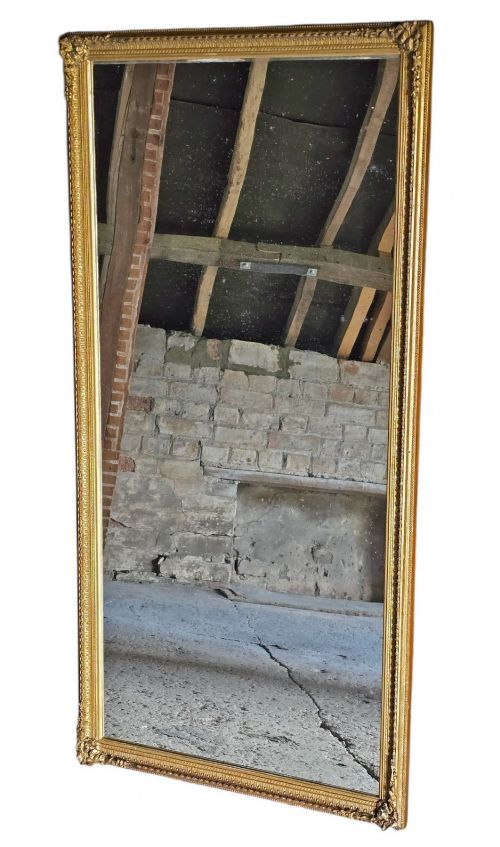
Most examples encountered here are large full-length mirrors intended to rest directly against a wall rather than hang from brackets. The forms include cheval mirrors, overmantel mirrors adapted for floor use, and pier mirrors built with impressive vertical scale.
Materials and construction
The frames rely on carved wood foundations built from timber such as mahogany and walnut, layered with gesso and plaster to build up deep ornamental relief. Artisans then applied gold leaf, silver, or paint to finish the surface.
Early examples feature genuine mercury glass panels that present a characteristic soft, mottled reflection, while later pieces incorporate standard silvered glass plates set securely within the heavy timber and composition frames.
Listings span the nineteenth and early twentieth centuries, featuring glass, gesso, giltwood, wood, plaster, and gold leaf in French Chateau and Rococo styles.
What separates the finest examples
Quality rests in the depth and crispness of the hand-carved ornamentation upon the wood and gesso frames, where bolder relief and smoother scrolling indicate superior craftsmanship. The integrity of the original gilding or painted surface also dictates the distinction between standard production and exceptional studio work.
The survival of original mercury glass plates adds considerable merit, as does structural stability in mirrors of immense physical height and weight. Frames that retain their original backing boards and undisturbed surface patination represent the upper tier of surviving stock.
The Ornate French Floor Mirror Glossary
- Leaner mirror
- A tall mirror designed to stand unattached against a wall at a slight angle. These heavy pieces rely on their own broad base for stability.
- Gesso
- A plaster-like mixture applied to wooden frame foundations to create a smooth base for carving or gilding. It allows intricate relief work to be modelled before leaf is applied.
- Mercury glass
- A double-walled glass blown with a silvering mixture inserted between the layers, creating a cloudy, atmospheric reflection. It is commonly found on nineteenth-century examples.
- Cheval mirror
- A freestanding full-length mirror hung on a central vertical pivot within a matching wooden frame. This allows the glass to tilt to various angles.
- Giltwood
- Timber carved and subsequently covered with a very thin layer of gold leaf. It produces the warm, reflective metallic sheen characteristic of formal period frames.
Ornate French Floor Mirror: Frequently Asked Questions
How do I safely lean a heavy floor mirror?
A heavy floor mirror should rest firmly on a secure, level floor surface with its base slightly away from the skirting board. The top of the frame must be anchored discreetly to the wall studs using appropriate fixings to prevent tipping.
Ensuring the weight distribution is supported properly protects both the wooden frame and the wall structure from accidental strain over time.
What is mercury glass?
Mercury glass is a historic type of double-walled glass where a silvering solution is poured into the interior cavity and sealed. Despite the name, metallic mercury was rarely used in the later Victorian processes.
This technique produces a distinctive, uneven reflection with dark spots and a charming speckled patina that distinguishes antique plates from modern float glass.
Can these mirrors be hung on the wall?
While many of these large pieces function primarily as leaner mirrors, some heavier examples require floor support rather than wall hanging. The sheer weight of the timber, gesso, and glass demands robust structural hardware if wall mounting is attempted.
Consulting a professional installer is recommended to assess whether the wall structure can bear the considerable mass of a full-height antique frame.
How do I care for antique gilt frames?
Antique gilt and gesso frames require gentle dusting with a soft, dry brush to remove particles without disturbing delicate raised ornamentation. Moisture and chemical cleaning agents must be avoided entirely to prevent lifting the gold leaf or damaging the underlying composition work.
Maintaining a stable room temperature away from direct sunlight and damp conditions preserves the original finish and prevents the wood from warping.