
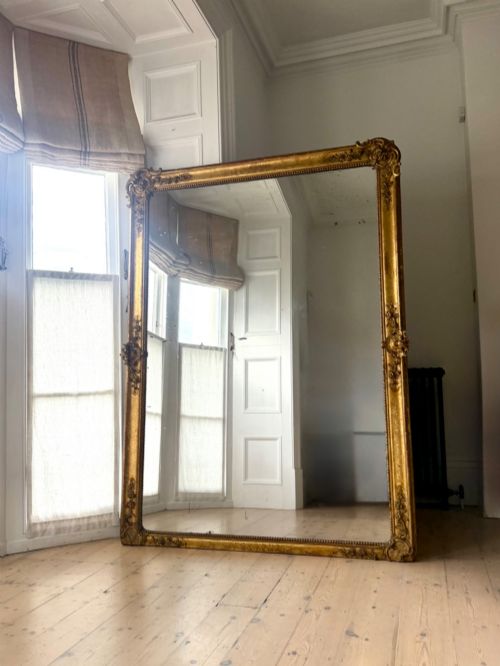
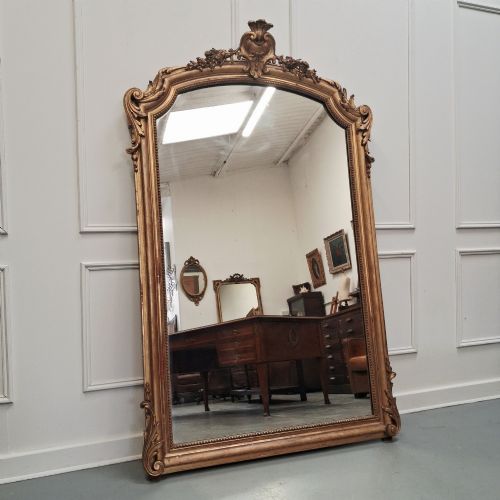
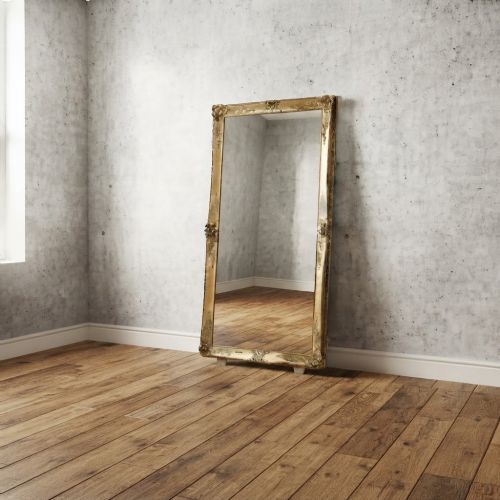
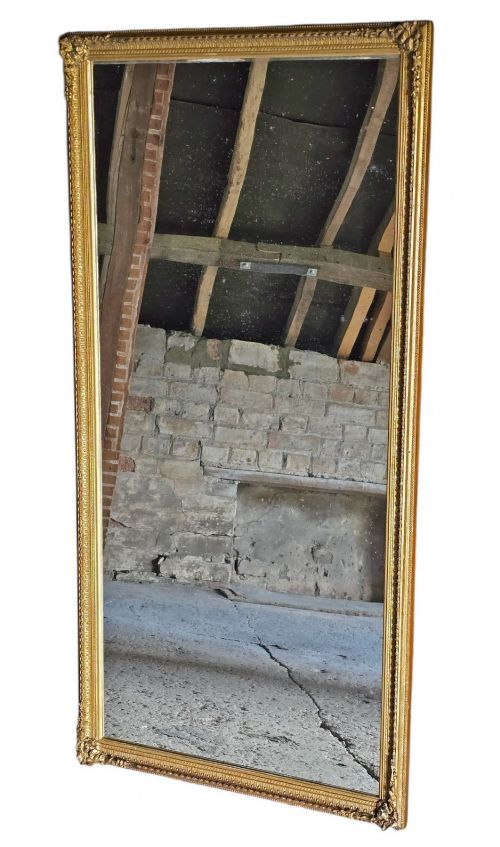
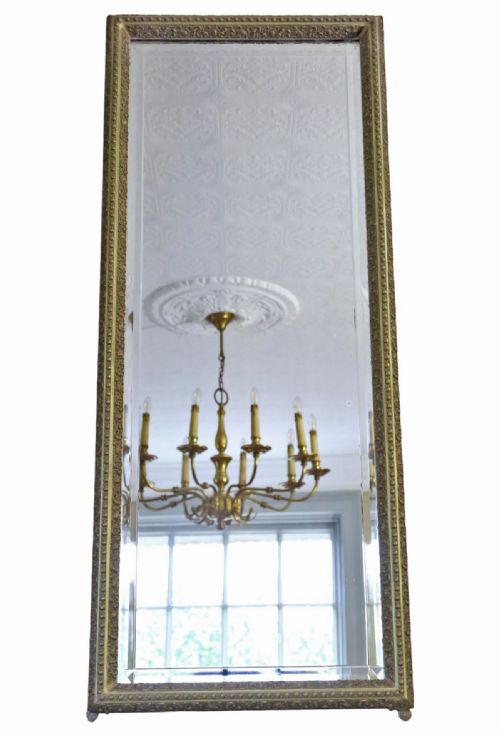


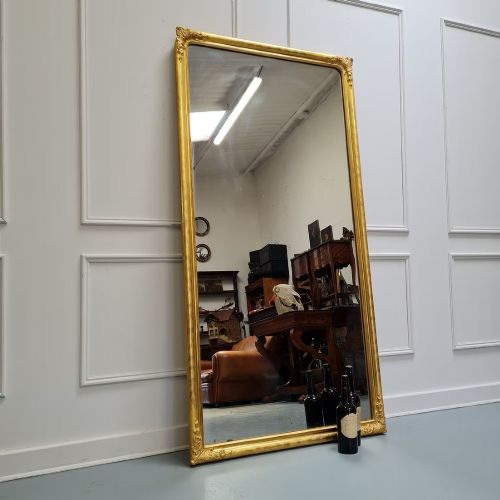


Large Gold Standing Mirror
These large gold standing mirror pieces bring scale and light into a room, offering both practical reflection and substantial decorative presence.
Large Gold Standing Mirror
A large gold standing mirror stands as a commanding presence in an interior, designed primarily as a floor-standing leaner or cheval glass. When searching for a large gold standing mirror, buyers encounter grand formats from the nineteenth and early twentieth centuries, spanning French Chateau, Victorian, and Edwardian aesthetic traditions.
How they were made
Makers constructed the structural frames of a large gold standing mirror using solid woods such as carved timber, then applied layers of gesso and plaster composition to build up intricate surface ornamentation. Artisans subsequently applied gold leaf or metallic gilding to achieve the characteristic luminous finish.
Reflective surfaces utilised early techniques including mercury glass and traditional mirror plates, set securely within heavy wooden rebated frames. Carved wooden details and moulded composition ornaments defined the decorative crests and borders typical of nineteenth-century workshops.
Some nineteenth-century French mirrors still whisper of Parisian salons through the faint silver ghosts slumbering within their original mercury glass plates.
What varies in quality
The standard of a large gold standing mirror depends upon the depth and crispness of the hand-carved wooden ornament compared to mass-moulded composition details. Superior examples exhibit finely proportioned architectural frames where the gilding retains its warmth and the structural joins remain rigid under the weight of heavy glass.
The integrity of the reflective plate significantly influences the character of the piece, with original silvering or early mercury glass showing authentic age without obscuring the reflection. The weight of the timber and the solidity of the backing boards further distinguish substantial architectural works from lighter domestic variants.
The Large Gold Standing Mirror Glossary
- Giltwood
- Timber carved and coated with gold leaf or metallic powder to create a radiant surface. This material forms the primary structure of many antique frames.
- Gesso
- A plaster-like mixture applied to wood frames to provide a smooth base for carving and gilding. Artisans used it to build up relief decoration before applying gold leaf.
- Cheval glass
- A full-length mirror hung on a vertical frame with pivots allowing it to tilt. These freestanding pieces permit the user to adjust the angle of reflection.
- Mercury glass
- An early type of mirror plate produced by pouring a mercury and tin amalgam behind glass. It often displays characteristic dark speckling and mottled age spots.
- Leaner mirror
- A tall mirror designed to rest against a wall without being hung from brackets. These heavy items rely on their own substantial base and frame for stability.
Large Gold Standing Mirror: Frequently Asked Questions
How do I secure a heavy leaner mirror?
Large mirrors resting directly on the floor require anchoring to the wall behind the frame to prevent tipping. Heavy floor-standing pieces exert significant forward pressure, making wall straps essential for safety in busy rooms.
Position the base securely on firm flooring rather than thick carpet to ensure the weight distributes evenly against the supporting vertical surface.
What is the difference between French and English frames?
French frames often incorporate elaborate, sweeping crests and chateau-style ornamentation, frequently utilising gesso on softer woods. English examples from the nineteenth century tend to display architectural rigidity, with carved wood and gesso defining classical or neoclassical proportions.
Both traditions favour gold leaf finishes, but the sculptural motifs reflect the distinct regional aesthetics of the period.
How do I clean antique mirror glass?
Use a soft, dry microfibre cloth to remove dust gently from the surface of the glass and the surrounding gilded frame. Avoid spraying liquid cleaner directly onto the mirror plate, as moisture can seep behind the silvering and cause accelerated degradation.
Apply mild, non-ammonia cleaner sparingly to the cloth rather than the glass if stubborn marks require attention.
Can these mirrors be used in small spaces?
Placing a large standing mirror in a compact room bounces natural light around the space and creates an illusion of greater depth. Leaner formats fit narrow hallways or bedroom corners where wall-hanging fixtures might prove impractical.
Ensure the floor area directly in front remains clear so the reflective surface successfully opens up the surrounding area.