
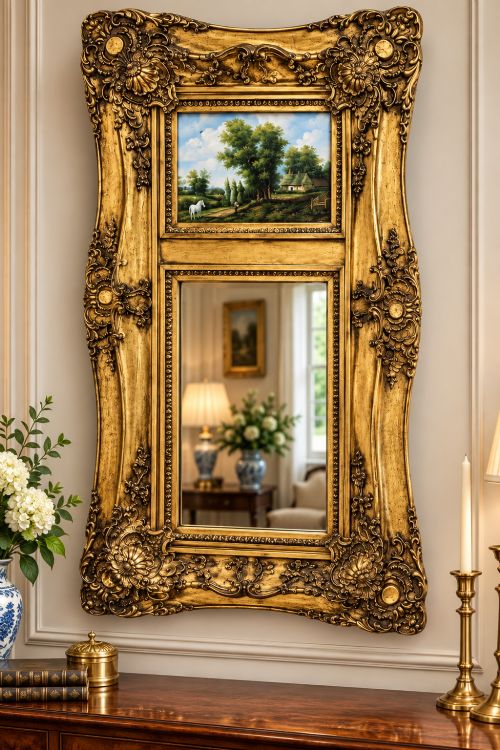
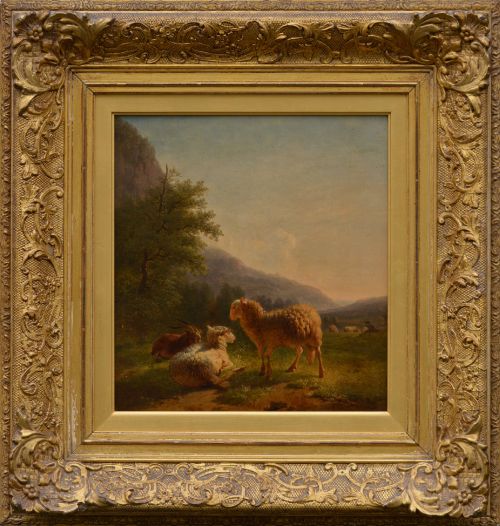
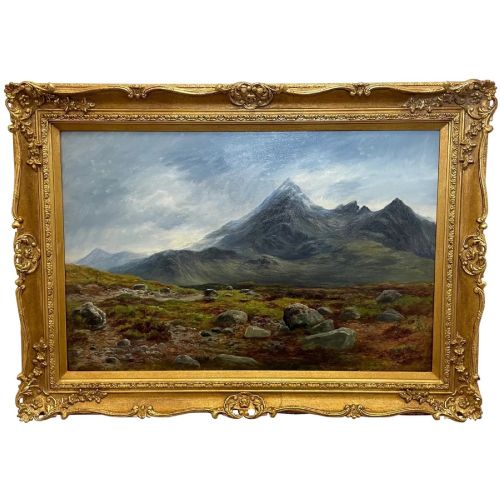

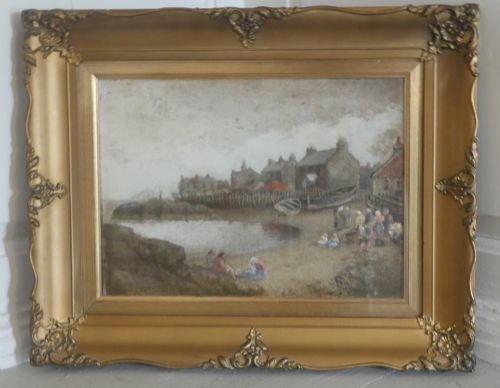
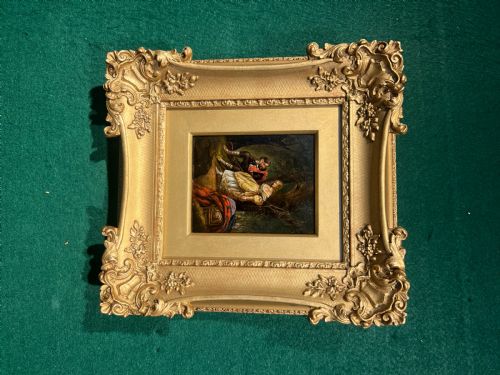
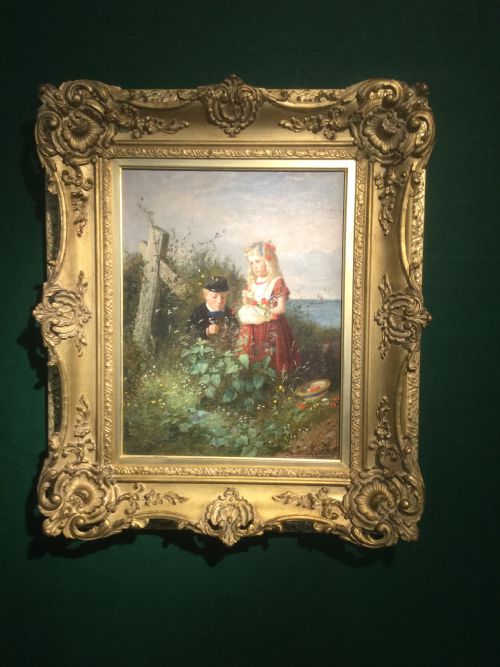
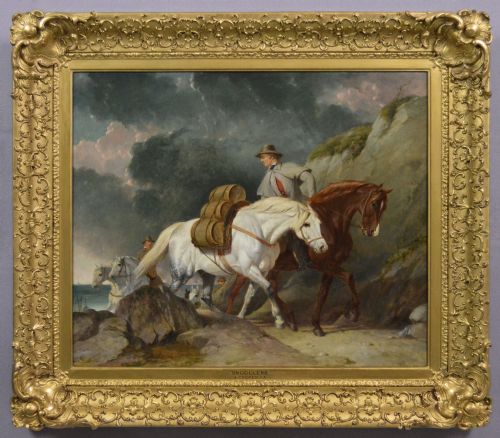
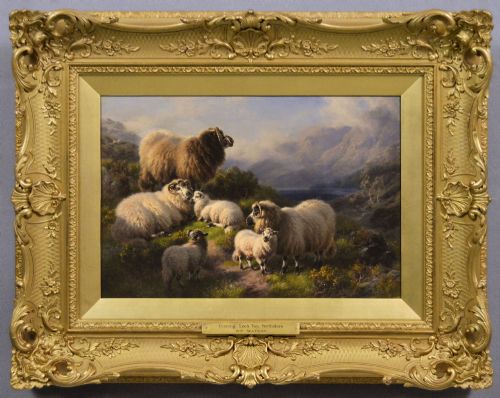
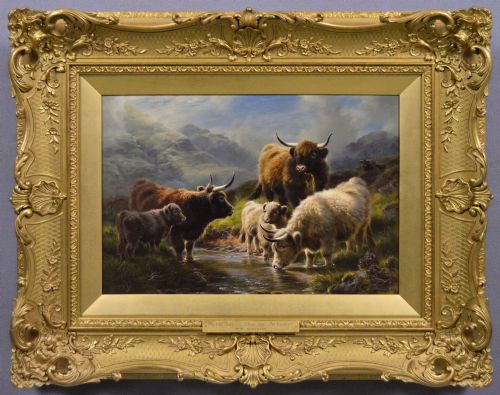

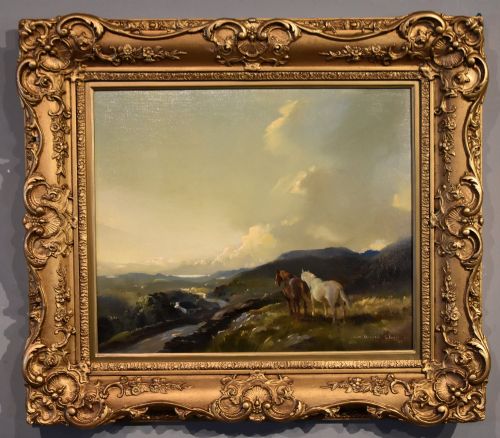
Ornate Framed Landscape
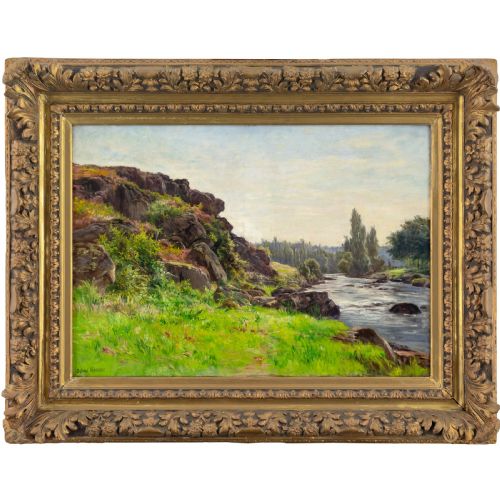
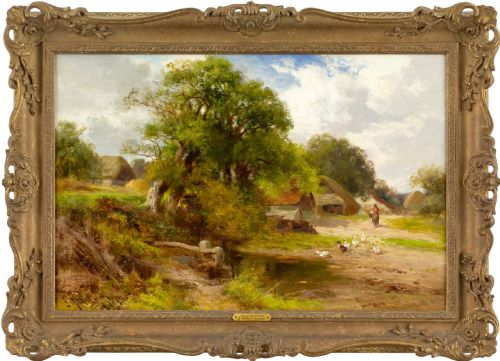
An ornate framed landscape brings deep horizons and heavily moulded surrounds into a room, offering windows onto distant valleys, rivers and coastlines.
Ornate Framed Landscape
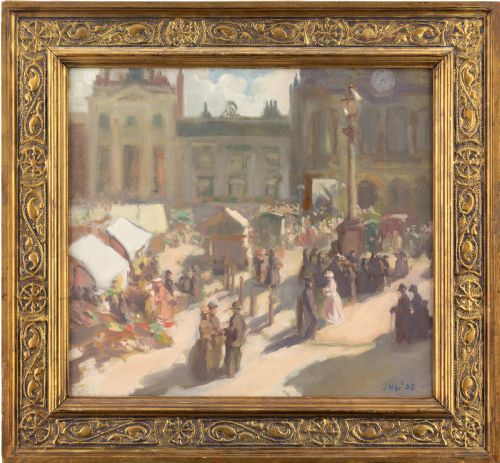
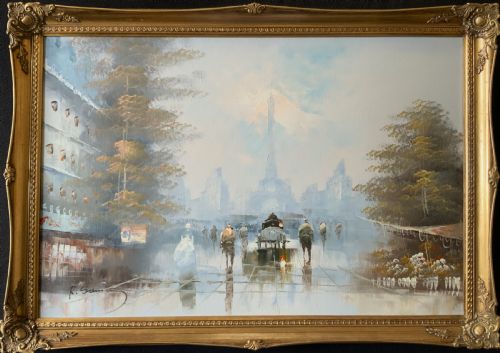
When you search for an ornate framed landscape, you encounter oil paintings, watercolours and framed artwork depicting rural scenes, marine views and cityscapes. These pieces combine detailed painted scenery with elaborate housings designed to focus the eye entirely on the vista within.
The versions you are most likely to meet on this page date predominantly from the nineteenth century, including Victorian, Edwardian and Impressionist examples. Makers from British, French, Dutch and Scottish schools appear frequently across canvas, board and panel supports.
How they were made
Painters applied oil and watercolour pigments onto canvas stretched over wooden frames, wooden panels or card boards. They built up pastoral and maritime subjects using layered brushwork to create atmospheric light and depth.
The surrounds rely on carved wood and gesso build-ups finished with gold leaf or giltwood. Artisans sculpted intricate plaster ornament onto wooden foundations to produce heavy, light-reflecting mouldings.
Current listings span the nineteenth and twentieth centuries, featuring oil on canvas, giltwood, and gesso across diverse European schools.
What varies in quality
The calibre of an ornate framed landscape rests upon the harmony between the painted composition and its enclosure. Masterful brushwork depicting light on water or upland grazing grounds commands attention when paired with deeply chased, well-preserved gilded mouldings.
The depth and crispness of the gesso work dictate the character of the surround. Intricate floral and scrolling motifs retain their sharp relief in superior examples, whereas softer or heavily repainted surfaces obscure the original hand of the gilder.
Eugène Verboeckhoven·William Beattie-Brown·William Howard Hardy·Edward Mills·Gabriel Mathieu·John Horace Hooper·John Hodgson Lobley·Charles Hunt·Abraham Cooper·William Watson Jnr·Paul Désiré Trouillebert·Vernon DeBeauvoir Ward·William Henry Williamson·T Bergman·William Arthur Breakspeare·André Prévot-Valéri·Pieter Cornelis Dommersen·Stuart Lloyd·Thomas Edward Roberts·John Frederick Herring Jnr·William Mellor·Henry John Yeend King·Adrian Van Porten·George Vicat Cole·Clarence Henry Roe
The Ornate Framed Landscape Glossary
- Gesso
- A plaster mixture applied to wood bases as a smooth surface for gilding. This compound allowed artisans to carve intricate relief ornamentation before applying gold leaf.
- Giltwood
- Wood that has been coated with a thin layer of gold leaf or metallic powder. It provides a luminous border that catches ambient room light.
- Impressionism
- An art movement focusing on transient effects of light and spontaneous brushstrokes. Practitioners sought to capture immediate visual impressions rather than precise details.
- Oil on Canvas
- Pigments bound in drying oil applied to a woven fabric support. This combination allowed artists to blend tones smoothly and build rich surface textures.
- Barbizon School
- A French movement of landscape painters working in the mid-nineteenth century. Members emphasised direct observation of nature and tonal atmospheric effects.
Ornate Framed Landscape: Frequently Asked Questions
How do I hang a heavy framed landscape safely?
Heavy framed landscapes require robust picture hooks secured directly into wall studs or fitted with appropriate masonry fixings. Due to the substantial weight of carved giltwood surrounds, wire should be doubled and checked periodically.
Position the centre of the canvas at average eye level to replicate gallery viewing heights. Ensure the wall bracket supports the combined weight of both the artwork and its heavy housing.
What is the difference between an oil painting and a watercolour?
Oil paintings use pigments suspended in drying oil applied to canvas, wood panel or board. They offer rich, buildable textures and deep colour saturation that endure across centuries.
Watercolours use water-soluble pigments on paper supports, requiring glass protection within their surrounds. They present a lighter, translucent quality compared to the heavier impasto found in oil works.
How can I tell the nineteenth-century frames apart?
Nineteenth-century frames display distinct moulding shifts from the clean neoclassical lines of the early decades to the exuberant, deep-relief scrollwork of the Victorian era. Examining the corner mitres and the consistency of the gesso reveals whether the surround is period-correct.
Earlier frames often feature hand-carved wooden embellishments, whereas later nineteenth-century examples relied more heavily on moulded composition ornament pressed onto timber foundations.