



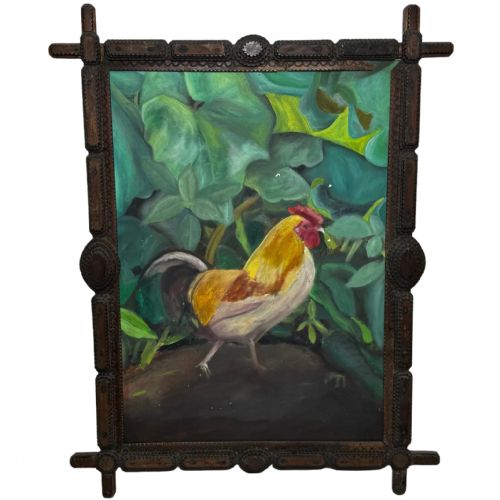


Antique Poultry Oil Painting
These antique poultry oil painting works capture farmyard fowl and exotic birds in oils across centuries of realism.
Antique Poultry Oil Painting
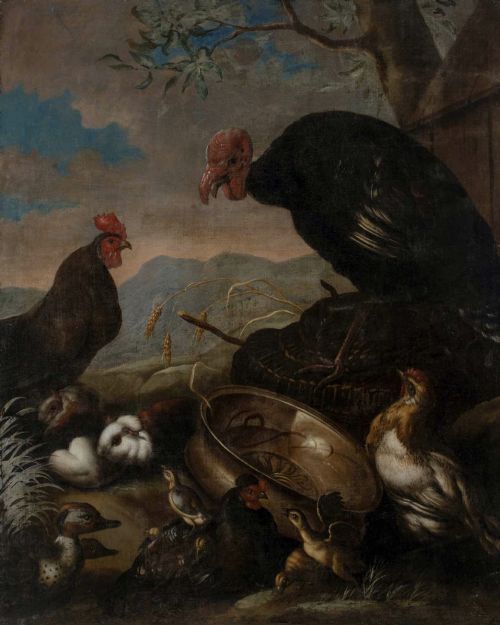
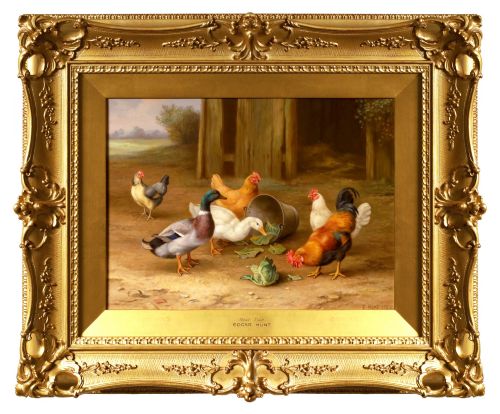
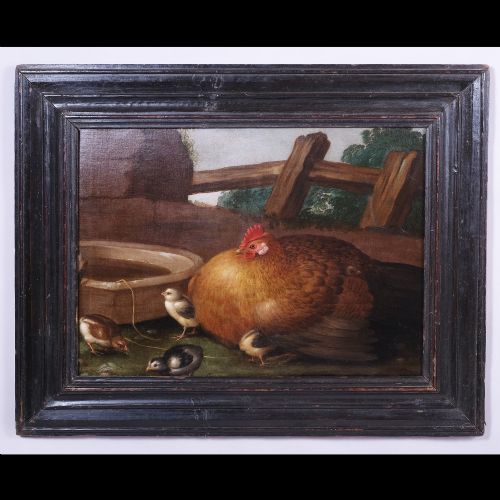
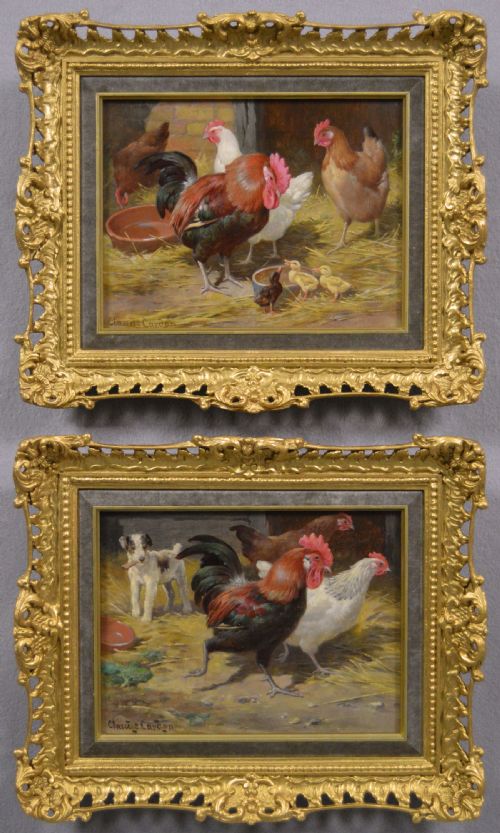
An antique poultry oil painting depicts chickens, cockerels, hens, and farmyard fowl, often set within rural landscapes, farmyards, or rustic interiors. These works span from the seventeenth century through to the early twentieth century, taking in Victorian realism and Edwardian interpretations.
The most common examples on this page are nineteenth-century and early twentieth-century oil paintings on canvas or board, frequently featuring detailed studies of poultry alongside other farm animals or horses in pastoral settings.
Collectors encounter diverse regional traditions, ranging from British animalier and Dutch-influenced compositions to Spanish folk art from Catalonia and large-scale continental still-life pieces.
Materials and methods
Paintings of this type are executed in oil paint applied to stretched canvas, wooden panels, or rigid board, utilising the rich pigmentation characteristic of historic studios. Artists built up feather textures and landscape backgrounds through careful layering of oil mediums.
Many works retain their period frames, particularly moulded giltwood frames and carved wooden surrounds that complement the traditional subjects.
Listings feature oil paintings on canvas and board spanning the seventeenth, eighteenth, nineteenth, and early twentieth centuries.
Distinctions in quality
Quality in these works rests upon the anatomical precision of the birds, the handling of plumage, and the depth of the surrounding landscape or farmyard backdrop. Master painters achieve realistic light and texture in the feathers, whereas lesser works rely on formulaic composition.
The framing also influences the presentation, with original giltwood surrounds providing a period-correct context that enhances the visual weight of the canvas.
Angelo Maria Crivelli·Edgar Hunt·Claude Cardon·Percival Glenfern·John Frederick Herring Jnr·J L VAN Leemputten
The Antique Poultry Oil Painting Glossary
- Animalier
- A style or artist specialising in the realistic depiction of animals. This term frequently applies to nineteenth-century painters who focused on farmyard birds and livestock.
- Oil on Canvas
- Pigment mixed with a drying oil applied to a woven fabric stretched across a wooden frame. It serves as the primary medium for historical painting.
- Giltwood
- Wood that has been coated with a thin layer of gold leaf or gilt paint. Period frames utilise this technique to accent oil paintings.
- Still Life
- A painting featuring inanimate subject matter, such as game, fowl, or domestic objects arranged in a composition.
- Board
- A rigid wooden or composite sheet used as a painting support instead of stretched fabric.
Antique Poultry Oil Painting: Frequently Asked Questions
How do I identify the period of a poultry oil painting?
Dating relies on stylistic clues, framing methods, and the preparation of the canvas or board. Nineteenth-century works often show distinct realism, whereas seventeenth-century examples employ darker palettes and classical landscapes.
Examining the stretcher bars, canvas weave, and any artist signatures provides further chronological context.
Where were these farmyard paintings displayed historically?
These works hung in country houses, farm estate offices, and domestic dining rooms. They reflected an appreciation for rural life, agriculture, and livestock.
Owners selected them to bring pastoral scenes inside grand homes and country dwellings.
What is the difference between canvas and board supports?
Canvas requires stretching over a wooden frame and offers flexibility, which was the standard method for larger formal paintings. Board provides a rigid surface that painters frequently utilised for smaller studies and panel works.
Both supports appear across various periods represented here.
How do I care for an antique oil painting?
Keep paintings away from direct sunlight, high humidity, and extreme temperature fluctuations to protect the oil paint and canvas. Dust them gently with a soft, dry brush without using liquid cleaners.
Professional conservation is recommended for any structural repairs to the canvas or giltwood frame.