






Rustic Farmyard Wall Art
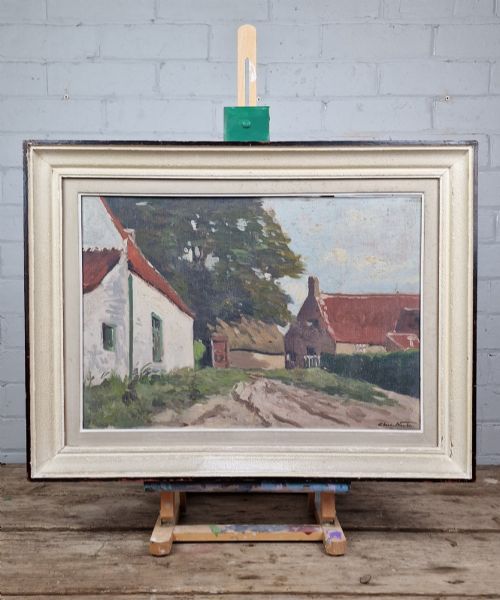
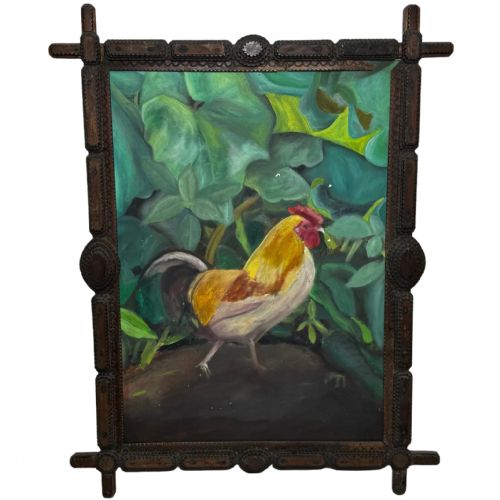
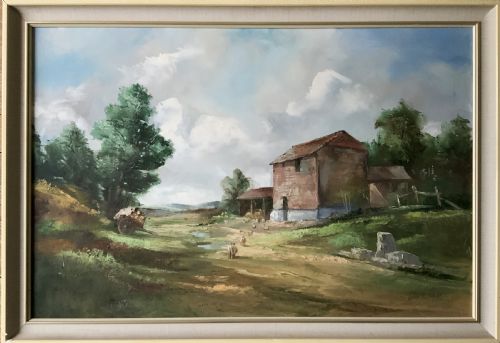
These rustic farmyard wall art pieces bring rural domestic life and agricultural scenes onto the wall through period paintings and prints.
Rustic Farmyard Wall Art
Rustic farmyard wall art spans oil paintings, watercolours, and framed prints capturing agricultural scenes, cottages, and animals across the nineteenth and twentieth centuries. These works include Victorian realism, British Impressionism, and folk art interpretations executed by various European and British hands.
The most common formats on this page are oil paintings on canvas or board and watercolour paintings depicting horses, pigs, cattle, and farm buildings. Pieces range from detailed nineteenth-century landscapes to simpler folk art street scenes and character studies.
Subjects focus heavily on traditional rural life, featuring cart sheds, milking cows, and poultry yards rendered in both accomplished academic styles and primitive folk traditions. The selection reflects changing artistic approaches to the countryside from the Victorian era through the mid-twentieth century.
Materials and methods
Painters utilised oil on canvas, oil on board, and watercolour on paper, often framing finished works in wood or giltwood frames. Artists built up oil compositions using layered pigments to achieve depth in landscapes and animal coats, while watercolourists applied translucent washes on paper.
Printmakers employed techniques like coloured mezzotint engraving on paper, producing multiple impressions of popular rural subjects after original artists. Sand pictures represent a distinct textural method, fixing coloured sands to a backing to build up farmyard scenes.
Support materials range from stretched canvas and wooden panels to heavy paper sheets and card mounts, housed within period wooden or moulded frames. Each medium dictated the final handling of light and texture across the agricultural subject matter.
Listings feature works created across the nineteenth and twentieth centuries, using oil on canvas, oil on board, and watercolour on paper.
Assessing quality
Quality rests on the precision of drawing, handling of light, and anatomical accuracy in depicting animals and human figures within the landscape. Masterly brushwork and confident colour mixing separate accomplished realist compositions from stiffer, formulaic student efforts.
The strength of the composition and the depth of atmospheric perspective distinguish superior rural scenes from flat, static depictions. Finer works capture specific textures in feathers, fur, weathered wood, and foliage with distinct economy and vigour.
The integrity of the original support, surface stability, and the presence of a period-appropriate or original frame contribute significantly to a piece's standing. Intact signatures and well-documented attribution to known artists elevate the stature of individual paintings.
Charles Houben·Edgar Hunt·John Atkinson·Percival Glenfern·Ralph Dorrance·Owen Bowen·John Frederick Herring·John R. K. Duff·Edward Killingworth Johnson·Jack R Mould·Georgina Lara·George Morland·Fred C. Jones
The Rustic Farmyard Wall Art Glossary
- Oil on Canvas
- Pigment mixed with drying oil applied to a woven fabric support. This method allows for rich blending of colours and tactile surface textures.
- Watercolour Painting
- Pigments suspended in a water-soluble binder applied to paper. It relies on white paper showing through translucent washes for its luminosity.
- Mezzotint
- A printmaking process where the copper plate is roughened to produce dark tones and scraped back for lighter areas. It yields rich tonal gradations well suited to reproductive prints.
- Rural Realism
- An artistic movement focusing on unidealised depictions of country life and agricultural labour. Practitioners sought to portray rural scenes with direct observation.
- Folk Art
- Artistic work created within a traditional culture by self-taught makers. These pieces prioritise expressive narrative over academic rules of perspective and proportion.
Rustic Farmyard Wall Art: Frequently Asked Questions
What periods do these farmyard artworks cover?
The selection spans from the mid-nineteenth century through the Victorian era into the mid-twentieth century. Most examples date from the Victorian period up to the nineteen-thirties.
Works reflect shifting artistic movements, moving from nineteenth-century realism and academic animal painting toward twentieth-century folk art and regional Impressionism.
How do I identify a watercolour from an oil painting?
Watercolours are painted on paper and typically displayed under glass, showing translucent washes where the white of the paper illuminates the colour. Oil paintings use heavier, opaque pigments on canvas or wooden boards.
Oil surfaces often display visible brushstrokes and a tactile texture that reflects light differently than paper under glass.
What subjects appear most often in these scenes?
Common subjects include farmyards, cart sheds, cottages, and rural street scenes populated by horses, pigs, cattle, and poultry. Human figures usually appear as farmers, milkmaids, or labourers engaged in daily agricultural tasks.
Artists frequently focused on quiet domestic moments in the yard rather than sweeping panoramic landscapes.
Are these works signed by the artists?
Several pieces preserve original artist signatures, inscriptions, or contemporary attribution labels on the front or reverse. Others represent unsigned folk art or follow established painters.
Unsigned works rely on stylistic evidence, subject matter, and materials to suggest their period and regional origin.
How should I care for antique paintings on paper?
Works on paper, such as watercolours and prints, require protection from direct sunlight to prevent fading of pigments and yellowing of the paper support. Framing under conservation-grade glass helps block harmful ultraviolet rays.
Keep them away from damp environments to avoid mould growth and paper degradation over time.