


19th Century Farmyard Art
These pieces of 19th century farmyard art capture rural life through oil paintings, watercolours, and metalwork that bring pastoral livestock and agricultural scenes into a room.
19th Century Farmyard Art
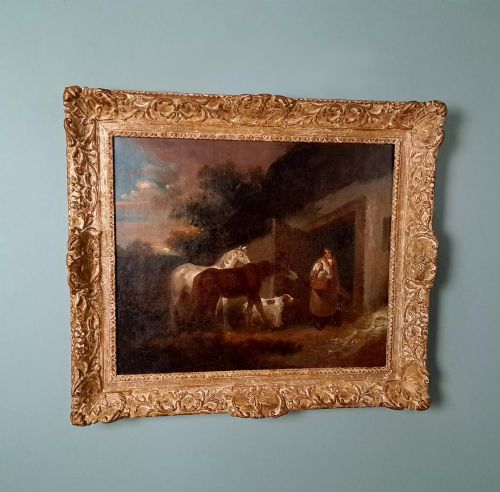
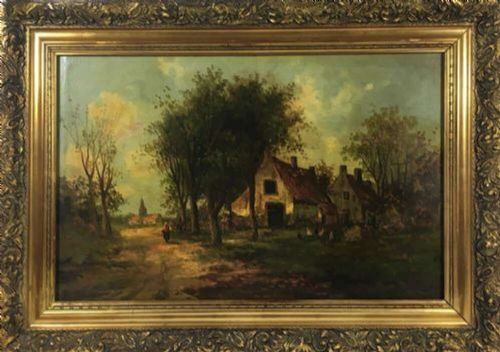
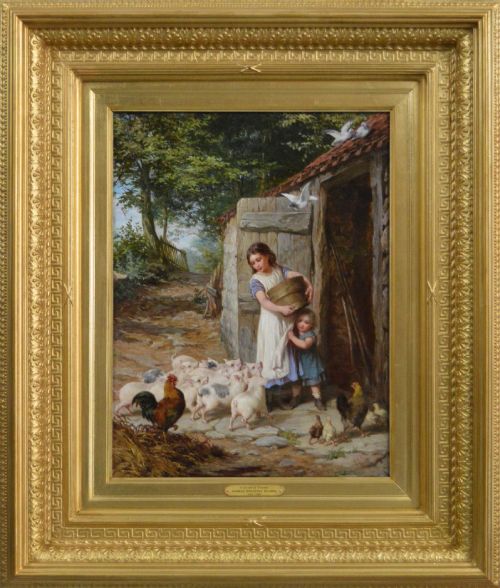
When you examine 19th century farmyard art, you are looking at oil paintings on canvas and panel, watercolours, and folk art objects that depict rural subjects such as horses, poultry, pigs, and labourers. The selection relies heavily on oil paintings, ranging from expansive landscapes with farm animals to intimate genre scenes of poultry and farm buildings.
The versions you are most likely to meet on this page date from the Victorian period through to the early decades of the twentieth century. These works capture the changing face of agriculture, shifting from idealised pastoral views to more naturalistic portrayals of farmyards and working animals.
Subjects frequently centre on heavy horses, shire horses, cockerels, hens, and ducks gathered around barns and homesteads. Alongside traditional framed canvas works, the evidence includes distinct variations such as metal weathervanes and sand pictures depicting rural scenes.
Materials and methods of production
The physical foundation of these works is predominantly oil paint applied to canvas, often supported by wooden stretchers and housed within period frames finished in giltwood, gold leaf, and gesso. Artists built up their compositions using layered oil colours to render the textures of feathers, fur, weathered timber, and livestock.
Watercolour on paper appears in works depicting animals and rural figures, offering a lighter touch compared to the heavier impasto and glazing found in oil paintings. Folk art pieces within this sphere utilise metalworking techniques, as seen in shaped and cut weather vanes designed for agricultural structures.
A young foal steals fruit from a basket while farmyard chickens and pigs busy themselves nearby.
Distinctions in quality
Quality in these pastoral works rests upon the artist's ability to render animal anatomy and the play of natural light across a farmyard. Superior pieces display precise handling of texture in horse muscle, plumage, and straw, whereas lesser works rely on formulaic arrangements and stiff poses.
The integration of the animals into their wider landscape setting differentiates fine studio pieces from simpler decorative works. Frames also contribute to the overall standard, with original giltwood and gesso surrounds holding greater integrity than later replacements.
William Joseph Shayer Senior·George Augustus Holmes·John Frederick Herring Jnr·Percival Glenfern·Claude Cardon·John Frederick Herring·John Linnell·Helena Maguire·Pierre Emmanuel Dielmans·Arthur Charles Dodd·Edgar Hunt·J L Van Leemputten·Edward Killingworth Johnson·Arthur Walker Redgate·Georgina Lara·George Morland·Thomas Blinks
The 19th Century Farmyard Art Glossary
- Barbizon School
- A French movement of painters dedicated to naturalistic landscape and rural subjects. Their approach influenced how subsequent artists recorded agricultural scenes and light.
- Gesso
- A plaster-like mixture applied to wood or canvas as a base for painting or moulded into decorative reliefs on picture frames. It provides a smooth ground for gilding.
- Genre oil painting
- A work depicting scenes from everyday life, typically featuring ordinary people and animals engaged in normal routines. These paintings focus on domestic or agricultural narratives.
- Pastoral
- Relating to the rural countryside and agricultural life, often conveying a traditional or idealised view of farming. It defines art that centres on fields, livestock, and farmyards.
- Sand picture
- An image constructed by fixing coloured sands to a backing board to form a pictorial composition. This unusual technique creates a textured surface distinct from standard paint.
19th Century Farmyard Art: Frequently Asked Questions
What subjects appear in farmyard art?
The works depict agricultural settings populated by heavy horses, shire horses, pigs, goats, cattle, and poultry such as cockerels, hens, ducks, and chicks.
Human figures also feature, including labourers resting near oak trees or children feeding farm animals alongside barns and cottages.
How do these paintings reflect the nineteenth century?
These pieces mirror the period's growing fascination with rural realism, pastoral landscapes, and the daily operations of working farms.
Artists documented both the industrializing countryside and traditional farming practices using horses and manual labour before mechanisation took over.
Are all these pieces oil paintings?
While oil on canvas forms the majority of the selection, the category extends to watercolours on paper and textured sand pictures.
Three-dimensional folk art objects like metal farmyard weathervanes also appear alongside traditional framed canvas artwork.
How should I display a giltwood framed painting?
Hang the framed artwork away from direct sunlight and fluctuating heat sources to protect both the oil paint and the underlying gesso and gold leaf.
Ensure the wall fixings can support the weight of heavy nineteenth-century wooden stretchers and ornate period frames.