



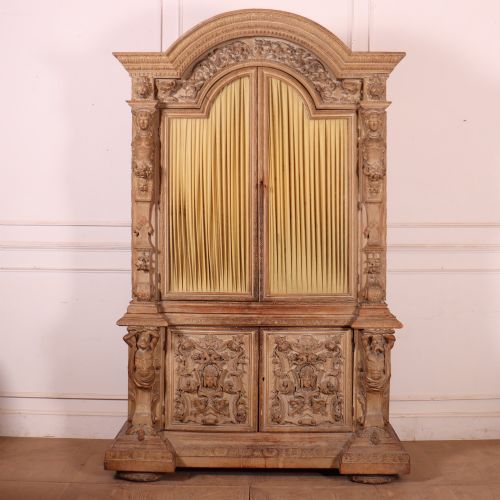


Ornate Carved Cupboard
An ornate carved cupboard brings tactile depth and rich timber grain to a room, holding practical storage within heavily worked panels.
Ornate Carved Cupboard
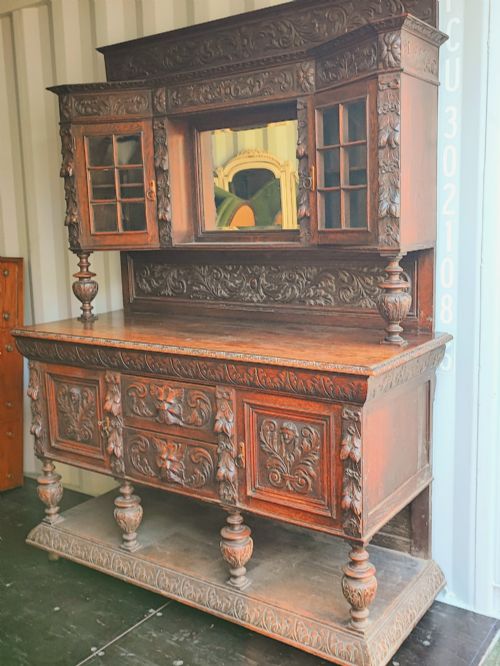
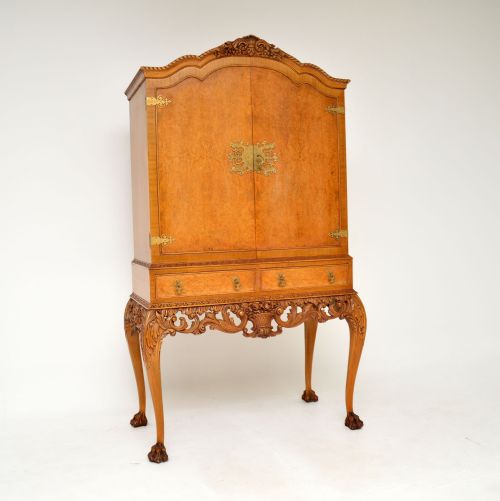
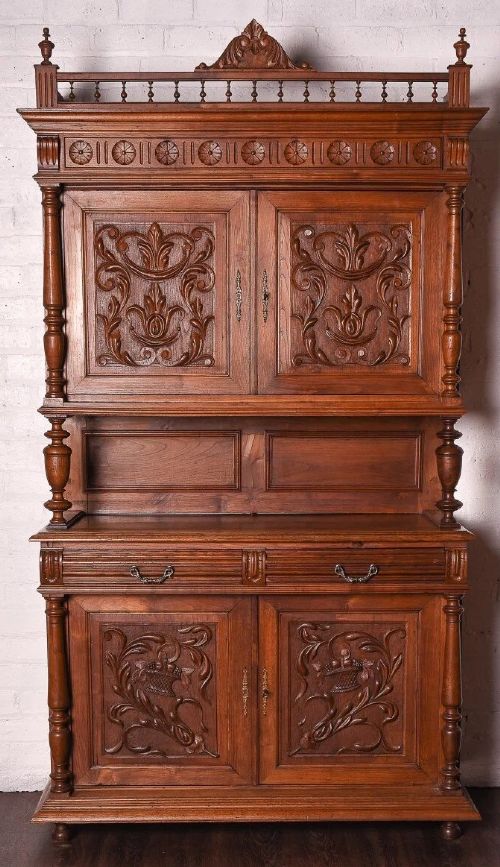
An ornate carved cupboard is a substantial storage piece defined by sculptural woodwork, panel relief, and period revival styling. Buyers searching for an ornate carved cupboard encounter walnut, oak, and mahogany forms originating from the eighteenth, nineteenth, and early twentieth centuries.
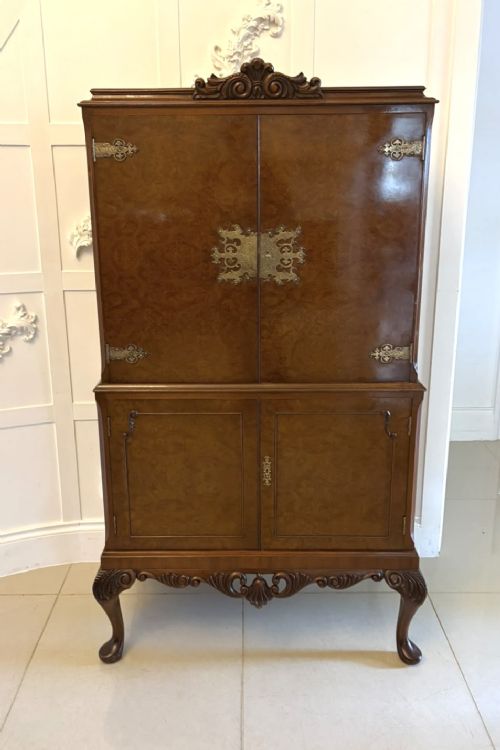
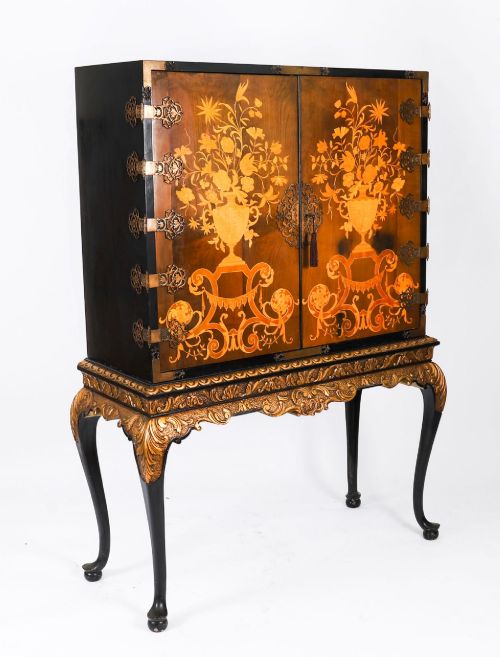
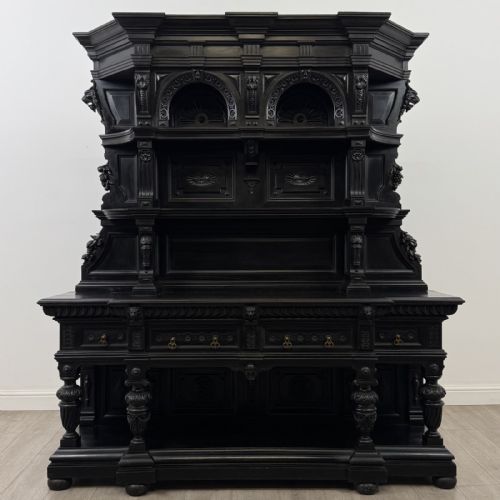
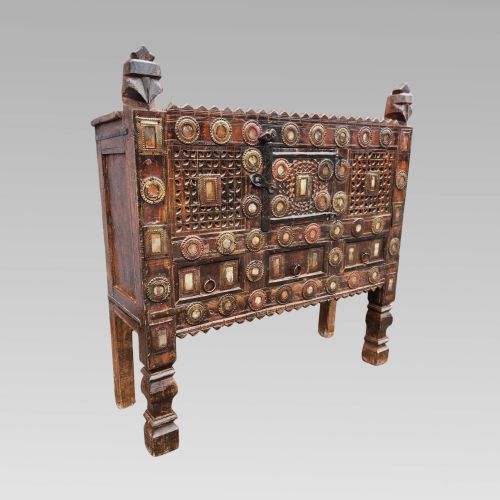
The selection here encompasses sideboards, cocktail cabinets, vitrines, and tabletop pieces shaped by Renaissance, Jacobean, and Queen Anne revivals. Regional expressions such as Indian folk art chests and French walnut game cabinets also appear among the traditional British and continental storage furniture.
How they were made
Cabinetmakers constructed these pieces using solid hardwoods like oak and walnut, frequently applying burr walnut veneers or marquetry inlay to flat surfaces. Structural joinery relied on traditional mortise and tenon methods to support the heavy timber doors and internal shelving.
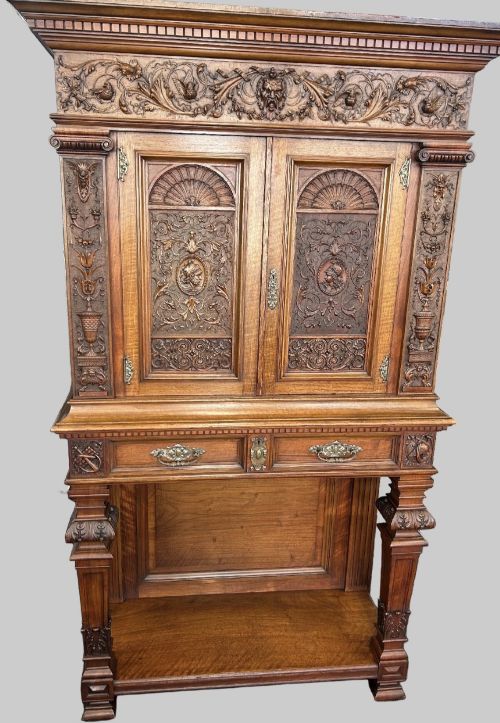
Carvers shaped the ornamentation by hand directly into the solid wood, utilising gouges and chisels to create deep relief foliage, figures, and geometric strapwork. Metal hardware including brass handles, hinges, and iron mounts completed the construction of these storage cabinets.
Ornate Carved Cupboard Retail Price Guide 2026
Typical asking prices for ornate carved cupboard among the pieces listed under this phrase on Sellingantiques today, from the lower quarter to the upper quarter. They describe what is for sale here now, not the wider market.
Revival styles represented across these cabinet forms include Renaissance, Queen Anne, Jacobean, and French regional designs.
What varies in quality
The depth and crispness of the hand-carved detail separate ordinary production from exceptional work, with superior pieces showing undercut foliage and clean tool marks. Timber selection also dictates the grade, as finely figured burr walnut or dense quarter-sawn oak displays far greater visual movement than plain boards.
Proportion and architectural coherence define the upper tier of these cabinets, where cornices, bases, and carved panels align with deliberate stylistic intent. Lesser examples often rely on applied machine-moulded decoration rather than integrated sculptural woodwork.
Sigmund Jaray, Wien
The Ornate Carved Cupboard Glossary
- Renaissance Revival
- A nineteenth-century design movement drawing heavily on sixteenth-century architectural motifs, heavy column supports, and deep sculptural relief. It often manifests in walnut sideboards and display cabinets.
- Marquetry
- The art of applying decorative veneer pieces in geometric patterns or pictorial scenes onto a timber carcase. This technique appears frequently on twentieth-century cocktail cabinets.
- Vitrine
- A glass-fronted display cabinet designed for exhibiting ceramics, glassware, or small collectibles. These pieces often feature fine wooden framing and glazed side panels.
- Buffet
- A low side cabinet or sideboard used for serving food and storing dining utensils. Victorian iterations often incorporate mirror backs and substantial carved oak supports.
Ornate Carved Cupboard: Frequently Asked Questions
How do I date a carved wooden cabinet?
Examine the timber species, construction joinery, and the specific revival style influencing the design. Eighteenth and nineteenth-century pieces often display hand-cut joints and distinct regional patination.
Compare the carving depth and secondary woods used on the interior panels with known examples from the period. Hardware styles and backboards also provide reliable clues to the exact manufacturing era.
Where should I place a large cupboard?
Position these substantial storage pieces against a sturdy wall in a dining room, hallway, or spacious living area where their weight and scale balance the surrounding architecture. Ensure the floor is level so the heavy timber doors hang true.
Keep the cabinet away from direct heat sources and strong sunlight to protect the polished wood surfaces and delicate veneers from drying out or fading over time.
How do I care for antique carved walnut furniture?
Dust the intricate carved recesses regularly using a soft natural bristle brush to prevent dirt accumulation in the wooden relief. Apply a quality microcrystalline wax sparingly to nourish the timber and maintain a soft protective sheen.
Avoid silicone-based sprays and keep the humidity in the room stable to prevent the solid wood panels from splitting or warping.