

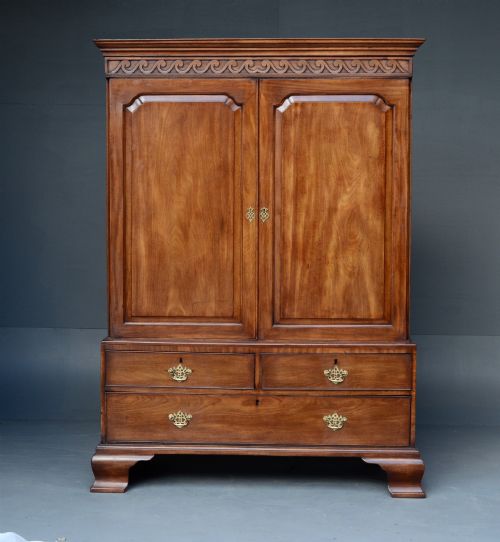
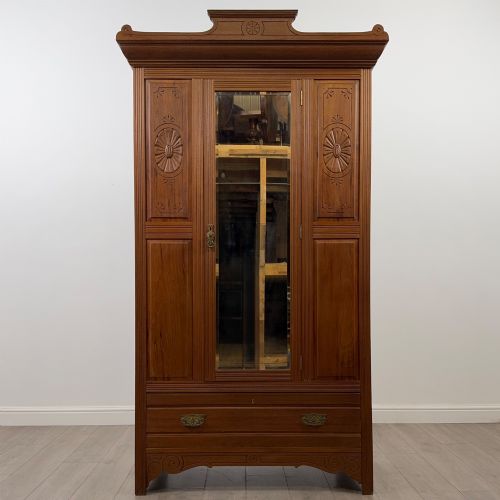
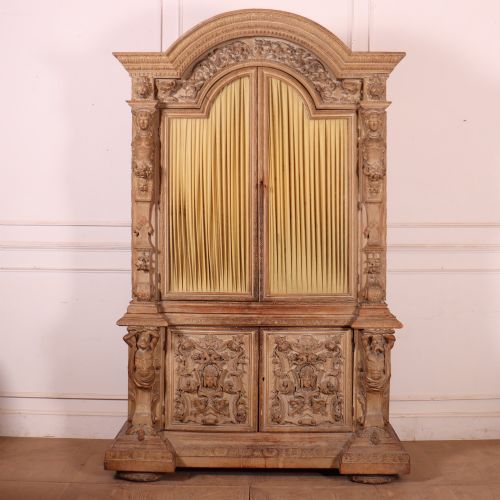


Carved Timber Linen Press
These carved timber linen press pieces offer serious architectural presence and storage, uniting period heft with practical utility in any room.
Carved Timber Linen Press
When you search for a carved timber linen press, you are looking at substantial storage furniture built from timber, frequently spanning centuries of domestic history. The selection presented here draws from multiple eras, ranging from seventeenth century creations to pieces made in the early twentieth century.
The assortment includes wardrobes, armoires, cabinets on chest, and vitrines. You will frequently encounter forms carrying stylistic influences such as Edwardian, Italian Renaissance Revival, Anglo-Indian, and French Provincial.
Makers utilised woods like oak, walnut, mahogany, satinwood, amboyna, and teak to construct these large storage items. Pieces often incorporate glass, brass, iron, fabric, or painted finishes to complement the timber structure.
Construction and materials
Craftsmen built these large storage units using solid timbers including oak, walnut, and mahogany, often enhanced by decorative veneers like burr amboyna and satinwood. Structural integrity relied on traditional joinery methods appropriate to each period, from seventeenth century cabinet work to Edwardian workshop production.
Carving serves as a primary decorative element across the examples, executed directly into the timber surfaces to form panels, cornices, and door frames. Metal hardware in brass and iron provides functional hinges and pulls, while glass panels appear on display-oriented cabinets and vitrines.
Carved Timber Linen Press Retail Price Guide 2026
Typical asking prices for carved timber linen press among the pieces listed under this phrase on Sellingantiques today, from the lower quarter to the upper quarter. They describe what is for sale here now, not the wider market.
The listings span from the 17th century through to the 1920s, featuring oak, walnut, mahogany, teak, and satinwood.
Judging quality and character
The distinction between standard and superior examples lies in the depth of the timber carving and the selection of the wood itself. Highly figured veneers like burr amboyna or finely grained walnut elevate a piece above simpler domestic utility furniture.
Proportion and stylistic coherence determine the visual strength of an armoire or wardrobe. Pieces that execute historical revivals, such as Gothic or Italian Renaissance styles, with confident carving and substantial brass or iron fittings represent the upper tier of the range.
The Carved Timber Linen Press Glossary
- Armoire
- A tall wardrobe or cupboard, typically featuring doors that open to reveal hanging space or shelving. French examples often display provincial carved details.
- Cabinet on chest
- A two-part storage furniture form where a smaller cabinet sits atop a larger chest of drawers. This format allows for hierarchical display and compartmentalised storage.
- Vitrine
- A glass-fronted cabinet designed for displaying objects or collections. The frame is constructed from timber to match other room furniture.
- Burr timber
- Wood taken from a tree growth where the grain has grown in a deformed, swirling manner. It produces highly decorative veneer patterns used on high-status cabinet work.
Carved Timber Linen Press: Frequently Asked Questions
What is a carved timber linen press used for?
These large pieces were traditionally designed to store household linen, garments, and textiles flat or folded on internal shelves. Today, they serve equally well as principal wardrobes or architectural storage cupboards in modern bedrooms and living spaces.
The deep cupboards and internal compartments provide substantial capacity for bulky items while adding historical character to an interior.
How do I identify the period of a wardrobe?
Dating relies on observing the timber species, the style of the surface carving, and the overall structural proportions. Pieces range from seventeenth century constructions with dense ornamentation to Edwardian items displaying lighter satinwood or mahogany.
Examining the internal construction methods and hardware also helps anchor the piece to its specific era of manufacture.
What is the difference between an armoire and a wardrobe?
While both terms describe large storage cupboards with doors, armoire typically denotes continental European origins, particularly French or Italian. Wardrobe is more commonly applied to British and Edwardian furniture made for hanging garments.
Both forms utilise carved timber construction and share similar functional roles within the home.
Where should I place a large cabinet in my home?
Due to their substantial height and depth, these cabinets require adequate wall space and clearance for doors to open fully. They anchor large bedrooms, hallways, or living rooms effectively, functioning as focal points.
Ensure the placement avoids direct heat sources that could dry out historical timbers and veneers.