
Ornate Carved Chair
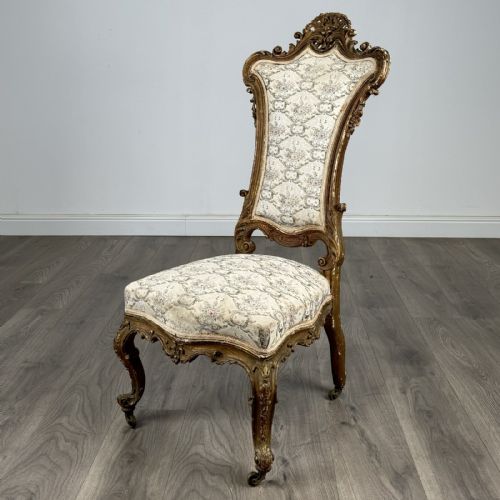
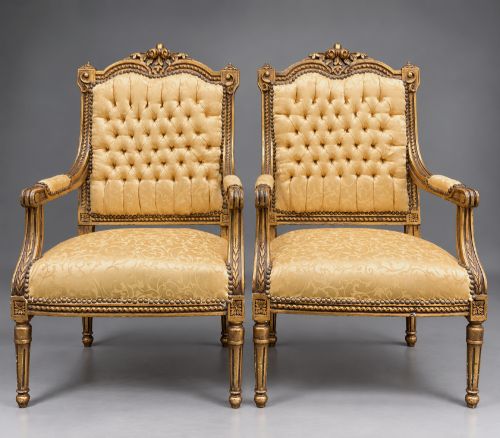
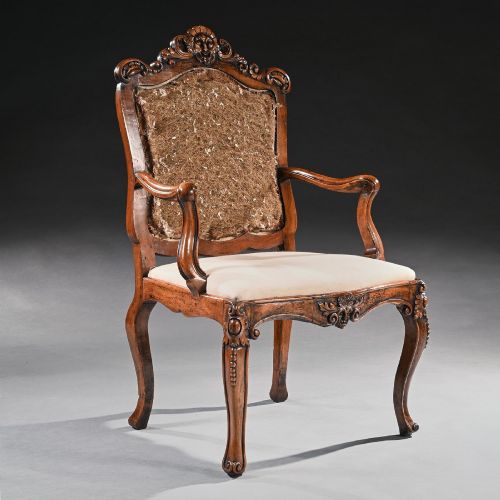
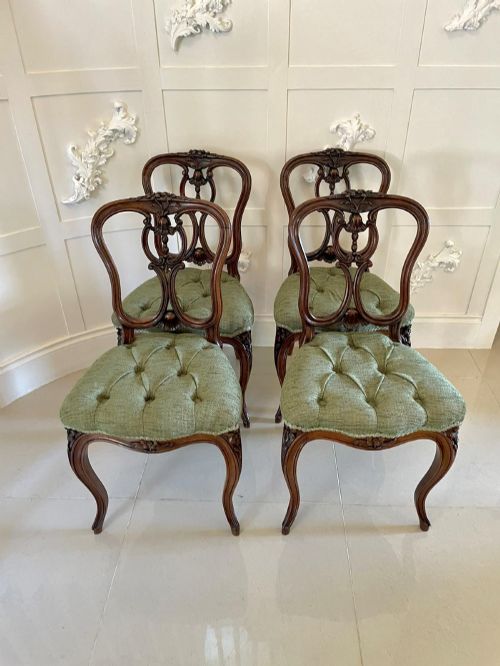
An ornate carved chair brings heavy historical presence into a room, joining deep timber work with upholstered comfort.
Ornate Carved Chair
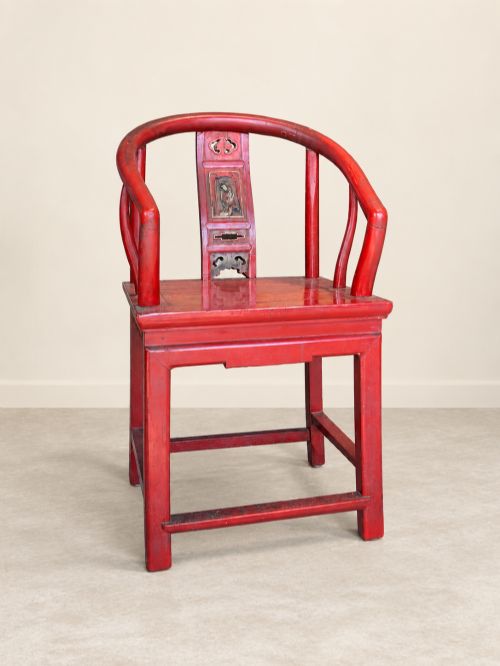
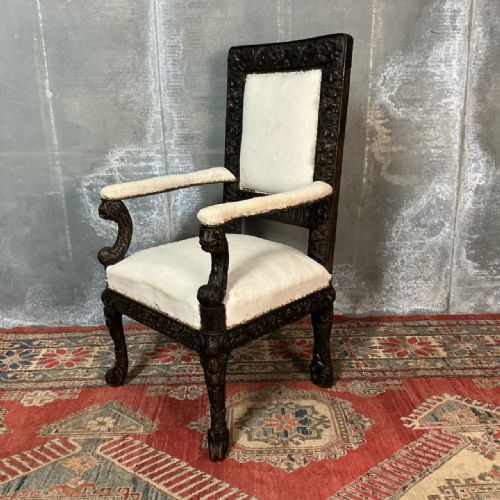
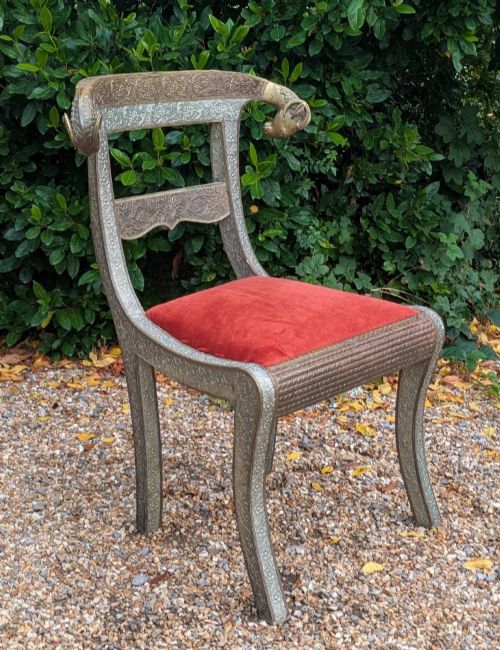
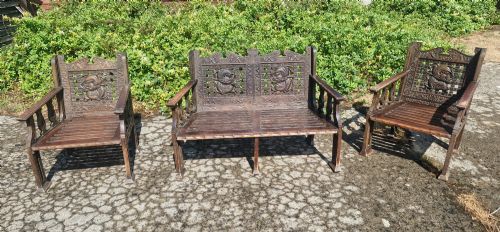
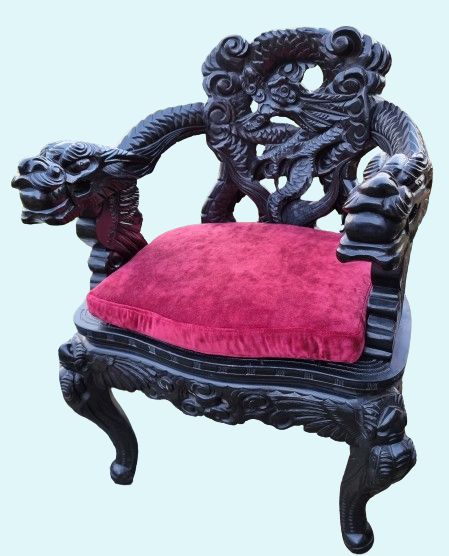
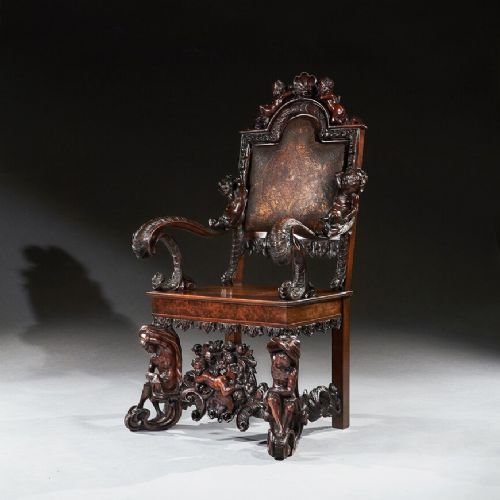
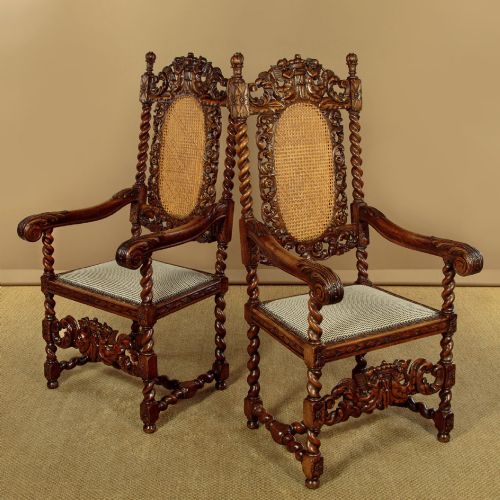
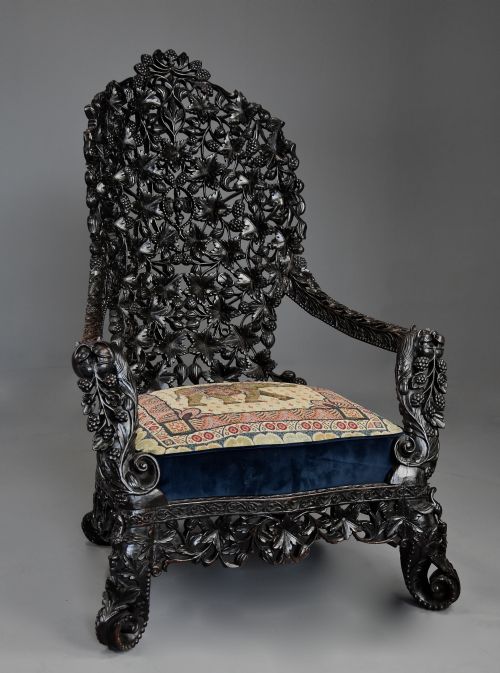
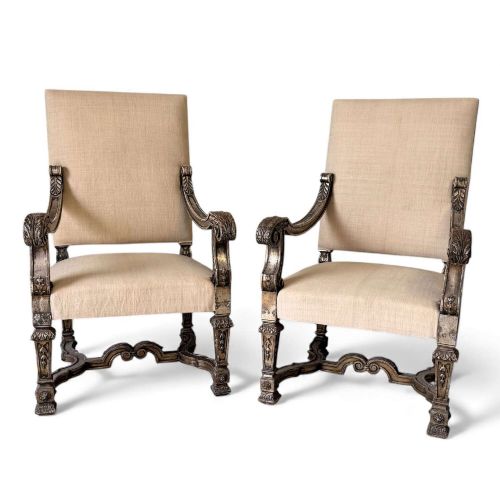
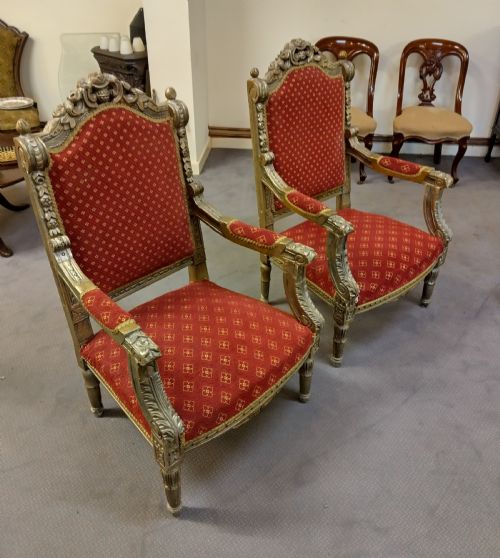
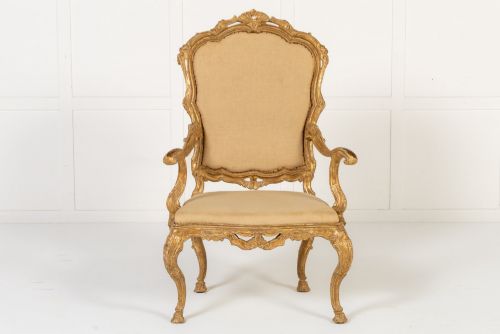
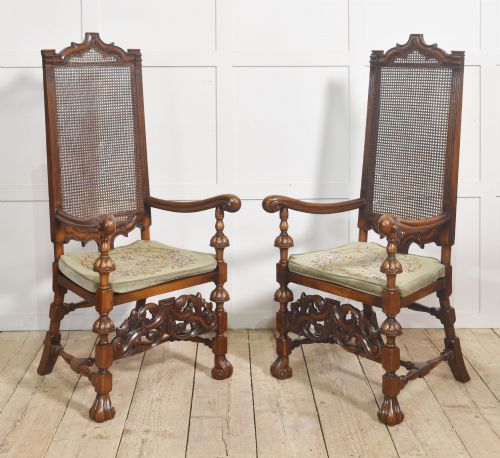
An ornate carved chair spans multiple continents and centuries, ranging from European revival seating to Anglo-Indian and Burmese temple pieces. The versions most commonly met on this page are 19th-century walnut armchairs, Victorian oak hall chairs, and giltwood throne chairs.
Makers produced these functional works of art for grand reception rooms, hallways, and private libraries. Surviving forms include side chairs, dining chairs, accent pieces, and large seating suites.
Regional workshops across Italy, France, Britain, and Asia developed distinct decorative vocabularies, applying heavy relief work, gilding, and figurative motifs to dense hardwoods.
How they were made
Joiners and carvers worked with dense timbers including walnut, oak, mahogany, padauk, and blackwood, often finishing surfaces with intricate hand-chiselled relief. Giltwood pieces received layers of gold leaf applied over gesso grounds on carved wooden carcases.
Upholstered versions combined traditional webbing and stuffing with coverings in velvet, silk, and patterned textiles, secured with brass tacks.
A Swiss walnut chair from the 19th century conceals a musical mechanism within its intricately marquetry-inlaid frame.
What varies in quality
The depth and crispness of the chisel work separate standard production from exhibition pieces. Superior examples show meticulous undercut relief and anatomical accuracy in figurative carvings, whereas lesser pieces rely on shallow surface stamping.
The selection of timber grain and the structural integrity of the joinery determine longevity, particularly in heavily loaded armchair joints and high-back side chairs.
Andrea Brustolon
The Ornate Carved Chair Glossary
- Giltwood
- Timber coated with gold leaf over a prepared gesso base. This finish catches candlelight and daylight in grand interiors.
- Padauk
- A heavy, durable tropical hardwood used in colonial and Asian seating. Its dense grain allows for extremely sharp relief carving.
- Baroque Revival
- A nineteenth-century style emulating seventeenth-century exuberance. It relies on massive scrolls, bold curves, and dramatic proportions.
- Carolean Style
- An English seventeenth-century aesthetic revived during the Victorian era. It uses crown motifs, scrolls, and cane panels.
- Marquetry
- The art of applying thin pieces of wood veneer to form decorative patterns. It frequently appears on nineteenth-century walnut surfaces.
Ornate Carved Chair: Frequently Asked Questions
Where should I place an ornate carved chair?
These pieces suit reception hallways, studies, or bedrooms where their sculptural frames act as focal points rather than everyday utility seating. Pair them with simpler modern furnishings to let the timber work stand out.
Ensure placement avoids direct sunlight and rapid temperature fluctuations, which can dry out historic timber and damage applied gilt finishes.
How do I identify a Victorian piece?
Victorian examples often combine revivalist styles like Gothic, Carolean, or Rococo with dark woods such as walnut and oak. Look for heavy proportions and deep machine-assisted or hand-tooled relief work.
Date markers also appear in the upholstery techniques, hardware, and occasional stamped maker details on the underside of the seat rail.
What is the difference between an armchair and a throne chair?
Throne chairs are significantly larger, featuring high backs, commanding proportions, and more elaborate crest rails designed to denote status. Armchairs are scaled for comfortable domestic sitting.
Both forms utilise the same deep relief carving, but throne chairs often incorporate figural elements like lions, hounds, or dragons.
How do I care for antique carved wood?
Dust the intricate crevices regularly using a soft-bristled brush to prevent particulate buildup in the carving. Avoid silicone-based polishes, which leave residues on historic finishes.
Maintain stable indoor humidity levels to prevent the dense hardwoods from splitting or warping over time.