


Upholstered Continental Chair
An upholstered continental chair brings European craftsmanship into a room, offering period seating shaped by centuries of walnut carving and textile design.
Upholstered Continental Chair
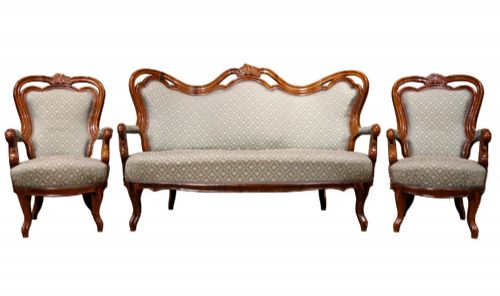
Makers across Italy, the Netherlands, and wider Europe produced these seats for formal salons and domestic chambers. Examples range from mid-eighteenth-century Italian walnut side chairs to later salon suites finished around eighteen ninety. Buyers find both individual items and matched pairs dressed in contemporary or historical fabrics, hessian, and upholstery.
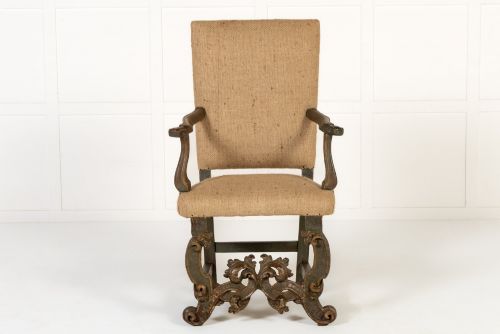
The typology extends from high-backed seventeenth-century Italian armchairs to later satinwood seating created in the Biedermeier taste. Regional variations display distinct stylistic traits, such as the curves associated with Dutch rococo chair back settees or the restrained lines of Louis XVI style furniture. Each piece reflects the interior fashions of its specific origin and period.
How they were made
Carpenters constructed the foundational frames primarily using solid walnut, alongside satinwood and giltwood for specific decorative schemes. Timber components were shaped by hand, employing traditional joinery methods suited to bearing weight and supporting applied ornamentation. Workshops also utilised painted finishes on wood surfaces to achieve desired aesthetic effects.
Upholstery techniques involved securing foundational webbing, hessian, and fabric directly to the wooden framework to create padded seats and backs. Textile selection varied widely according to the intended function and period, ranging from simple woven materials to elaborate decorative covers. Giltwood pieces received layers of gold leaf applied over prepared grounds to highlight carved details.
Listings feature walnut as the primary timber, alongside examples in satinwood and giltwood across various European periods.
What varies in quality
Quality in these chairs rests upon the crispness of the timber carving and the structural integrity of the frame. Superior examples display deeply sculpted walnut details, such as rococo flourishes or baroque scrolls, executed with precision by skilled hands. Inferior pieces often show softer lines, heavy modifications, or timber fatigue from centuries of use.
The refinement of the proportions and the fidelity of the period style further distinguish better pieces from standard production. Well-balanced forms with harmonious lines command greater appreciation among collectors than stiff or awkward adaptations. The retention of original framing elements without extensive replacement timber preserves the integrity of the object.
The Upholstered Continental Chair Glossary
- Giltwood
- Wood that has been covered with a thin layer of gold leaf. This technique was frequently utilised on formal continental furniture to create a brilliant metallic finish.
- Biedermeier
- A central European style dating to the first half of the nineteenth century. It prioritises clean lines and utilitarian comfort over excessive ornamentation.
- Rococo Revival
- A nineteenth-century stylistic movement that reinterpreted the asymmetrical curves and naturalistic motifs of the eighteenth-century rococo period. It appears frequently on Victorian-era seating.
- Settee
- A long upholstered seat with a back and arms, designed for more than one person. Eighteenth-century examples often share design motifs with matching armchairs.
- Hessian
- A coarse woven fabric typically made from jute fibres. It serves as a traditional foundation material beneath the final textile layer in upholstery.
Upholstered Continental Chair: Frequently Asked Questions
How do I identify a seventeenth century chair?
Seventeenth-century chairs are characterised by heavy timber construction, rectilinear frames, and restrained joinery that predates the flowing curves of the rococo era. They frequently employ solid walnut and feature high backs designed for formal domestic or civic interiors.
Collectors look for structural markers specific to the period, such as turned stretchers and mortise-and-tenon joints secured with wooden pegs. The overall weight and density of the wood reflect seventeenth-century woodworking practices.
What is a salon suite?
A salon suite comprises a matching set of seating furniture, typically including a settee and several armchairs or side chairs intended for a formal drawing room. These ensembles ensured visual harmony across the reception spaces of nineteenth-century homes.
Such suites were produced as cohesive units by continental workshops, sharing identical carved details, wood types, and upholstery fabrics. Surviving complete suites offer insight into period interior decoration.
Where were continental gilt side chairs used?
Continental gilt side chairs were placed against the walls of formal salons, ballrooms, and reception rooms in grand European residences. Because they functioned primarily as part of the room's decorative scheme rather than for heavy daily lounging, their carved frames often survived in pristine condition.
These chairs were easily moved to accommodate guests during gatherings, making them versatile components of period interior design. Their reflective gilt surfaces added brightness to candlelit evening rooms.
How do I care for antique upholstery?
Care for antique upholstery involves protecting the fabric from direct sunlight and avoiding harsh chemical cleaning agents. Regular gentle dusting with a soft brush helps prevent particulate accumulation within the weave of the textile.
Environmental stability is essential for preserving both the internal stuffing materials, such as hessian and hair, and the outer fabric. Maintaining moderate room humidity prevents the timber frame from drying out and loosening the upholstery tension.