

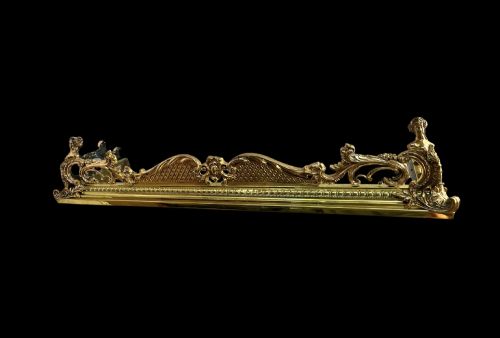
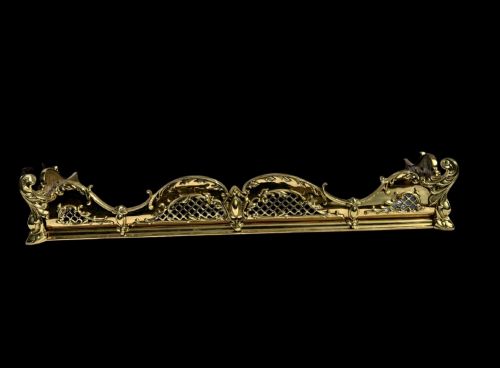


Ornate Brass Hearth Surround
An ornate brass hearth surround brings warmth and period character to a fireplace, offering both containment for ash and a polished metallic framing.
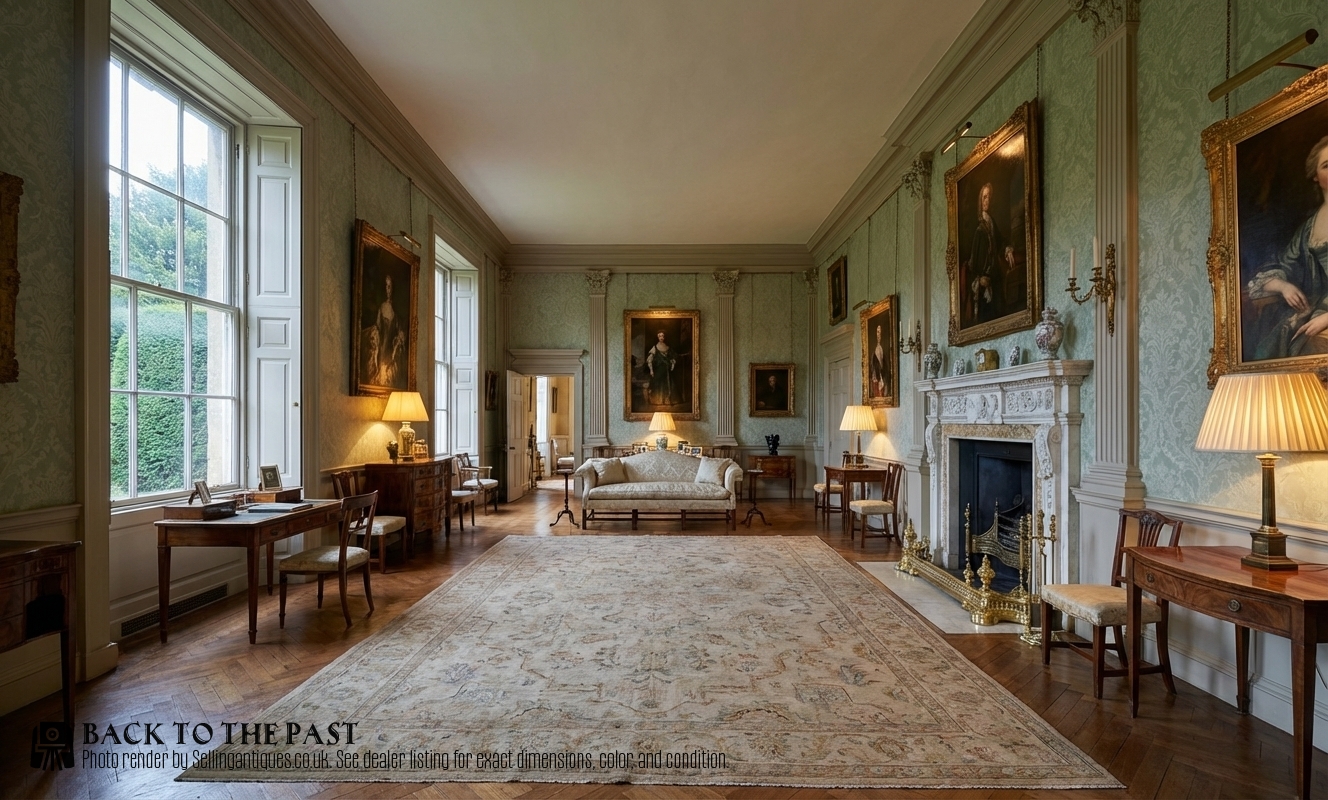
Ornate Brass Hearth Surround
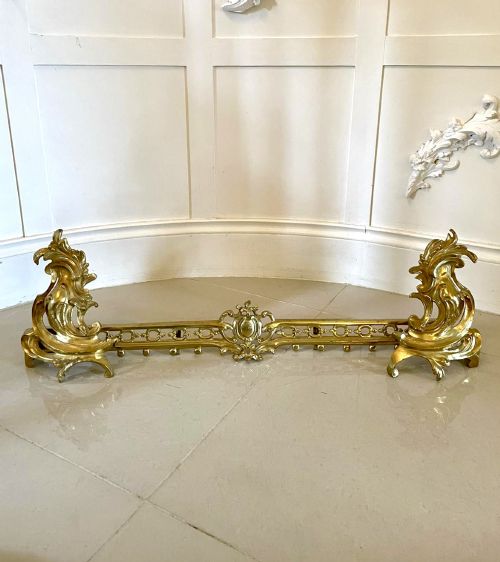
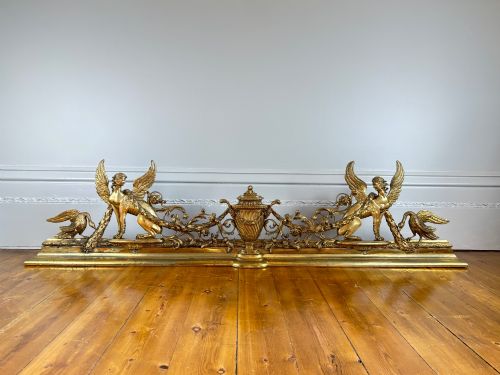
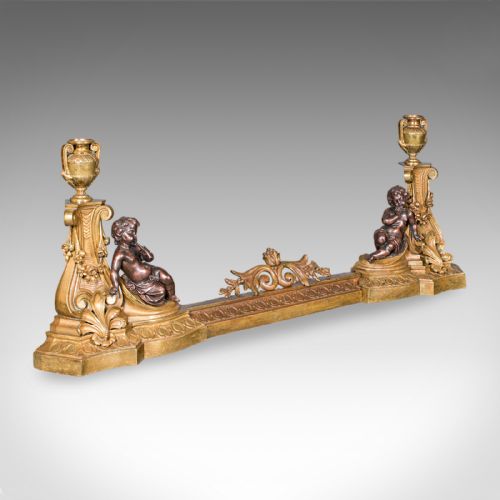
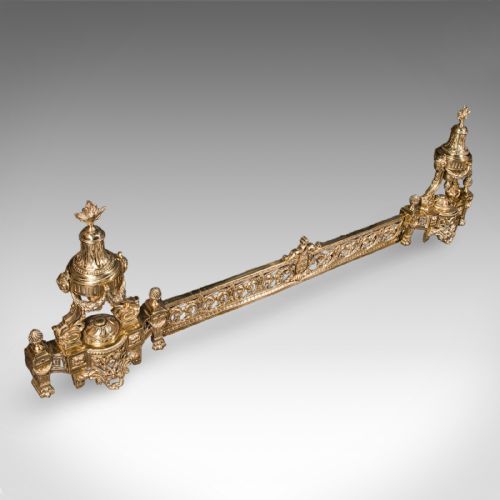
An ornate brass hearth surround functions primarily as a fender or fire kerb placed directly in front of an open fireplace to contain embers and protect the floor. These pieces frequently date from the Victorian era and the nineteenth century, spanning periods from eighteen sixty to nineteen twenty.
The forms vary from standard fixed lengths to extending and adjustable designs, alongside matched pairs of chenets. Buyers encounter French Rococo, Louis XV style, and Neoclassical Revival aesthetics alongside English Victorian interpretations.
Makers and origins cross between English workshops and French foundries, sometimes incorporating steel, copper, or cast iron components alongside the dominant brass structure.
How they were made
The construction relies heavily on cast brass, gilt bronze, ormolu, and gilded brass, often combined with heavy iron frames or steel elements for structural rigidity. Artisans employed casting and chasing techniques to achieve elaborate scrollwork, garlands, and Rococo motifs.
Extending mechanisms utilised sliding metal tracks that allowed the fender to fit various hearth widths securely. Surface decoration ranged from polished natural metal to polychromed finishes and fire gilding.
Some Victorian fenders arrived with built-in spaces specifically designed to warm chilly toes on winter mornings.
What varies in quality
The weight and thickness of the cast metal separate standard production items from superior examples, as heavier pieces utilise more substantial brass and bronze. Finer specimens display crisp chasing and deeply modelled detail across garlands, foliage, and scrollwork rather than shallow stamped patterns.
The complexity of the mechanism in adjustable models influences the standard, with smooth extension actions and robust locking screws indicating superior workshop production.
E F Caldwell New York
The Ornate Brass Hearth Surround Glossary
- Ormolu
- Finely chased gilded bronze produced by applying a mercury and gold amalgam to a bronze base. This technique creates a rich, lasting metallic surface found on French pieces.
- Chenet
- A firedog or ornamental iron support placed on the hearth, often matching the design of the surrounding fender. Pairs of chenets flank the fire opening.
- Fender
- A low metal guard placed around the hearth to keep burning coals and ash contained. Many nineteenth century examples feature adjustable sliding sections.
- Rococo Revival
- A nineteenth century design style characterised by asymmetrical scrolls, C-scrolls, and naturalistic plant motifs. This aesthetic heavily influences ornate fireplace accessories of the period.
Ornate Brass Hearth Surround: Frequently Asked Questions
How do I measure for a fender?
Measure the width and depth of the fireplace opening and hearth stone to ensure the fender sits correctly without blocking foot traffic.
Adjustable models offer flexibility if exact hearth measurements fall between fixed standard lengths.
Are these fenders adjustable in width?
Many nineteenth century examples feature sliding sections that allow the overall length to expand or contract.
Fixed models remain solid and require precise matching to the dimensions of the fireplace hearth.
How do I clean ornate brass?
Gentle dusting with a soft brush helps maintain the surface without disturbing patination or wearing away thin gilding.
Avoid harsh chemical dips that strip the historic finish and leave raw, overly bright metal.
What is the difference between ormolu and brass?
Ormolu consists of a gold and mercury mixture applied to a bronze base, producing a warm and durable surface finish. Brass is an alloy of copper and zinc that forms the primary structure of standard English hearth surrounds.