



French Gilt Hearth Guard
A french gilt hearth guard brings warmth and opulence to a room, protecting the floor while framing the fire with classical French flair.
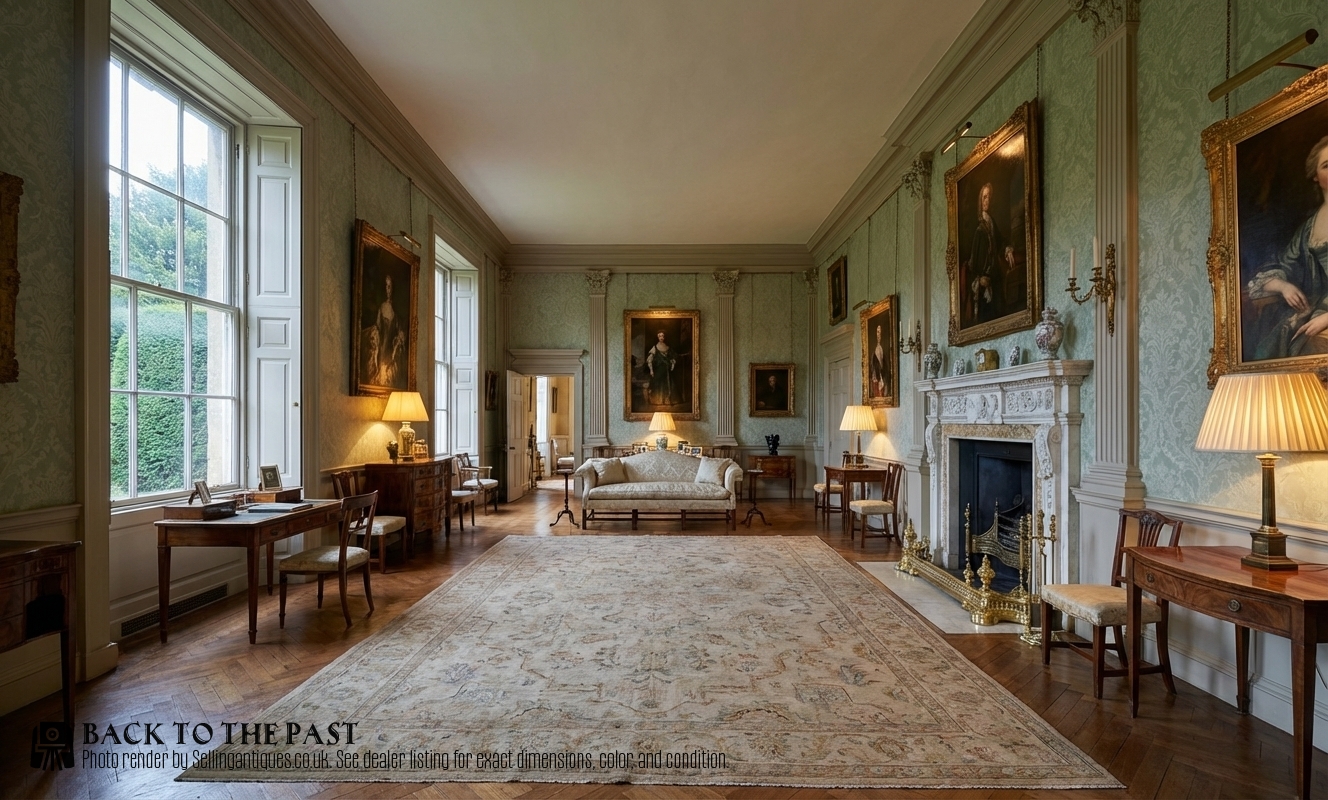
French Gilt Hearth Guard
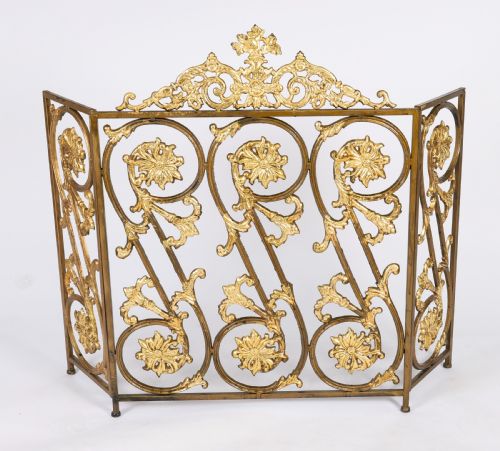
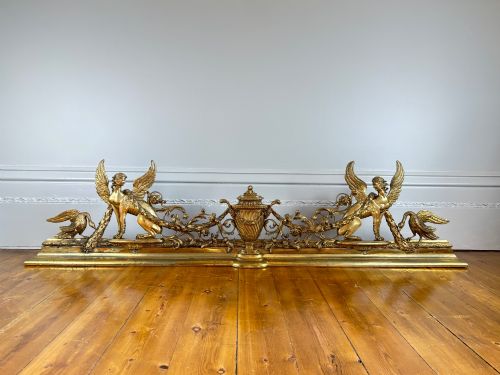
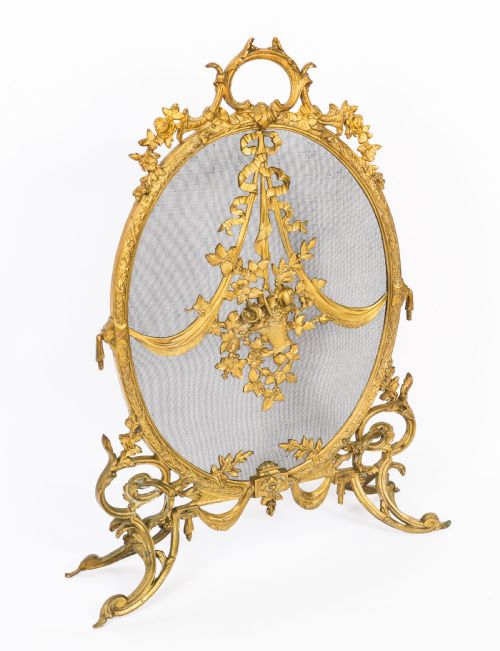
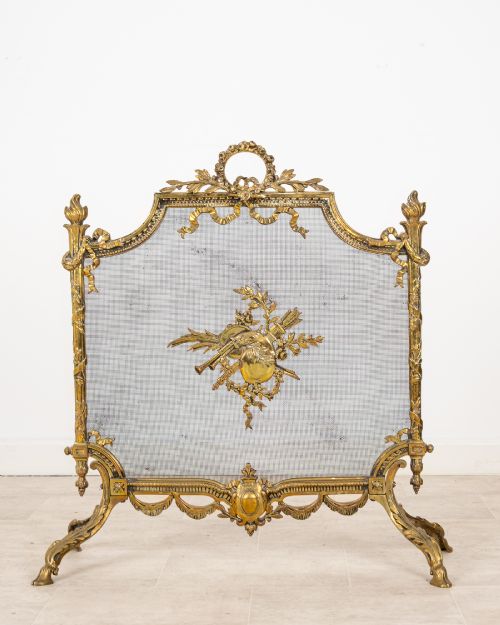
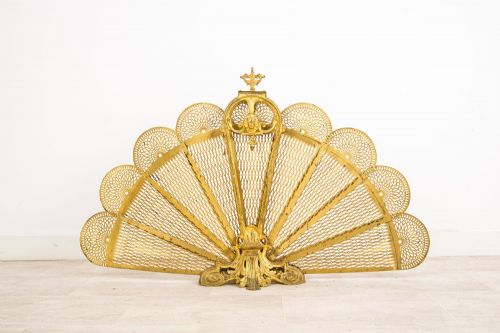
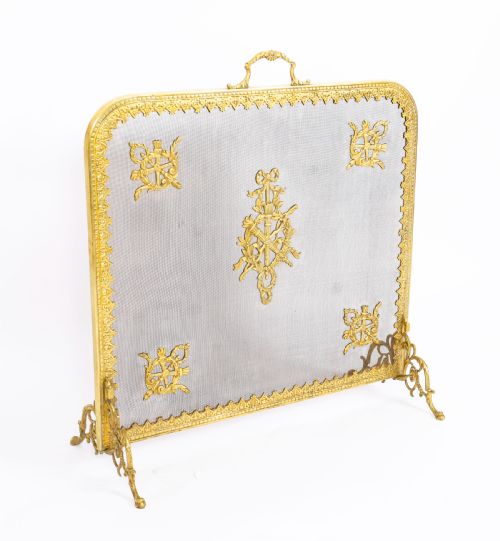
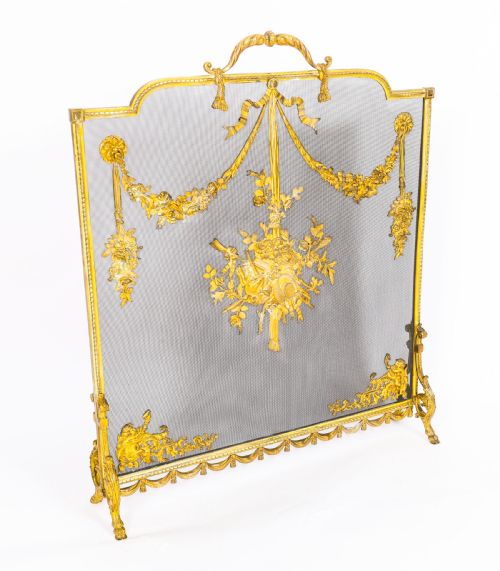
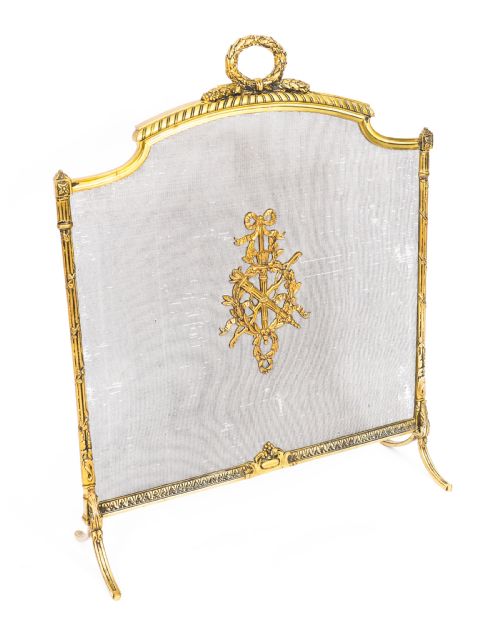
You are most likely to meet nineteenth-century examples on this page, particularly pieces exhibiting Rococo, Empire, and Louis XVI revivals. They range from solid brass and polished steel frames to intricately cast ormolu and gilt bronze configurations with wire or steel mesh.
The forms vary from folding fan screens and standing shields to fender surrounds that frame the hearth opening entirely. Each style reflects the grand decorative tastes of nineteenth-century French domestic interiors adapted for practical fireside use.
Assessing quality in gilt metalwork
The distinction between ordinary production and superior craftsmanship lies in the crispness of the chased detail upon the bronze and ormolu mounts. Finer pieces display deeply undercut castings where flora, ribbons, and classical trophies retain sharp, sculptural definition rather than soft edges.
Weight and structural integrity also separate the tiers of manufacture, as better guards employ heavier gauge brass and substantial bronze frames that stand solidly without wobble. The quality of the gilding itself, showing enduring warmth and even coverage across complex scrolling surfaces, marks the superior workshop.
E F Caldwell New York
The French Gilt Hearth Guard Glossary
- Ormolu
- Gilded bronze, where finely ground gold is amalgamated with mercury and applied to a bronze base through heat. This technique produced a rich, durable golden lustre characteristic of luxury French metalwork.
- Chenet
- French term for firedog, used to support logs within the hearth while often presenting an ornamental front facing the room. They frequently match or complement the design of the fire screen or fender.
- Rococo revival
- A nineteenth-century design movement resurrecting the asymmetrical scrolls, shell motifs, and naturalistic curves of the eighteenth-century French Louis XV style. It dominates many ornamental brass and bronze fireside accessories.
- Peacock fan screen
- A fire screen constructed from overlapping metal blades that expand outward like a tail feather. When closed, the blades fold neatly into a protective housing beside the fireplace.
French Gilt Hearth Guard: Frequently Asked Questions
How do I clean a gilt hearth guard?
Dust the metal gently with a soft dry brush to remove soot and surface debris without scratching the delicate metallic finish. Avoid chemical polishes or abrasive cloths, which can strip away the historical gilt surface.
For stubborn grime, use a slightly damp microfiber cloth followed immediately by thorough drying. Preservation of the aged patina is paramount for antique metalwork.
Can I use these screens with an open fire?
Most pieces feature robust wire or steel mesh designed specifically to catch sparks and flying embers safely. However, vintage mesh requires careful inspection for structural integrity before exposure to intense heat.
Consider whether the frame construction remains solid enough to handle the thermal expansion of a roaring fire. Many collectors prefer utilising them with gas grates or simply as decorative room focal points.
How do I date a French brass screen?
Examine the casting quality, fastening methods, and stylistic revival cues to establish the manufacturing period. Nineteenth-century examples often exhibit hand-chased details combined with machine-threaded screws or distinct patination.
Stylistic markers such as Empire revival torch motifs or Rococo asymmetry point toward specific decades between eighteen-sixty and nineteen-ten. Comparing the construction techniques to dated comparative pieces helps narrow the timeline.
What is the difference between a fender and a screen?
A fender sits low on the floor around the hearth perimeter to keep logs and rolling embers contained within the fireplace footprint. It outlines the hearth space spatially.
A screen stands upright to block radiant heat and flying sparks from entering the wider room. Many domestic settings utilised both accessories together for complete fireside protection.