
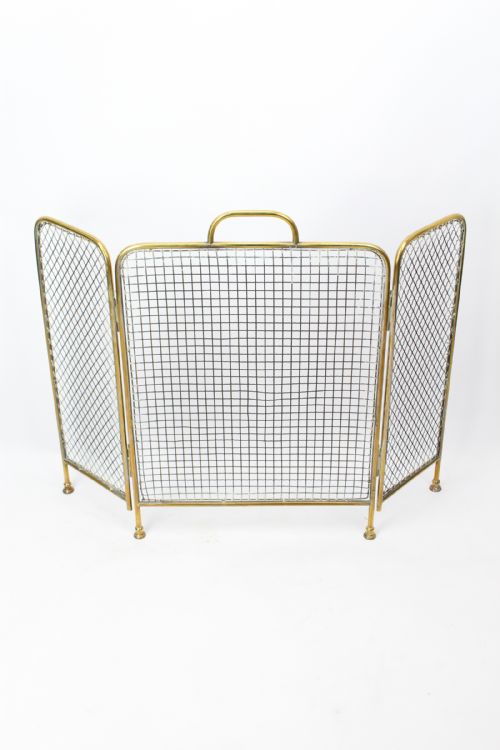


Brass Fireplace Protector
These brass fireplace protector pieces shield rooms from stray embers while bringing warmth and shine to the hearth.
Brass Fireplace Protector
A brass fireplace protector stands before the hearth to catch sparks and contain ash while the fire burns. These functional hearth accessories appear across the Victorian, Edwardian and early twentieth century periods, reflecting changing domestic habits in British and continental homes.
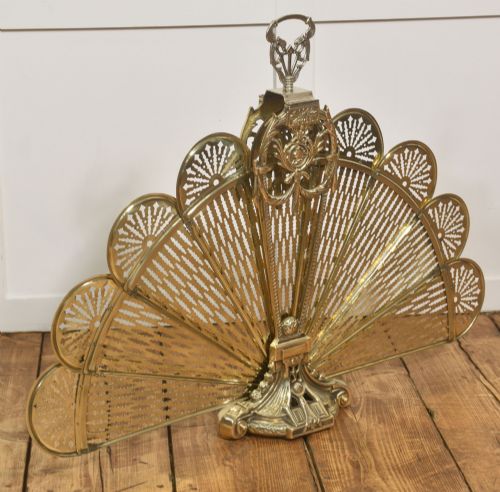
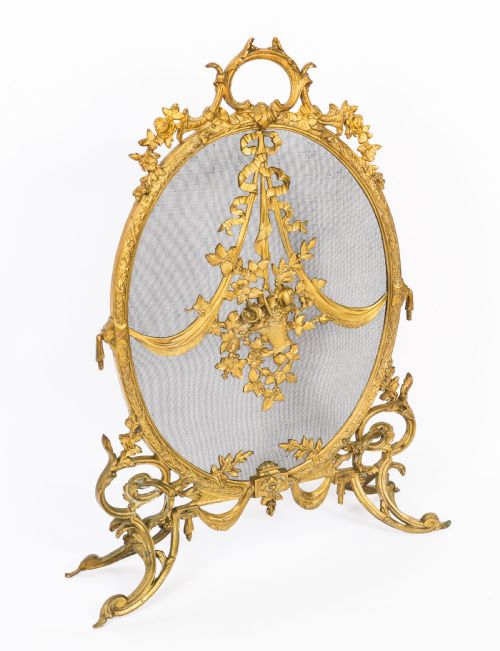
The most common form met here is the fire screen or spark guard, ranging from simple folding panels to elaborate French Rococo revival designs. Many pieces use wire or steel mesh combined with a solid metal frame to balance safety with visibility of the flames.
How they were made
Makers constructed these hearth guards using brass alongside iron and steel for structural strength, often incorporating fine mesh panels to trap hot cinders. Some decorative examples utilise cast gilt bronze elements, particularly within French revival styles.
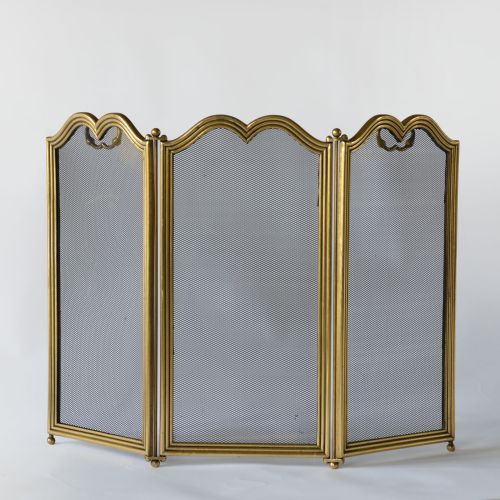
Frames were shaped through casting, beating and riveting, joining solid metal edges to flexible wire mesh. Folding mechanisms relied on sturdy hinges that allowed tripartite or bowed guards to curve securely around the fireplace opening.
Listings feature items spanning the Victorian era through the 1920s, constructed in brass, iron, wire mesh and gilt bronze.
What varies in quality
Quality rests in the weight of the metal and the precision of the assembly, distinguishing heavy cast brass frames from thinner pressed alternatives. Superior pieces maintain rigid hinges and securely fixed mesh that withstands decades of heat without sagging.
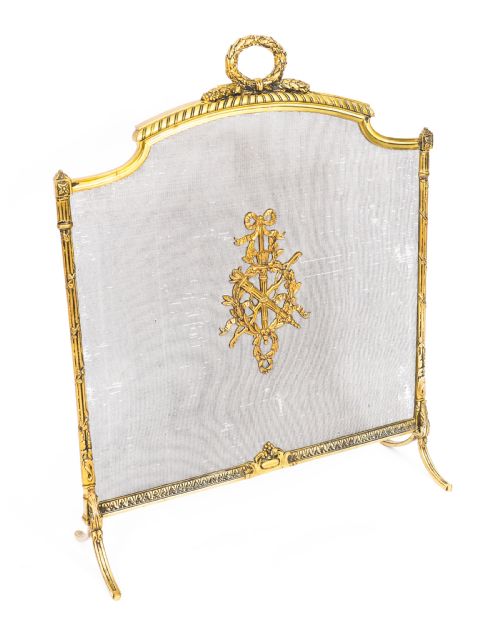
Decoration also defines the range, moving from plain utility spark guards to ornate French Rococo or Empire revival castings with detailed chasing. The crispness of the foliage, torch or scrollwork indicates the skill of the original metalworker.
The Brass Fireplace Protector Glossary
- Spark guard
- A protective screen placed before an open fire to catch flying embers. These devices use fine mesh to stop sparks while allowing heat to circulate into the room.
- Nursery fender
- A tall protective guard designed to keep children and pets at a safe distance from the hearth. They often feature bowed or multi-panel frames for enclosure.
- Tripartite folding
- A screen divided into three hinged sections that angle around the hearth opening. This construction allows the guard to adjust in width and fold flat when not in use.
- Gilt bronze
- Copper alloy treated with a gold coating, frequently seen in French revival decorative mounts. It provides a rich, enduring metallic lustre.
- Wire mesh
- Woven metal grid material fitted within frames to block cinders. It forms the protective barrier of the spark screen.
Brass Fireplace Protector: Frequently Asked Questions
How do I choose the right size fireplace protector?
Measure the width and height of your fireplace opening to ensure the guard covers the entire hearth span safely. Consider whether you need a folding or bowed design to accommodate hearth stones and fenders.
Allow extra clearance around the sides if the guard sits outside the fireplace surround rather than flush against the opening.
Were these guards used in nurseries?
Many taller designs functioned specifically as nursery guards to keep young children from getting too close to open flames. These tall structures encircled the entire hearth area with robust mesh barriers.
Victorian households relied heavily on these enclosed fenders for domestic safety during the winter months.
What is the difference between a fire screen and a spark guard?
A fire screen often prioritises decorative appeal, historically shielding a cold fireplace during summer months or blocking radiant heat when seated close. A spark guard focuses strictly on safety with dense wire or iron mesh.
Many surviving pieces combine both roles, offering decorative brass frames fitted with functional spark mesh.
How do I clean brass and mesh fireplace protectors?
Dust the mesh gently with a soft brush and wipe brass surfaces with a dry cloth to remove soot and ash residue. Avoid harsh chemical cleaners that can strip original patination from the metal.
Gentle maintenance preserves the aged surface lustre built up over decades of use near the hearth.