

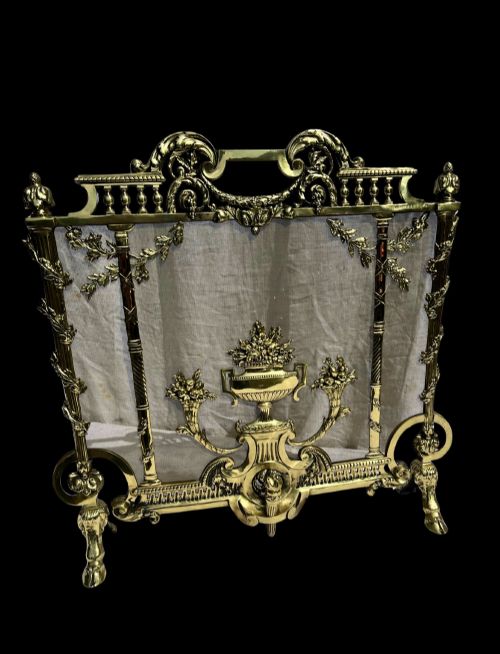
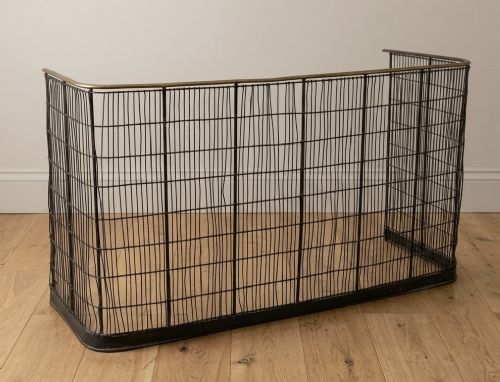
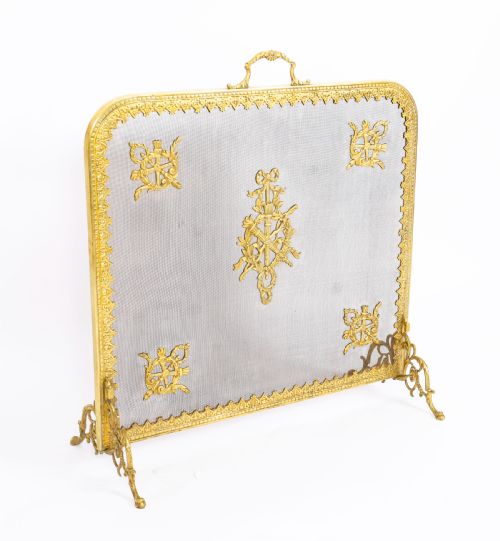
Vintage Brass Hearth Screen
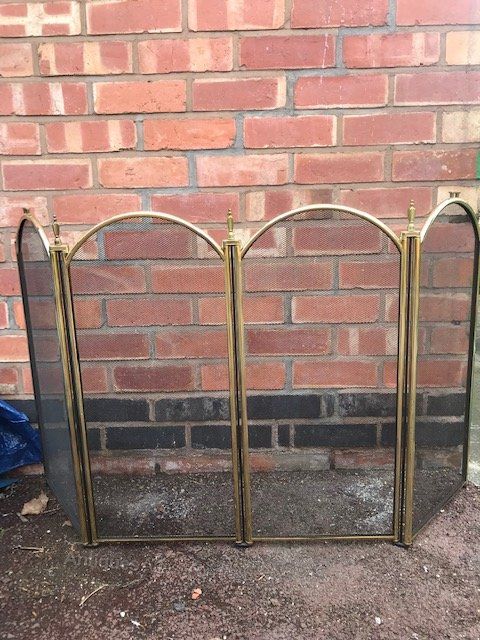
A vintage brass hearth screen guards the room while framing the fireplace with metalwork designed to catch the firelight.
Vintage Brass Hearth Screen
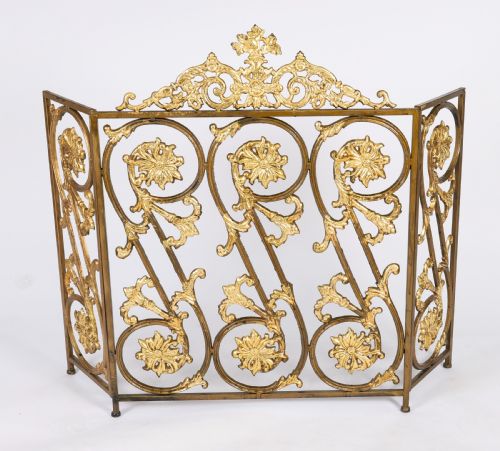
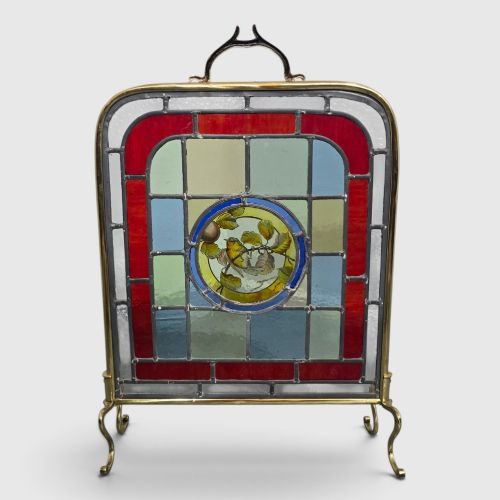
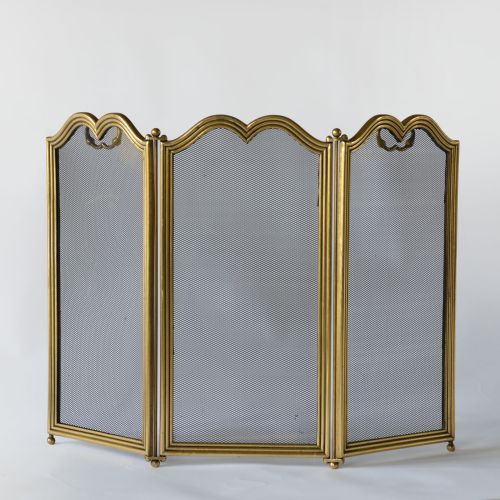
A vintage brass hearth screen provides a functional barrier in front of an open fireplace while adding decorative metalwork to the chimney breast. The selections here span the Victorian era, the Edwardian period, and the early twentieth century, showing both simple flat panels and articulated folding designs.
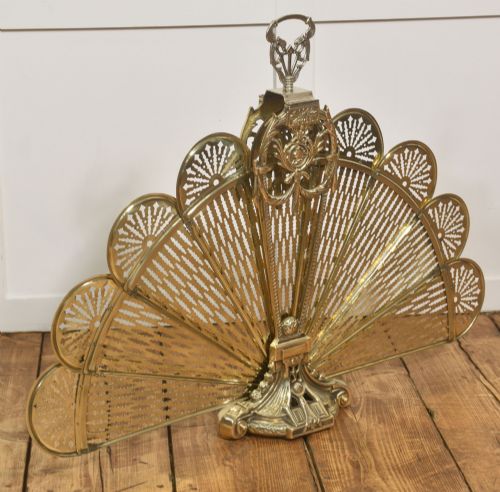
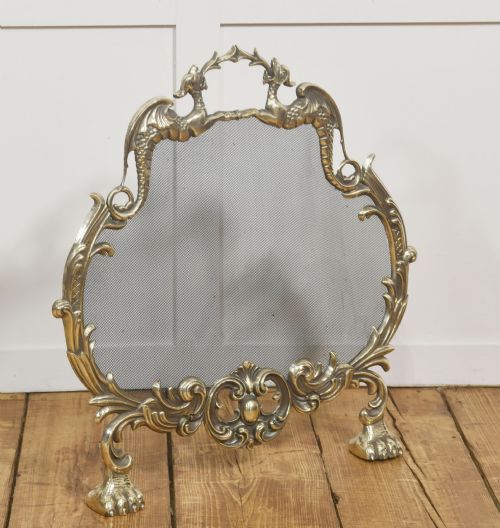
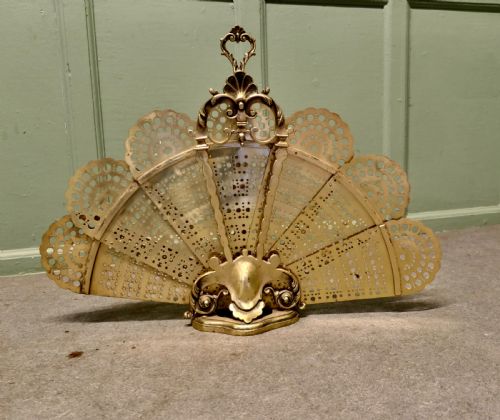
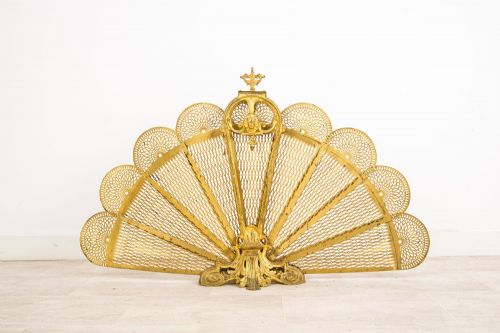
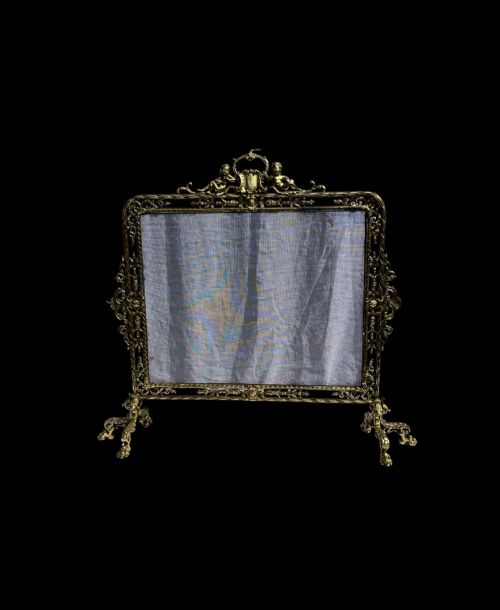
The most common form on this page is the folding peacock fan screen, which opens out in radiating metal blades to shield the hearth. Alongside these fan guards stand upright rectangular frames set with wire mesh, glazed panels, or embossed metal sheets.
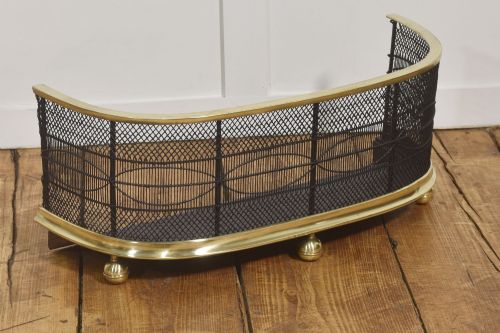
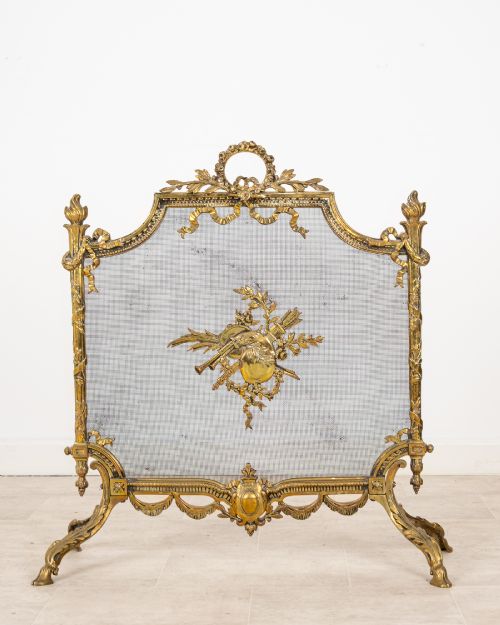
Origin styles range from English domestic utilitarian guards to ornate French revival pieces carrying Louis XIV, Louis XVI, and Rococo motifs. Makers also produced nursery fenders and three-fold guards designed to keep rooms safe from stray embers.
How they were made
Craftsmen built these guards primarily from brass frames combined with wire mesh, iron supports, and occasionally copper or steel elements. Many panels incorporate gilt brass, gilt bronze, or ormolu finishes that catch the ambient light of the hearth.
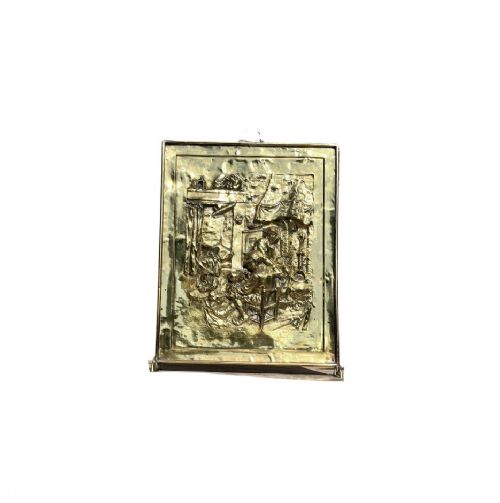
Decorative surfaces often rely on chasing, embossing, and piercing techniques to create floral trophies, coats of arms, and classical scrollwork. Folding mechanisms use hinges and sliding tracks to allow multi-section screens to expand and contract smoothly.
Vintage Brass Hearth Screen Retail Price Guide 2026
Typical asking prices for vintage brass hearth screen among the pieces listed under this phrase on Sellingantiques today, from the lower quarter to the upper quarter. They describe what is for sale here now, not the wider market.
What varies in quality
Quality in a vintage brass hearth screen rests upon the weight of the metal and the crispness of the chased or pierced ornamentation. Heavy cast bronze or thick brass frames maintain their rigidity over decades of handling, whereas thinner sheet metal flexes and distorts under heat.
Artistry in the decorative details separates standard utilitarian guards from high-style revival pieces. Hand-chased musical trophies, intricate peacock blade articulation, and securely joined mesh or glass panels show the hand of a skilled workshop.
The Vintage Brass Hearth Screen Glossary
- Spark guard
- A fine wire mesh or metal screen placed before an open fire to catch flying embers. These guards protect flooring and furnishings from stray sparks.
- Peacock fan screen
- A folding fireplace screen composed of overlapping metal blades that open like a tail. This design retracts neatly into a compact housing when not in use.
- Nursery fender
- A low metal barrier enclosing the hearth space to keep children at a safe distance from the fire. Some examples include integrated rails or mesh enclosures.
- Ormolu
- Finely ground high-zinc brass applied as a gilt finish to bronze or brass mounts. The technique gives a rich gold appearance to decorative metalwork.
Vintage Brass Hearth Screen: Frequently Asked Questions
How do I use a folding screen?
A folding screen expands across the hearth opening to block stray embers while allowing warmth to radiate into the room. Simply adjust the hinged panels to fit the width of your fireplace surround.
When the fire is extinguished, the sections fold flat or collapse inward for compact storage against the chimney breast.
Are these screens safe for modern fires?
Most pieces feature robust brass frames and fine wire mesh designed specifically to contain sparks and glowing ash. They function well with open wood or coal fires of traditional proportions.
Verify that the mesh or glass panels remain secure within the frame before placing the guard in front of an active fire.
How do I clean antique brass?
Dust the metal regularly with a soft cloth to prevent soot and ash accumulation from dulling the surface. Avoid harsh chemical polishes that strip away the aged patina built up over decades.
Gentle wiping with a damp cloth is usually sufficient to maintain the polished or gilt appearance of the brass work.
What is the difference between a fender and a screen?
A fender sits low on the hearth floor around the perimeter of the fireplace to contain rolling logs and ash. A screen stands upright to block sparks from leaping outward into the room.
Some larger nursery designs combine both elements into a single integrated protective structure.