


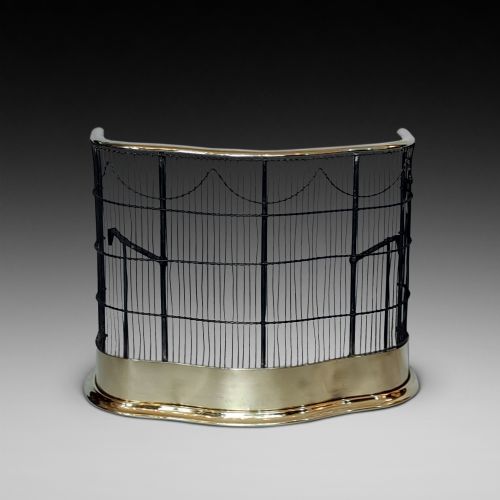


Edwardian Brass Fire Screen
An edwardian brass fire screen brings warmth and reflective shine to a hearth, shielding a room from stray sparks.
Edwardian Brass Fire Screen
An edwardian brass fire screen is a protective hearth accessory designed to sit before an open fireplace, combining utility with decorative metalwork. The pieces found here span the Edwardian period alongside Victorian, 19th Century, 1880, 1890, 1900, 1910, and 1920 examples.
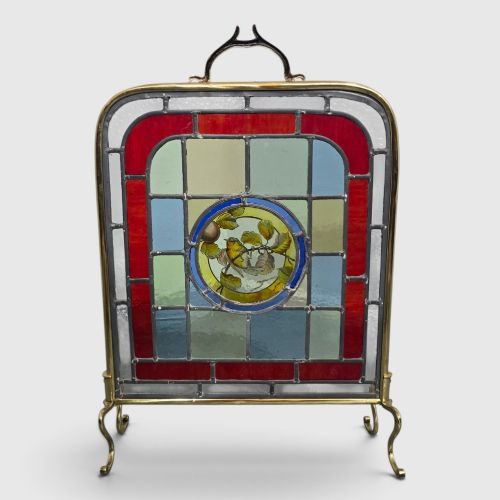
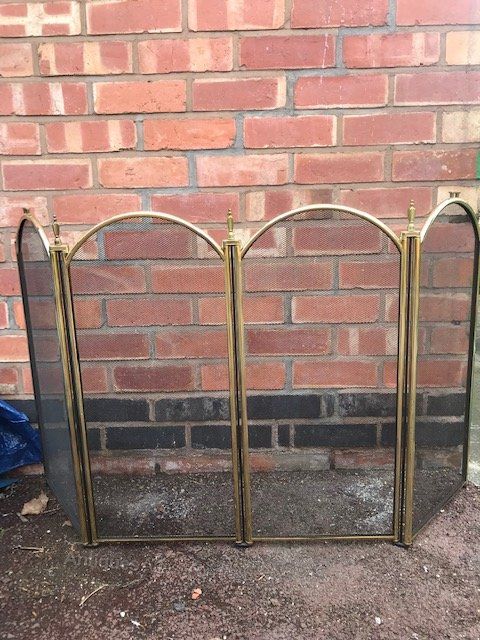
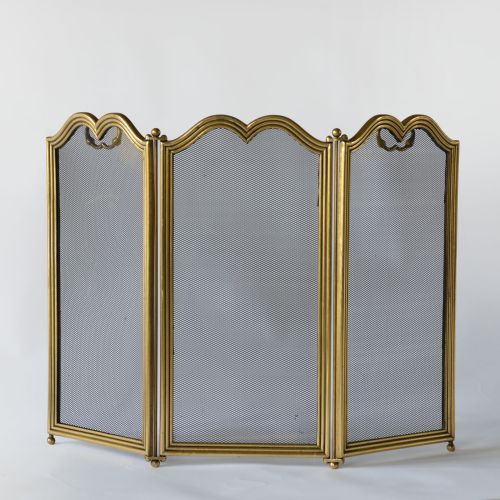
Forms vary from simple single panels to folding tripartite designs, gate-fronted guards, and nursery fenders equipped with clothes rails. The core framework relies consistently on brass, often framing glass, stained glass, wire mesh, mirrors, or textile inserts.
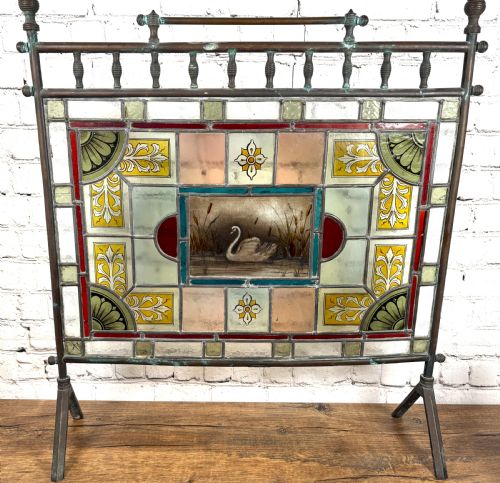
Stylistic influences lean heavily into Art Nouveau and Arts and Crafts aesthetics, featuring organic motifs alongside embossed details and copper or iron elements. Buyers will encounter both transparent glass panels and solid metal screens intended to manage hearth sparks.
What varies in quality
The sophistication of the decorative work sets examples apart, ranging from plain functional frames to elaborate Art Nouveau framing and embossed country house designs. The choice of interior panel - such as bevelled glass, painted tapestry, or stained glass - dictates the visual weight of the piece.
Structural heft and the integrity of moving parts, including hinges on folding screens and nursery fenders, determine durability. The combination of mixed metals like copper and brass adds complexity to the construction of better pieces.
Edwardian Brass Fire Screen Retail Price Guide 2026
Typical asking prices for edwardian brass fire screen among the pieces listed under this phrase on Sellingantiques today, from the lower quarter to the upper quarter. They describe what is for sale here now, not the wider market.
Listings feature brass, iron, glass, stained glass, lead, wire mesh, copper, and steel across Victorian and Edwardian periods.
The Edwardian Brass Fire Screen Glossary
- Tripartite folding
- A screen divided into three hinged sections that can angle around a hearth opening. This configuration allows the wings to adjust for stability and coverage.
- Wire mesh
- A woven metal web fitted within the frame to catch flying embers while maintaining visibility of the fire. It appears frequently on functional spark guards.
- Spark guard
- A protective barrier designed specifically to contain ashes and sparks from an open fire. These often feature fine mesh or glass panels.
- Nursery fender
- A low enclosing guard, sometimes featuring an integrated clothes rail, built to keep children at a safe distance from the hearth. They combine iron and brass construction.
Edwardian Brass Fire Screen: Frequently Asked Questions
How do I choose the right size fire screen?
Measure the width and height of your fireplace opening to ensure the screen covers the space adequately without overwhelming the hearth.
Consider whether a folding tripartite design or a rigid single panel suits the physical layout of your mantel and fireplace surround.
Can these screens be used with a working fireplace?
Many historical screens include wire mesh or solid metal panels specifically designed to catch sparks from an active fire. Glass and mirror panels are better suited to unlit hearths during warmer months.
Check the internal material of your chosen screen to confirm whether it utilises heat-resistant mesh or decorative glass.
How do I clean brass and copper screens?
Dust the frame regularly with a dry cloth to prevent soot accumulation and maintain the natural patina of the metal. Avoid harsh chemical polishes that can strip antique finishes.
Glass or mirror inserts can be cleaned with standard glass cleaner applied carefully to avoid contact with the surrounding brass.
What is the difference between Art Nouveau and Arts and Crafts screens?
Art Nouveau styles typically feature fluid, asymmetrical organic lines, floral motifs, and whiplash curves in the brass framing. Arts and Crafts pieces tend to emphasise visible construction methods, hammered copper, and simpler geometric forms.
Both styles emerged during the broader late Victorian and Edwardian eras represented in these collections.