


Art Nouveau Fireguard
These art nouveau fireguard pieces combine fluid natural forms with practical hearth protection, bringing unmistakable period character to any fireplace.
Art Nouveau Fireguard
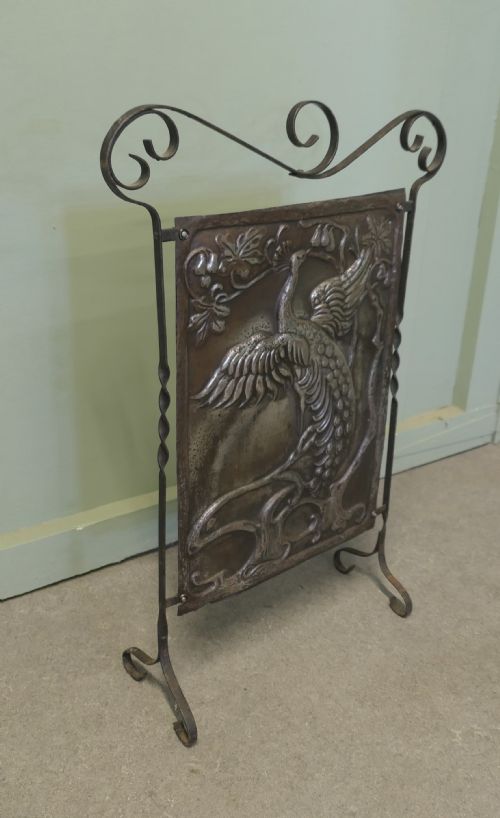
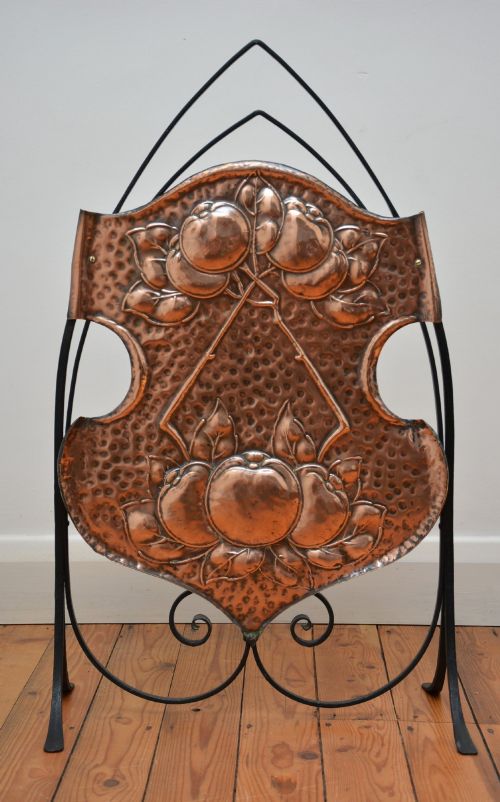
When you search for an art nouveau fireguard, you encounter hearth accessories designed to shield a room from fireplace heat while displaying characteristic period aesthetics. The pieces seen here span the Victorian era, the 1900s, and the nineteenth century, taking the form of fire screens, fireplace screens, and fire fenders. Most examples combine robust metal frames with decorative panels that reflect the organic lines of the Arts and Crafts and Art Nouveau movements.
The most common formats on this page are upright fire screens designed to sit in front of an unlit grate during warmer months. These screens frequently incorporate glass, textile, or metal panels held within sturdy frames of brass, copper, iron, or wrought iron. Alongside screens, the selection includes fender designs that frame the hearth perimeter with matching metalwork.
How they were made
The construction of these pieces relies on traditional metalworking techniques applied to brass, copper, and iron. Metal frames are beaten, cast, or riveted to hold delicate inserts securely within the structure.
Makers integrated various decorative mediums into the metal framework, including cut glass panels, woven wool textiles, and tapestry inserts. Iron and wrought iron provide structural rigidity, while polished brass and copper surfaces offer reflective warmth around the fireplace.
Listings feature pieces spanning the Victorian era, the nineteenth century, and the 1900s, constructed from brass, copper, iron, and wrought iron.
What varies in quality
The refinement of surface finishes also distinguishes different grades of execution. Finer pieces demonstrate careful attention to the polished surfaces of brass and copper, alongside secure joinery in the iron and wrought iron components that ensures stability on the hearth.
The Art Nouveau Fireguard Glossary
- Fire Screen
- A movable panel placed before a fireplace to block radiant heat or conceal an empty grate. These objects serve both protective and decorative functions in a room.
- Fire Fender
- A low metal guard placed around the hearth to contain ash and embers. They match the materials and aesthetic of contemporaneous fire screens.
- Repoussé
- A metalworking technique where the metal is hammered from the reverse side to form a raised design in relief. This method appears frequently on copper panels.
- Tapestry
- A form of textile art woven on a loom, often incorporated into screen frames as decorative panels. These insertions introduce softness and colour to the metal structure.
Art Nouveau Fireguard: Frequently Asked Questions
How were fire screens used?
Fire screens served a practical purpose during warmer months when fires were unlit, blocking soot views and drafts from the chimney. They also protected people from the intense radiant heat of active fires.
Households positioned them directly in front of the fireplace opening to act as both a physical barrier and a decorative focal point.
What materials are used?
These pieces utilise metals such as brass, copper, iron, and wrought iron for their primary structural frames and fenders. The central panels frequently incorporate cut glass, wool, or textile tapestries.
Combinations of polished copper and iron are particularly common across the surviving nineteenth century and nineteen hundreds examples.
How do I date a fire screen?
Dating relies upon stylistic markers associated with the Arts and Crafts and Art Nouveau movements alongside construction methods. Pieces from the Victorian period often display heavier ironwork, while 1900s examples lean towards polished copper and organic motifs.
Examining the materials, such as cut glass inserts or specific tapestry styles, helps place the object within its historical production window.
How do I live with one?
Living with these pieces involves placing them before a fireplace as a decorative element when the hearth is not in use. They require stable placement on a level hearth to ensure safety and balance.
Maintenance involves gentle cleaning appropriate for polished brass, copper, or iron to preserve the metal surfaces without damaging historic finishes.