


Art Nouveau Hearth Screen
An art nouveau hearth screen keeps the heat back while bringing flowing lines and hammered metal right to the centre of the room.
Art Nouveau Hearth Screen
An art nouveau hearth screen is a decorative barrier placed in front of an empty fireplace during warmer months, combining utility with distinct period aesthetics. These domestic furnishings arrive in forms such as fire screens and fireplace screens, serving as focal points within the room.
The pieces on this page span the Victorian era, the 1890s, and the 1900s, reflecting late nineteenth and early twentieth-century design movements. Alongside the dominant Art Nouveau style, examples also align closely with the related Arts and Crafts movement.
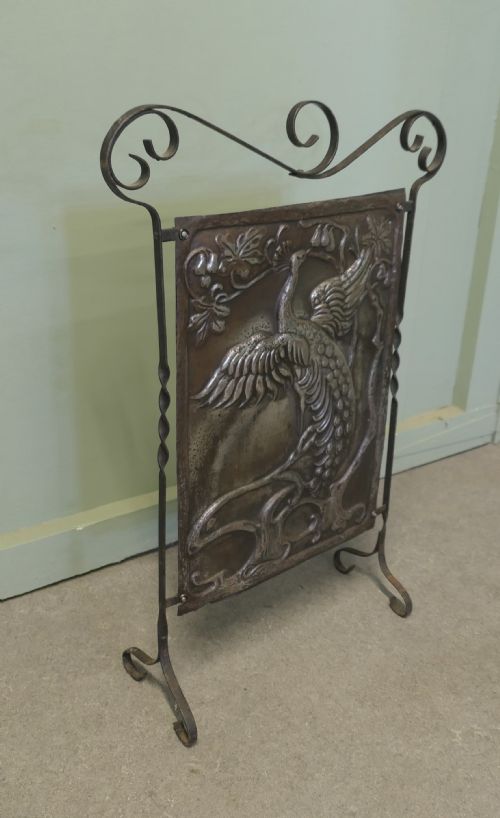
Makers and artisans of this period produced these screens in both French and British workshops, utilising durable metals and decorative panels. Buyers encounter plain frames alongside elaborate designs featuring specific animal motifs like peacocks and parrots.
How they were made
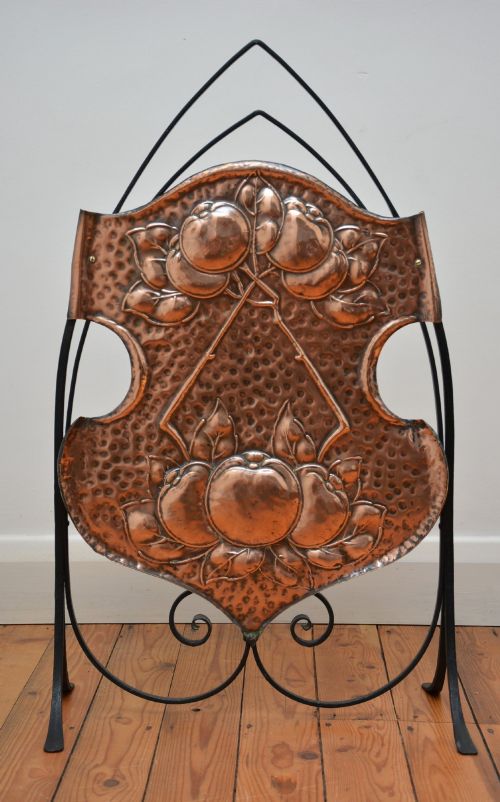
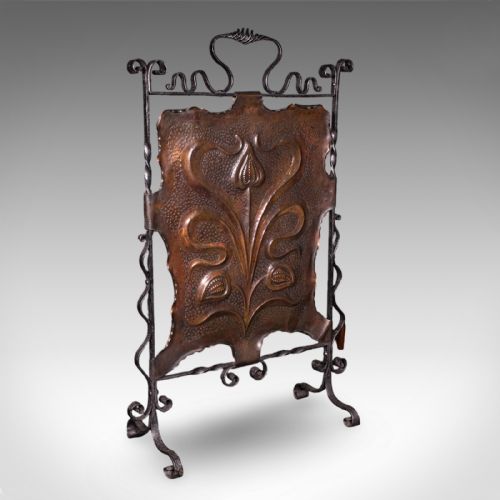
Craftsmen built the structural frames using wrought iron, brass, and copper, often employing polished or beaten finishes to catch the firelight. Iron provided sturdy support, whilst copper and brass offered malleable surfaces well suited to organic embossing.
Decorative panels incorporate diverse materials including cut glass, textile, and wool tapestry to create visual contrast against the metal framework. Artisans secured these elements within freestanding or folding metal mounts designed to withstand proximity to the hearth.
Watch out for exotic birds staring through the soot, as parrots and peacocks frequently peer out from the metalwork.
What varies in quality
Quality rests in the heaviness of the gauge metal and the crispness of the hand-worked details on the copper and brass plates. Heavier frames maintain stability on uneven hearths, whilst finer repoussé work shows deliberate, confident hammer marks rather than mechanical stamping.
The choice of infill panel also dictates the character of the piece, with woven tapestries and heavy cut glass demanding greater skill in mounting than plain wire mesh or simple sheet metal. Integrated framing that securely holds delicate textiles without strain marks superior workshop production.
The Art Nouveau Hearth Screen Glossary
- Repoussé
- A metalworking technique where the artisan hammers the metal from the reverse side to form a raised design on the front. This method defines the sculptural panels found on many copper and brass screens.
- Hearth screen
- A portable barrier placed before a fireplace opening when a fire is not burning. These items protect the room from soot and drafts while decorating the hearth.
- Arts and Crafts
- A design movement valuing handcraftsmanship, simple forms, and traditional materials over mass production. Many screens on this page blend these principles with sinuous natural motifs.
- Fireplace reflector
- A polished metal screen designed to bounce ambient light and residual warmth back into the room. French examples often adopted this specific reflective function.
- Tapestry
- A heavy hand-woven textile featuring pictorial designs, frequently mounted into metal frames. Wool panels bring softness and colour to rigid iron and brass structures.
Art Nouveau Hearth Screen: Frequently Asked Questions
What is an art nouveau hearth screen used for?
These screens stood in front of the fireplace opening during the summer months when fires were not lit. They hid unappealing ash and grates while adding decorative warmth to the room.
Beyond simple decoration, some designs incorporated polished metal reflectors to catch daylight or residual warmth. They served as key interior furnishings in late Victorian homes.
How do I date an art nouveau hearth screen?
Dating relies on examining the materials, construction methods, and stylistic motifs present in the frame and panel. Pieces on this page originate from the late nineteenth century through to the early 1900s.
Early examples often share characteristics with the Arts and Crafts movement, whilst later pieces embrace more fluid, asymmetrical plant lines. Hardware joints and screw types also help confirm the period of manufacture.
Are brass and copper screens difficult to clean?
Regular maintenance requires only gentle dusting with a soft, dry cloth to prevent the buildup of soot and grime. Aggressive metal polishes can strip away desirable aged patinas that accumulate over decades.
Leaving the natural oxidation intact preserves the historical character of the piece. Special care must be taken if the screen includes fabric or cut glass panels.
How do I place a screen safely by a fireplace?
These freestanding items require a flat, stable surface on the hearth to prevent tipping or sliding. They should sit squarely in front of the opening without obstructing surrounding woodwork.
Because many vintage screens incorporate textiles or glass, users typically remove them before lighting a real fire. They work best as decorative architectural accents in unused hearths.