

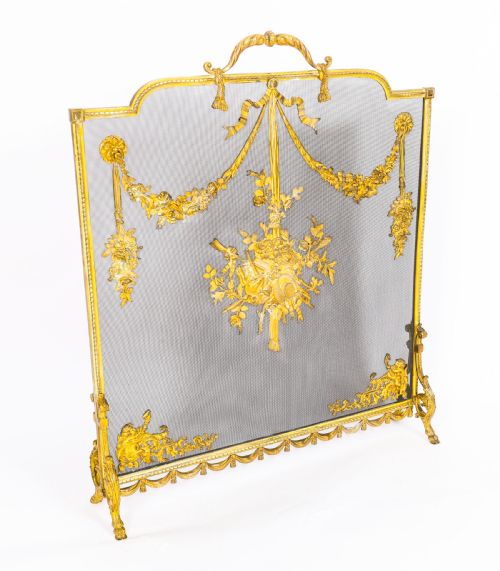
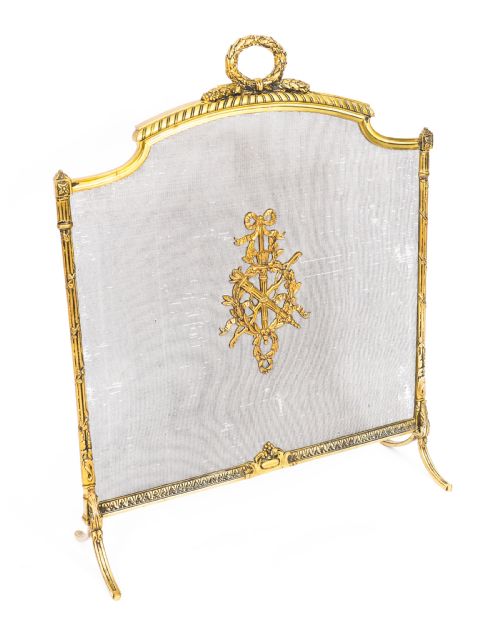


Gilt Bronze Fireplace Guard
A gilt bronze fireplace guard protects a room from stray sparks while bringing French decorative metalwork into the hearth.
Gilt Bronze Fireplace Guard
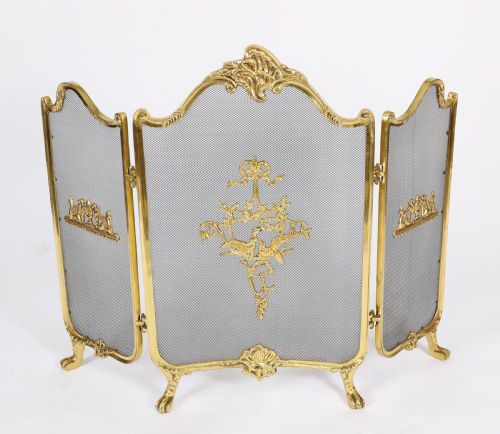
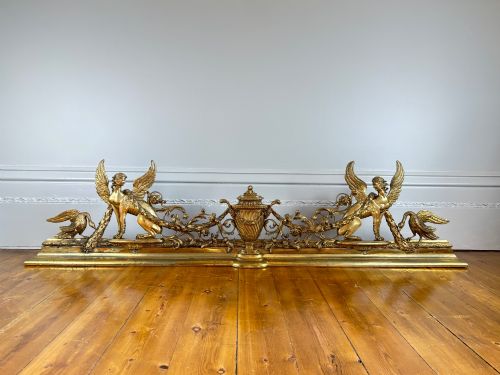
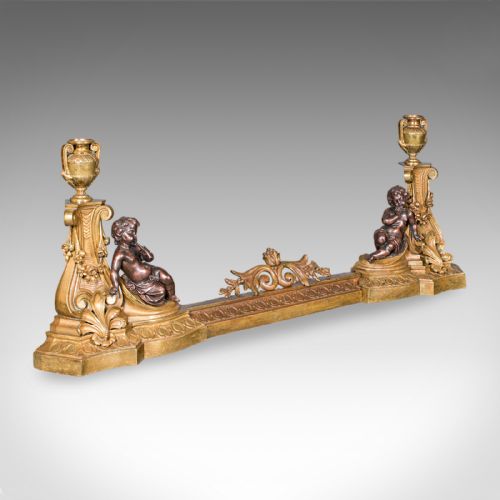
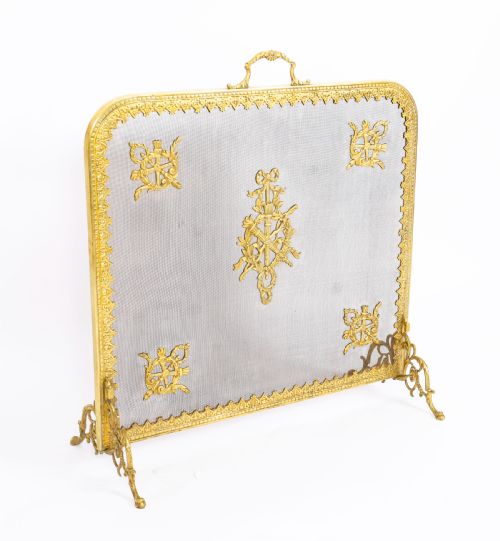
A gilt bronze fireplace guard takes the form of fire screens, fenders, chenets, and fire kerbs dating from the nineteenth and early twentieth centuries. These hearth accessories originate primarily from French workshops, with revival styles dominating the pieces available on this page.
The selection ranges from upright triple fire screens featuring flaming torches and musical trophies to adjustable fenders and mounted chenets. Buyers encounter Victorian pieces alongside French Rococo, Louis XVI, and Empire Revival designs created to frame an active hearth.
Forms vary between folding screens designed to shield the room from sparks and heavy metal fenders that contain logs and ash. Each object serves a practical function while displaying the ornamental metal casting typical of its period.
Materials and construction
Gilt bronze, ormolu, and brass provide the golden surfaces that define these hearth guards, often paired with wire mesh or polished steel. Metalworkers cast these components using traditional foundry methods before applying fire gilding or surface treatments to achieve a bright finish.
Decorative elements such as floral motifs, classical trophies, and flaming torches emerge through careful casting and chasing by hand. Structural parts incorporate steel mesh or iron frames to withstand the heat of the fire while supporting the decorative bronze mounts.
Listings feature French Rococo, Louis XVI, and Empire Revival styles executed in gilt bronze, brass, and polished steel.
Assessing quality and execution
Quality reveals itself in the crispness of the chased detail across floral garlands, musical trophies, and classical figures. Finer pieces display deep, clean casting where individual leaves and torch flames remain sharp rather than softened by wear or secondary reproduction.
The weight of the metal and the integrity of the joints distinguish superior examples from standard production pieces. Heavier bronze foundations and robust mesh or steel inserts indicate sturdiness beneath the decorative surface ornamentation.
E F Caldwell New York
The Gilt Bronze Fireplace Guard Glossary
- Gilt bronze
- Copper and zinc alloy finished with a gold coating, creating a durable golden appearance on decorative metalwork. This material resists tarnishing better than untreated brass.
- Ormolu
- Historic term for high-quality gilt bronze, particularly associated with French decorative arts of the eighteenth and nineteenth centuries. The technique involves applying a gold amalgam to a bronze base.
- Chenet
- A pair of ornamental firedogs placed at the front of a hearth to support logs. They frequently match the style of the accompanying fire screen or fender.
- Fire fender
- A low metal barrier placed around the hearth to keep embers contained within the fireplace opening. Adjustable versions allow the width to fit various fireplace dimensions.
- Fire screen
- An upright barrier designed to shield inhabitants from the radiant heat of a fire when unlit. These often feature decorative mesh panels framed in gilt bronze.
Gilt Bronze Fireplace Guard: Frequently Asked Questions
How do I clean a gilt bronze fireplace guard?
Cleaning requires gentle dusting with a soft, dry cloth to remove soot and surface particles. Avoid harsh chemical polishes that can strip the historic gilt surface from the bronze.
For stubborn grime, a very light wipe with a damp cloth followed by immediate drying preserves the metal finish.
Are these guards suitable for an active fire?
Many guards incorporate sturdy steel mesh or iron frames specifically designed to contain sparks and embers from an open fire. However, delicate ormolu mounts and antique gilt finishes benefit from careful placement to avoid excessive heat damage.
Checking the construction of the individual screen or fender helps determine its suitability for daily hearth use.
How do I date a nineteenth-century fire screen?
Dating relies on stylistic clues, such as the exuberant curves of French Rococo revival or the strict symmetry of Louis XVI neoclassical design. Construction methods, including the type of mesh and casting marks, also point to specific decades between eighteen hundred and nineteen ten.
Comparing the decorative motifs with documented period pieces provides a reliable guide to the era of manufacture.