
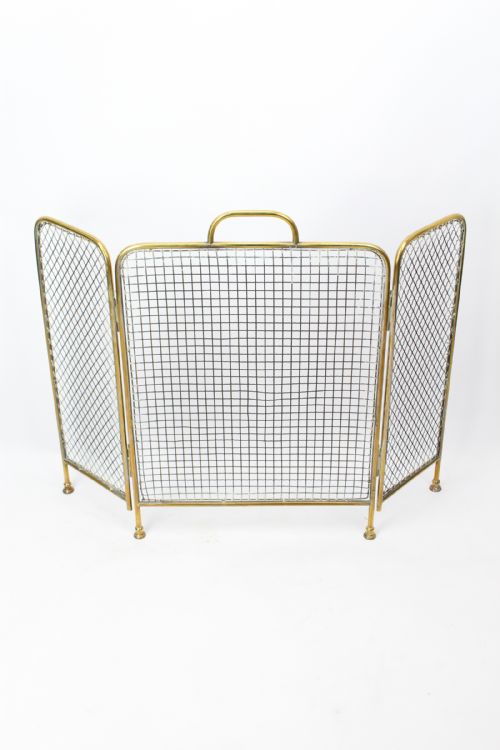


Gold Mesh Spark Screen
A gold mesh spark screen protects the room from stray embers while adding a metallic warmth to the hearth.
Gold Mesh Spark Screen
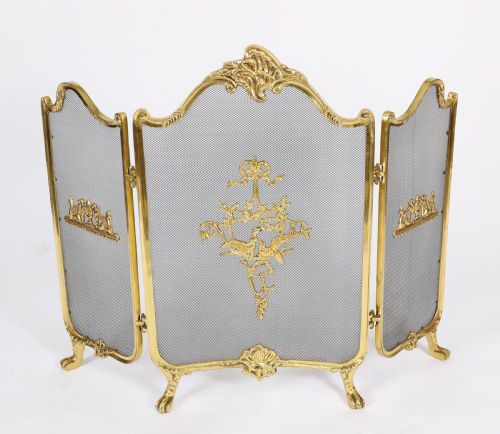
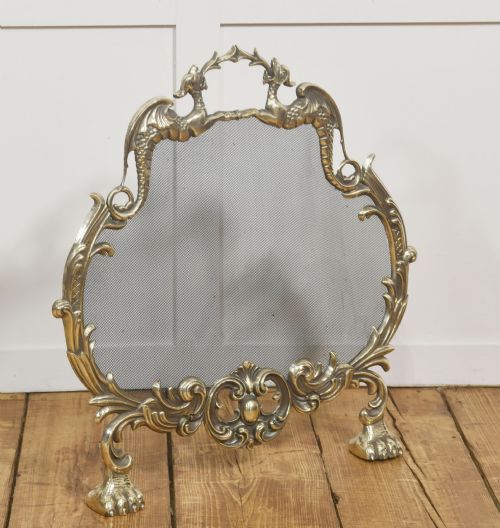
A gold mesh spark screen forms a functional barrier for the fireplace, combining metal frames with fine wire panels to catch flying cinders. These pieces date across the nineteenth and early twentieth centuries, spanning Victorian, Edwardian, and various French revival periods.
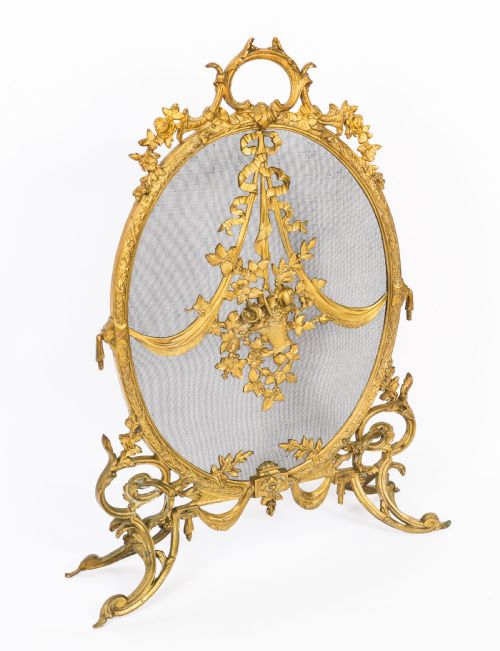
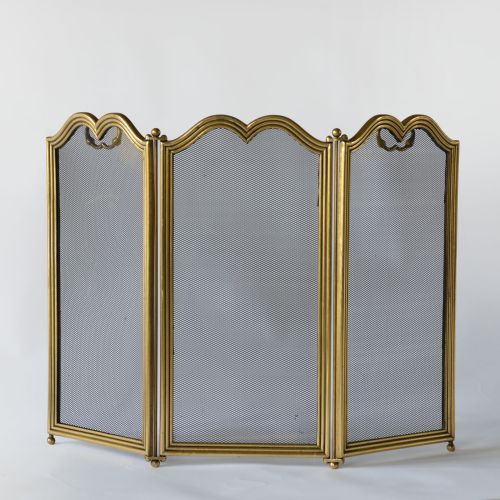
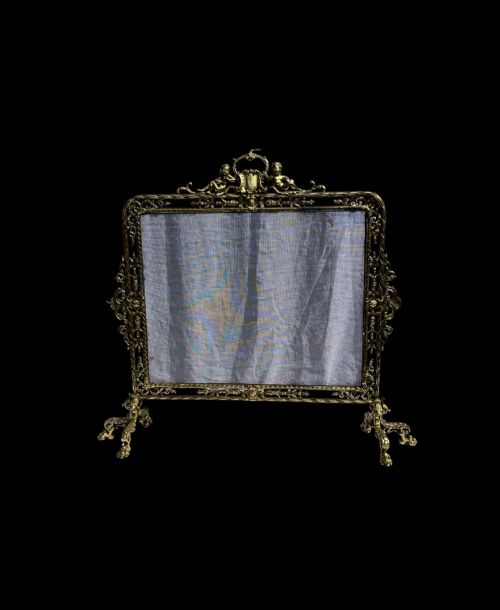
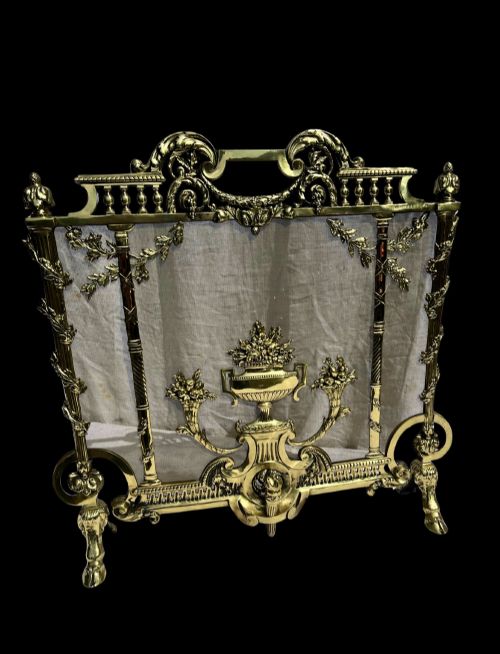
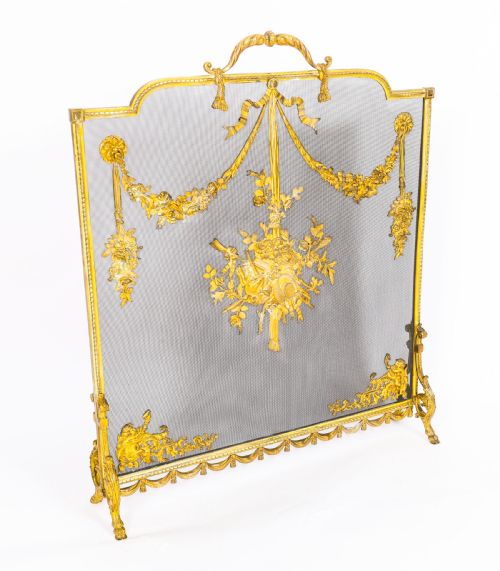
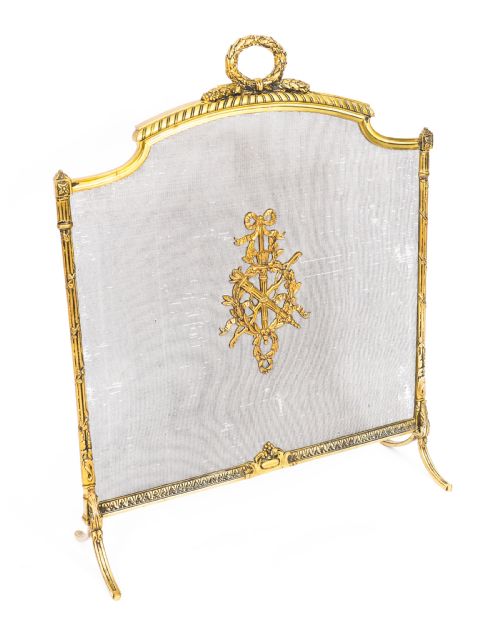
The standard form met on this page is the brass or gilt bronze fire screen, often built as a single rigid panel or configured into folding tripartite and three-fold guards. Makers utilised brass, wire mesh, gilt bronze, and steel mesh to balance stability with transparency so the fire remains visible.
Originating largely from British and French workshops, these fireplace accessories range from simple domestic guards to elaborate decorative objects. The styles frequently draw upon Rococo, Louis XVI, and Empire revivals, featuring motifs such as flaming torches, musical trophies, and dolphins.
What varies in quality
Quality depends upon the weight of the metal frame and the crispness of the cast ornamentation. Heavier cast brass and gilt bronze structures demonstrate superior craftsmanship compared to lighter, thinner stamped metal variants.
The refinement of the decorative detail sets finer examples apart, particularly in cast motifs like flaming torches, musical trophies, or Rococo scrollwork. Hand-chased detailing on bronze mounts indicates a higher standard of workshop production.
The integrity of the mesh insert and the stability of any folding hinges also determine the overall standard. Tightly woven wire mesh and smoothly articulated multi-fold frames represent more durable and carefully assembled construction.
Listings feature items spanning the Victorian, Edwardian, and nineteenth-century periods, alongside French Rococo, Louis XVI, and Empire revival styles.
The Gold Mesh Spark Screen Glossary
- Spark screen
- A protective metal mesh barrier placed before an open fireplace to contain flying embers. It allows heat to pass into the room while maintaining safety.
- Gilt bronze
- Bronze metal treated with a gold-coloured finish or mercury gilding. This material offers a rich, enduring metallic sheen suited to formal nineteenth-century interiors.
- Rococo revival
- A nineteenth-century design style reviving the asymmetrical scrolls, shell motifs, and organic curves of the eighteenth-century French movement. It appears frequently on decorative fire screen frames.
- Tripartite folding guard
- A fireplace screen constructed in three hinged sections that can be angled around the hearth opening. This design provides adjustable coverage for different hearth sizes.
- Fire guard
- An alternative term for a spark screen or hearth barrier. These pieces protect domestic spaces from open flames.
Gold Mesh Spark Screen: Frequently Asked Questions
What is a gold mesh spark screen?
A gold mesh spark screen is a decorative metal hearth accessory designed to block flying embers from an open fire. It pairs a structural brass or gilt bronze frame with a fine wire mesh panel.
These pieces served a dual purpose in nineteenth and early twentieth-century homes, offering essential domestic safety while enhancing the fireplace centrepiece.
How do you use a folding fire guard?
Folding fire guards feature hinged side panels that adjust to enclose the front of the fireplace securely. You simply unfold the wings and position the screen directly in front of the hearth opening.
The hinged design allows the screen to stand unsupported on the floor while adapting to various fireplace widths.
How do I date an antique brass fire screen?
Dating relies on examining the construction methods, materials, and stylistic revival motifs present in the piece. Mid to late nineteenth-century examples often display heavy cast brass frames influenced by French Rococo or Empire revivals.
Later pieces from around nineteen hundred frequently incorporate lighter gauge brass or simpler Edwardian framing while retaining traditional mesh panels.
Where were these fire screens made?
These fireplace screens were produced primarily in British and French workshops during the Victorian and Edwardian eras. French pieces frequently showcase elaborate gilt bronze casting and Louis-style revivals.
British production often favoured sturdy brass frames designed for practical domestic hearths across the nineteenth century.