
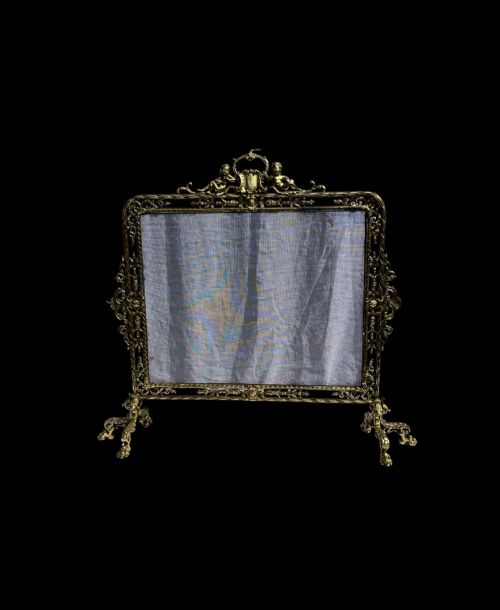
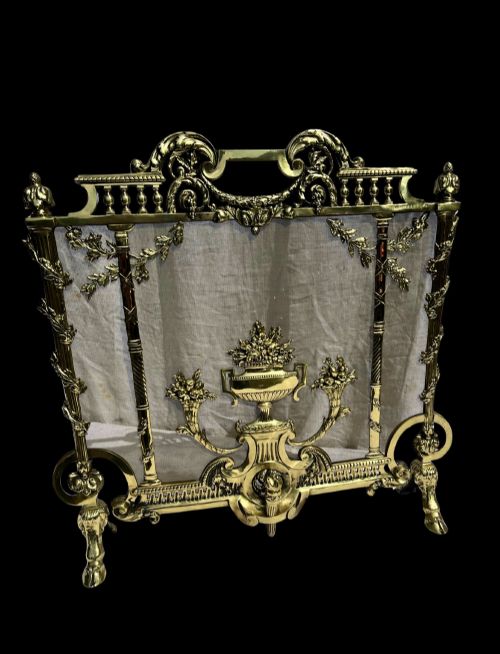
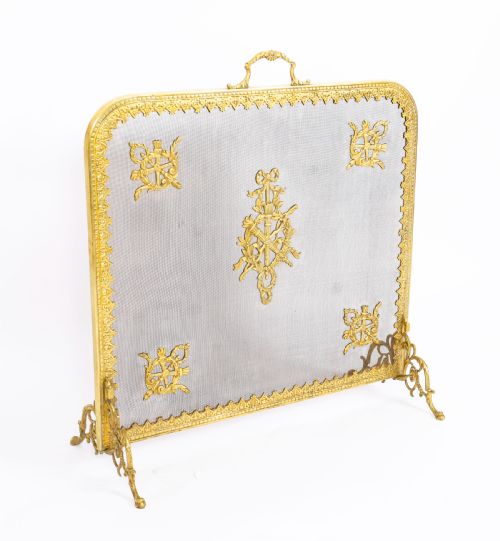
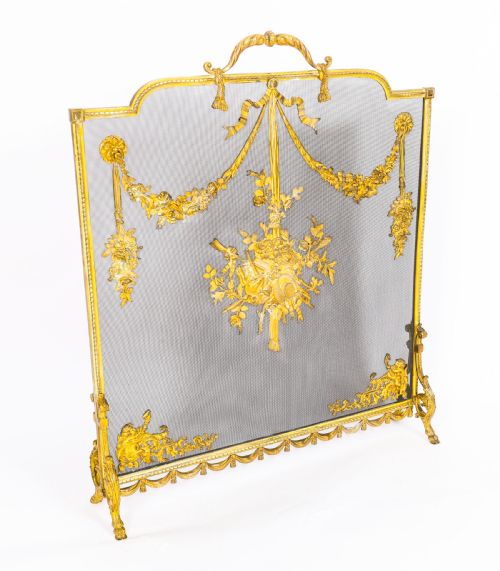
Gold Brass Fireplace Screen
A gold brass fireplace screen warms a hearth while catching the flickering room light.
Gold Brass Fireplace Screen
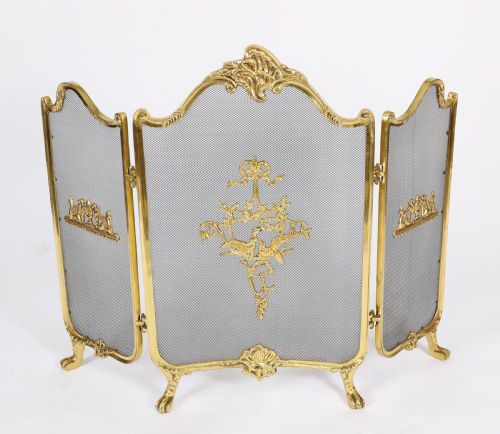
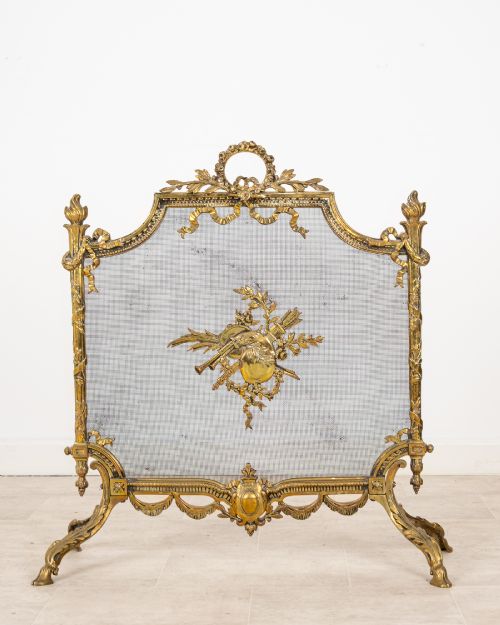
A gold brass fireplace screen sits before the hearth to shield a room from stray sparks while adding metallic warmth. The items gathered here span the Victorian era, the nineteenth century, and the early decades of the twentieth century.
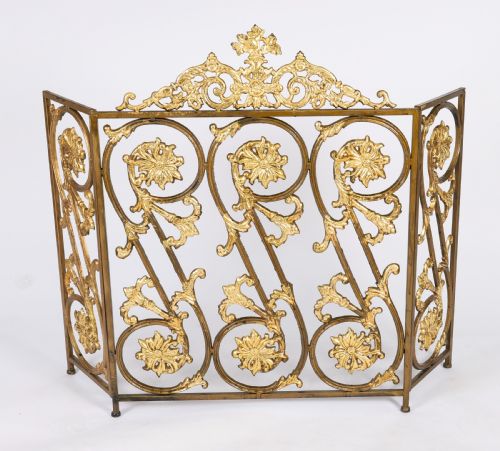
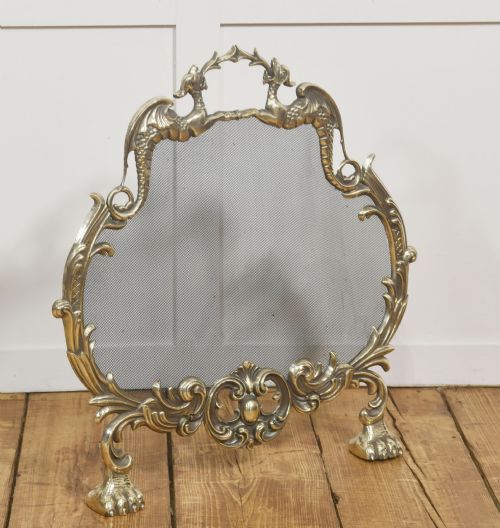
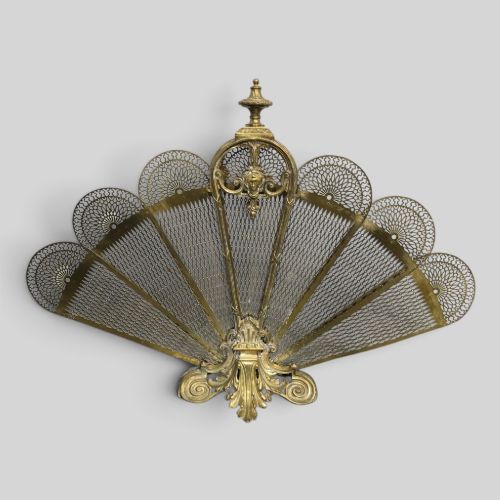
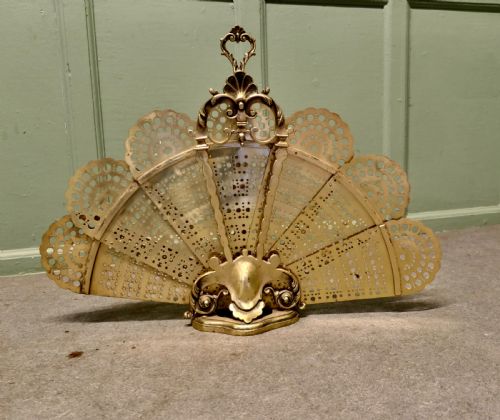
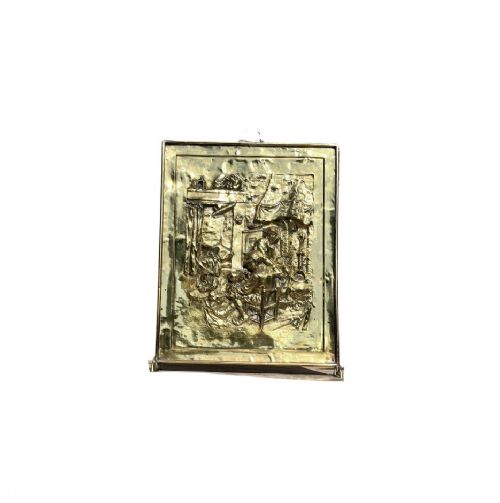
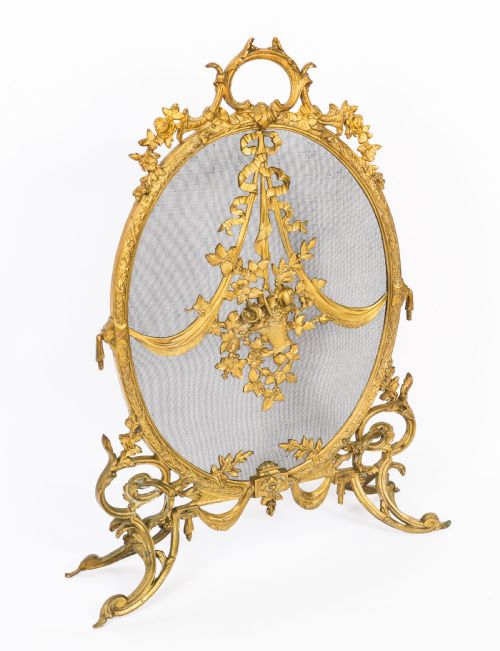
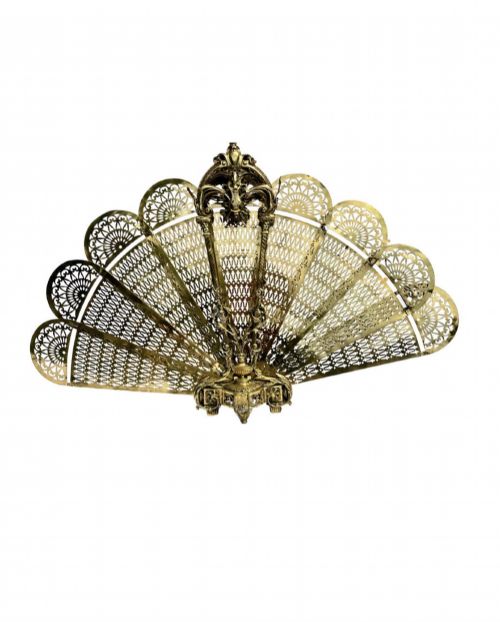
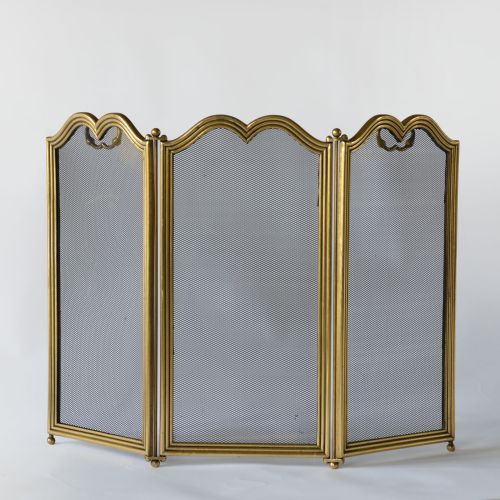
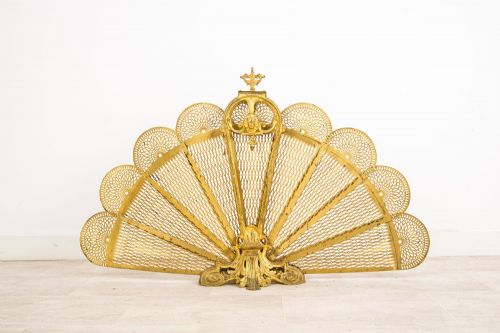
Most examples originate from French workshops or British homes, taking the form of folding fan shapes, tripartite spark guards, or solid frames set with wire mesh. Styles lean heavily towards French Rococo Revival, Louis XIV and Louis XVI revivals, and Art Nouveau.
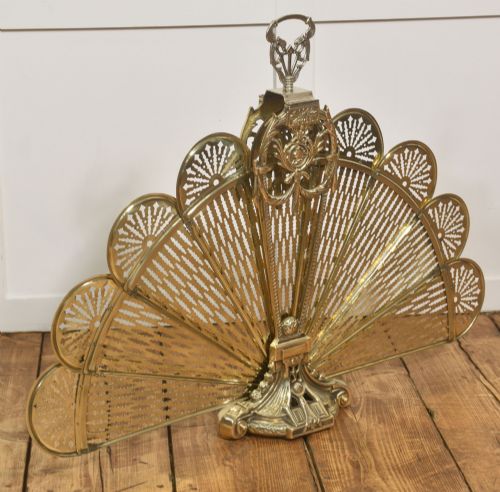
Buyers will encounter simple brass frames alongside elaborate gilt bronze creations adorned with trophies, flaming torches, and dolphin motifs. Folding peacock fan designs appear frequently among the nineteenth-century selections.
Materials and construction methods
Craftsmen built these guards using cast brass, sheet brass, and gilt bronze, often pairing heavy metal frames with fine wire mesh or glass panels. Ormolu and fire gilding imparted a rich gold finish to bronze and brass components.
Many screens utilise hinged sections that allow the piece to fold flat or expand into a fan configuration. Pierced ornamentation, cast floral details, and applied trophies demonstrate nineteenth-century metalworking proficiency.
Listings feature items from the Victorian period alongside nineteenth-century French Rococo, Empire Revival, and Art Nouveau designs.
Judging the quality of metal hearth guards
Quality rests in the crispness of the cast decoration and the weight of the metal used in the frame. Hand-chased details on gilt bronze display a depth and refinement entirely absent in mass-produced stamped brass.
The integrity of the hinges and the tightness of the wire mesh determine daily practicality. Superior examples maintain structural rigidity across folding panels without loose joints or warped metal.
The Gold Brass Fireplace Screen Glossary
- Gilt bronze
- Bronze that has been coated with a layer of gold. This technique produces a durable, rich metallic finish found on high-end nineteenth-century French pieces.
- Ormolu
- A term denoting gold-coloured metal ornaments mounted on furniture or used for decorative objects. It describes the golden appearance of gilded bronze hardware.
- Spark guard
- A functional screen or mesh barrier designed to catch flying embers from an open fire. These range from simple wire guards to ornate folding panels.
- Pole screen
- A freestanding screen mounted on a vertical pole with an adjustable height panel. It was traditionally used to shield a person's face from the direct heat of a fire.
Gold Brass Fireplace Screen: Frequently Asked Questions
How do I clean a brass fire screen?
Dust the metal gently with a soft dry cloth to remove soot and surface particles. Avoid harsh chemical polishes that strip historic patination from antique brass and gilt surfaces.
Gentle cleaning preserves the aged character of nineteenth-century metalwork. Test any mild cleaning solution on a hidden area before applying it to the entire piece.
Can I use these screens with a working fire?
Many historical screens include wire mesh or spark guards intended precisely for hearth safety. Ensure the frame sits stably on the hearth floor before lighting a fire.
Delicate gilt bronze or mirror panels benefit from being placed far enough away to avoid excessive heat damage. Folding fans can be adjusted to cover the hearth opening adequately.
How do I date an antique brass screen?
Dating relies upon stylistic cues such as Rococo Revival curves, Art Nouveau lines, or French Empire motifs. Construction techniques, including hand-cut screws and cast joints, also indicate the period.
Nineteenth-century pieces often display heavier casting and more intricate hand-finishing than later twentieth-century iterations. Examining the fixings and the type of wire mesh provides further clues to age.