


Ornate Accent Armchairs
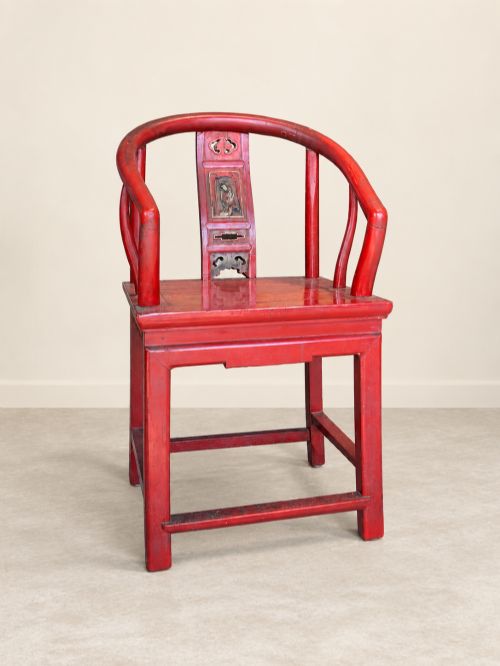
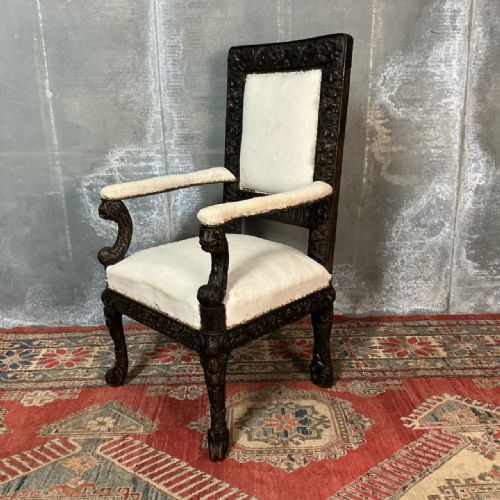
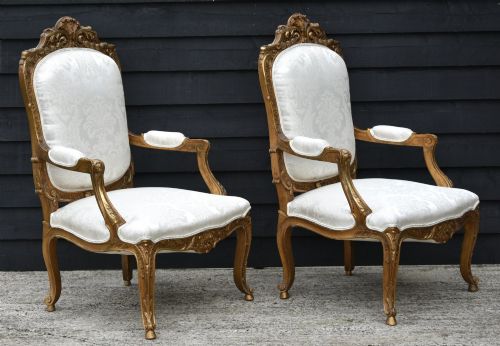
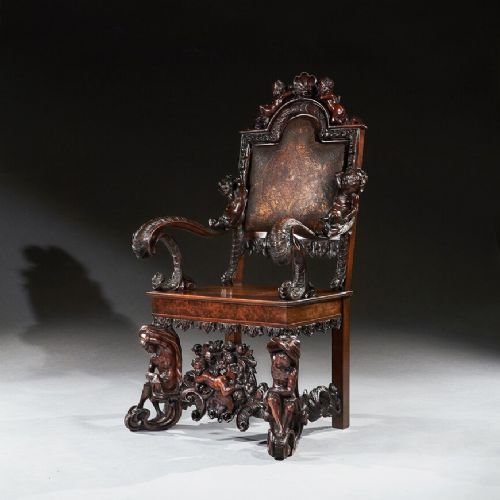
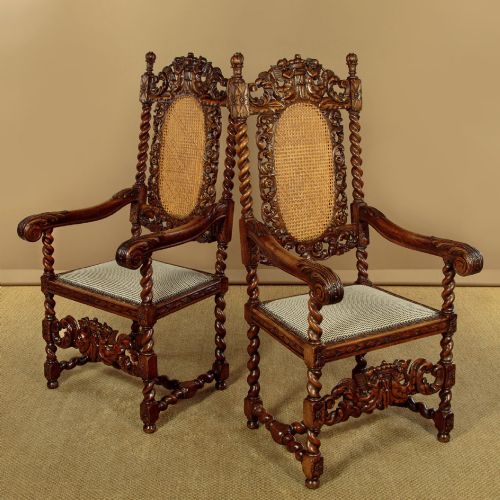
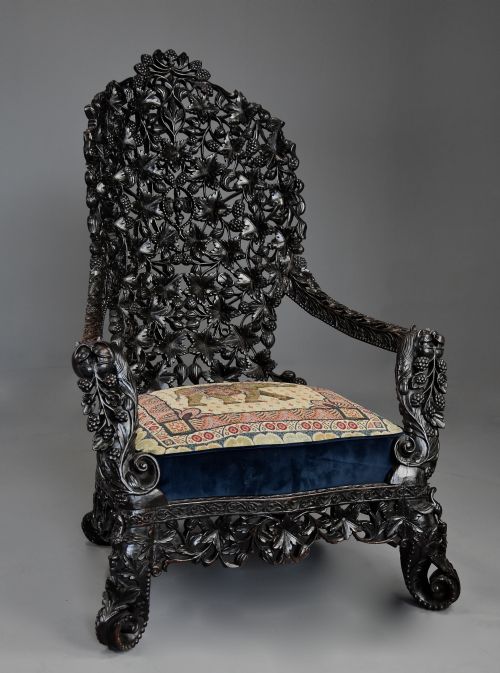
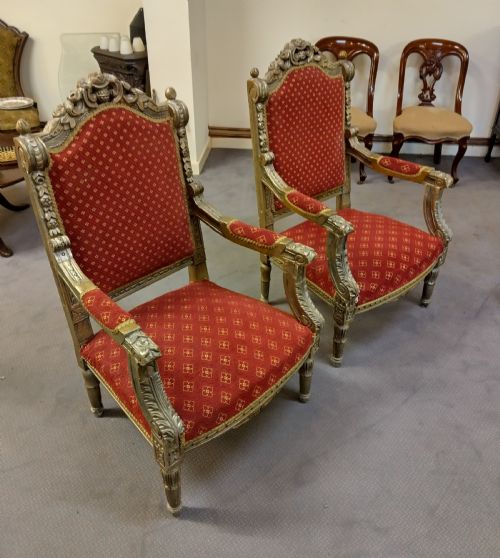
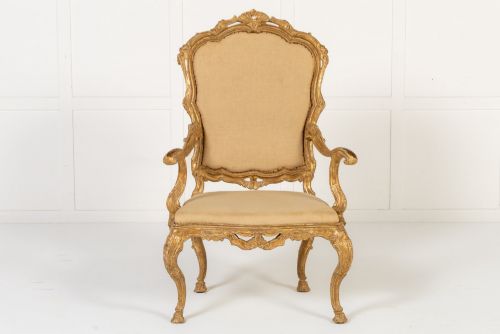
These ornate accent armchairs bring heavy carving, gilding and striking regional silhouettes straight into a room.
Ornate Accent Armchairs
When you search for ornate accent armchairs, you encounter heavily detailed seating designed to command attention in a room rather than simply fill a corner. These pieces span the nineteenth century into the early twentieth century, drawing on diverse global workshops and revivalist aesthetics.
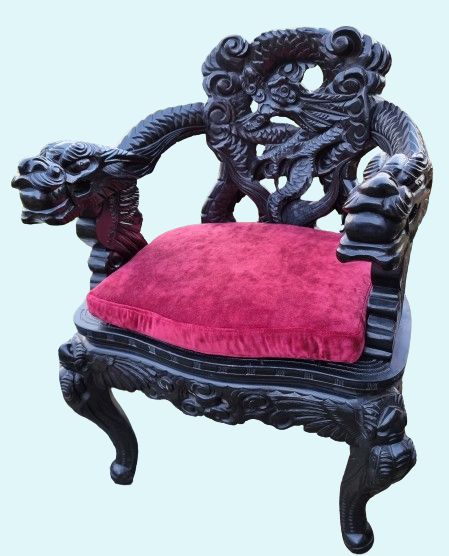
The selections on this page most commonly present as French giltwood salon chairs, Italian walnut seating, and carved hardwood examples from Anglo-Indian or Chinese traditions. They function as focal points in a drawing room, hallway, or study, combining functional seating with sculptural presence.
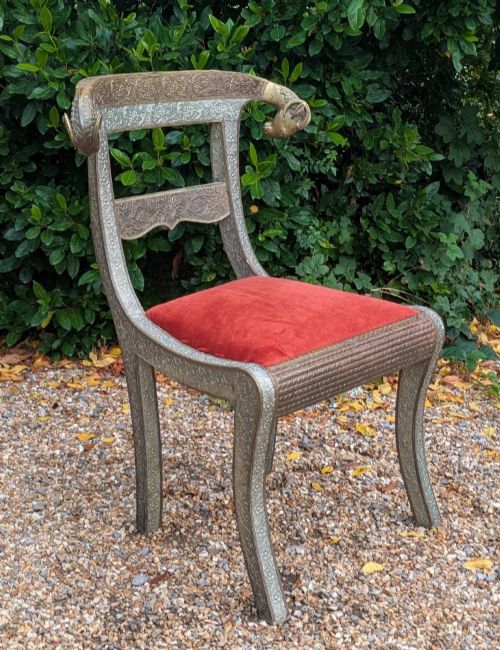
Makers across nineteenth-century Europe and beyond utilised various stylistic vocabularies, from Baroque and Rococo revivals to Gothic and Orientalist interpretations. Each armchair reflects the specific decorative ambitions of its period, whether through the grandeur of a throne chair or the intricate pierced work of an Indian peacock chair.
Materials and construction methods
The framework of these armchairs relies on solid timbers such as oak, walnut, and exotic hardwoods, selected for their stability under deep hand-carving. Artisans shaped these materials using traditional joinery before applying surface treatments like gold leaf, paint, or dark wax.
Upholstery techniques matched the decorative weight of the wooden frames, utilising silks, velvets, leather, and patterned fabrics fastened with careful detailing. Metal elements, including brass accents and wrought iron, occasionally reinforced the wooden structures or added contrasting texture.
The inventory records global influences, including Anglo-Indian, Chinese export, and European Baroque revival styles.
Assessing quality in carved seating
Quality reveals itself in the depth and crispness of the hand-carving across the frame, where confident tool marks distinguish skilled execution from mechanical reproduction. The integration of structural joints into elaborate ornamental motifs shows the maker's mastery.
The choice of primary timber and the richness of the original gilding or surface finish set the finest examples apart. Superior pieces maintain structural integrity despite intricate openwork, balancing decorative ambition with enduring support.
Andrea Brustolon
The Ornate Accent Armchairs Glossary
- Giltwood
- Timber treated with a thin layer of gold leaf applied over a prepared gesso ground. This technique creates a luminous surface that catches candlelight or natural daylight.
- Savonarola chair
- A folding wooden armchair formed of multiple intersecting curved slats. This design derives from Italian Renaissance precedents and offers a distinctive X-shaped profile.
- Wingback armchair
- A high-backed seat featuring protective side panels designed to shield the occupant from drafts. Nineteenth-century interpretations often layer this form with heavy carved ornamentation.
- Hardwood
- Dense timber sourced from broad-leaved trees, favoured for intricate carving because it holds fine detail without splitting. Walnut, oak, and various exotic species fall into this category.
Ornate Accent Armchairs: Frequently Asked Questions
Where should I place an ornate armchair?
These chairs demand a space where their carving and silhouette remain visible from multiple angles, making them ideal for hallways, large bedrooms, or drawing rooms.
Avoid pushing them flat against a wall where intricate details on the arms and back become hidden.
How do I identify the period of a carved chair?
Examine the timber species, the style of the carving, and the assembly methods used in the frame. Nineteenth-century pieces frequently lean into specific revivals like Baroque or Gothic, while the type of wood often points to regional workshops.
Compare the depth of the hand-carving and surface finishes against dated examples from the same stylistic tradition.
Are these armchairs comfortable for daily sitting?
Many of these pieces serve primarily as decorative or occasional seating rather than deep lounging chairs. Their upright postures and rigid wooden frames reflect nineteenth-century standards of formal hospitality.
Upholstered salon chairs offer softer seating, while heavy wooden throne chairs function best as statement pieces.
How do I care for giltwood and carved timber?
Keep gilded and polished wooden surfaces away from direct sunlight and sudden temperature shifts to protect the finish. Dust gently with a soft, dry brush to reach into the crevices of deep carvings without snagging fabric.
Avoid liquid polishes that can build up within intricate woodwork or degrade fragile gold leaf.