




Ornamental Brass Clock
An ornamental brass clock brings the weight of nineteenth-century French and English workshops straight to the mantelpiece.

Ornamental Brass Clock
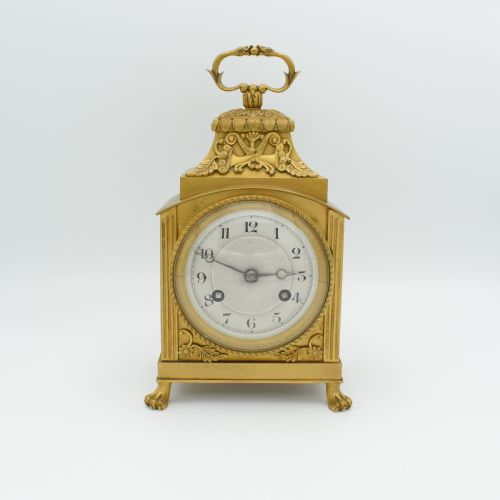
An ornamental brass clock encompasses mantel clocks, carriage clocks, and bracket clocks spanning the eighteenth, nineteenth, and early twentieth centuries. These pieces draw on Victorian, Louis XVI Revival, and French Empire styles to anchor a room.
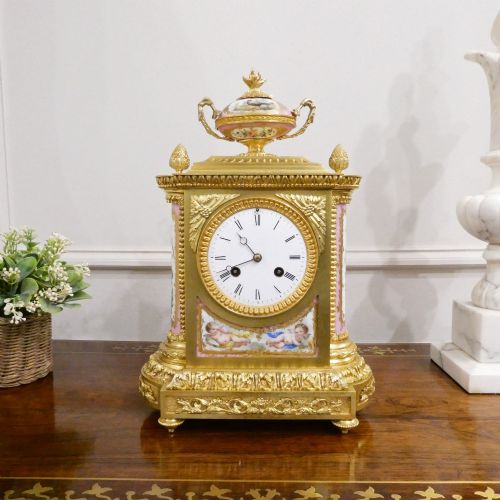
The version most commonly encountered on this page is the nineteenth-century French mantel clock, often cast in gilt bronze or ormolu and paired with enamel dials, porcelain panels, or marble bases.
Materials and Construction
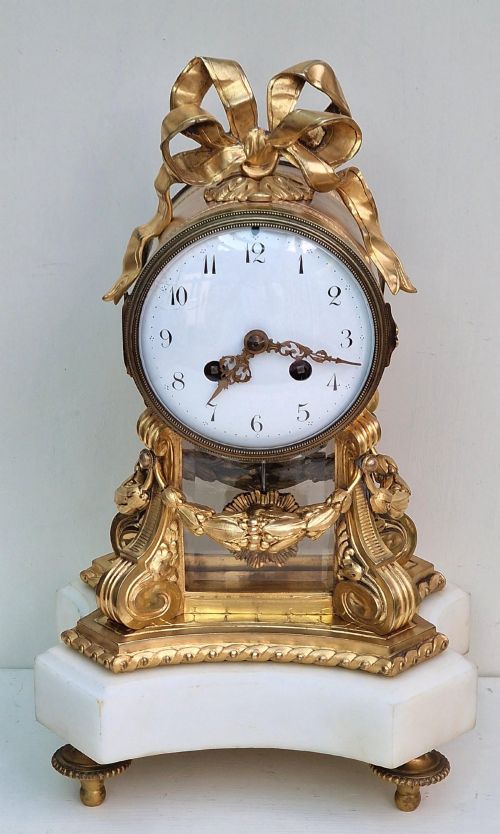
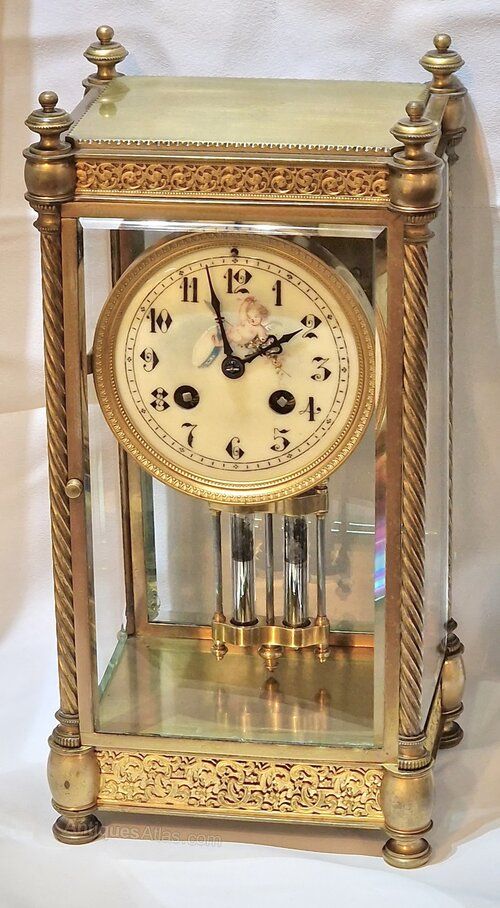
Casting forms the structural core of these pieces, utilising brass, gilt bronze, and ormolu to achieve intricate architectural and figural shapes. Artisans combined these metals with white marble, wood, and glass panels.
Dial decoration relied on hand-painted enamel and porcelain details, frequently paired with visible pendulums or intricate side pillars to display mechanical precision.
Listings feature items from the eighteenth, nineteenth, and early twentieth centuries, spanning Victorian, Georgian, and Louis XVI Revival styles.
Judging Quality and Finish
Quality rests upon the crispness of the metal casting and the depth of the gilding, where sharper chased details distinguish superior work from softer production.
The integration of secondary materials, such as matched porcelain plaques or solid marble plinths, dictates the overall harmony and ambition of the design.
Jean-Baptiste Delettrez·Chater & Son·James Murray London·F Marti
The Ornamental Brass Clock Glossary
- Ormolu
- Gilded bronze produced by applying a mercury and gold amalgam to a bronze base, creating a durable golden surface. This technique defined French decorative metalwork.
- Carriage clock
- A small, portable spring-driven timepiece designed for travel during the nineteenth century. These clocks usually feature glass panels and a swinging handle.
- Cartel clock
- A wall clock housed in an ornamental frame made of gilt bronze, wood, or brass. The style originated in France during the eighteenth century.
- Portico clock
- A mantel clock designed with architectural columns supporting the movement case. This neoclassical form gained popularity in the nineteenth century.
- Double fusee
- A mechanical movement using a conical pulley and chain to equalise the force of the mainspring as it unwinds. This mechanism improves timekeeping accuracy.
Ornamental Brass Clock: Frequently Asked Questions
How do I wind an antique brass clock?
Most mechanical clocks require a key inserted into the winding squares on the dial face to tension the springs.
Care must be taken not to overwind the mechanism, stopping as soon as resistance is felt.
What is a French carriage clock?
A carriage clock is a portable timepiece fitted with a handle and glass side panels to view the movement.
Originating for travel, they became standard domestic desk and mantel pieces by the nineteenth century.
How do I identify a Victorian clock?
Victorian clocks often incorporate Gothic, Revival, or heavy brass and marble elements typical of the nineteenth century.
Maker signatures on the movement plates or cast details provide the most reliable dating evidence.
Where should I place a heavy mantel clock?
A heavy clock requires a stable, level surface such as a wooden mantelpiece or a strong console table.
Ensuring the surface is level helps the pendulum swing evenly and keeps the movement striking correctly.