


Frame Clock Victorian
These frame clock victorian pieces combine precise horology with architectural housings, offering a glimpse into nineteenth-century domestic timekeeping.

Frame Clock Victorian
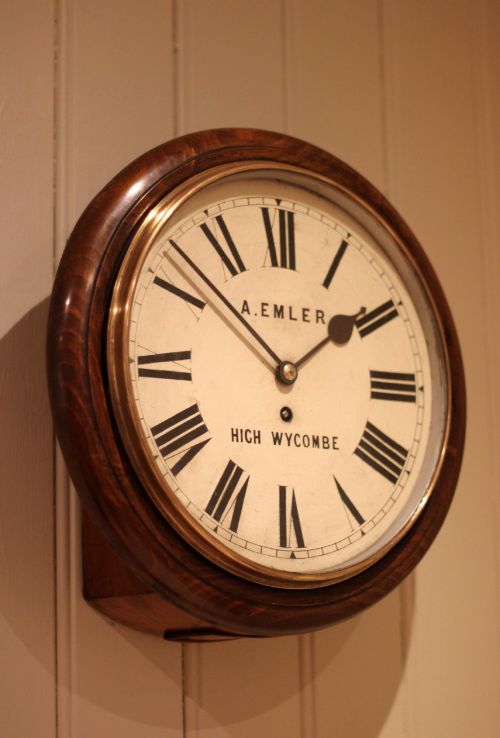
When you search for frame clock victorian, you encounter a distinct group of horological objects housed within architectural frames, wall cases, or skeleton structures. The selection spans the nineteenth century, encompassing various forms from French wall clocks to English fusee dial clocks.
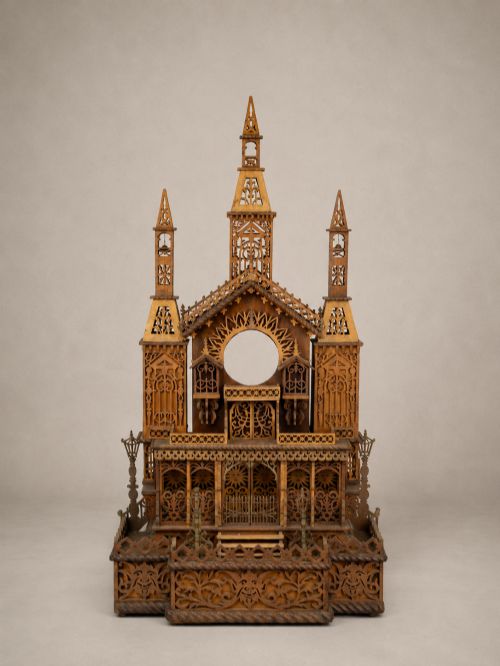
Most pieces date from the Victorian era, utilising materials such as brass, ebonised wood, marble, and mahogany. Formats range from library clocks and desk clocks to picture frame wall clocks and large architectural fretwork clock cases.
Makers and origins vary across English and French workshops, featuring specific movements like double fusee mechanisms and painted panels. The pieces serve both functional timekeeping and decorative wall or mantel art.
How they were made
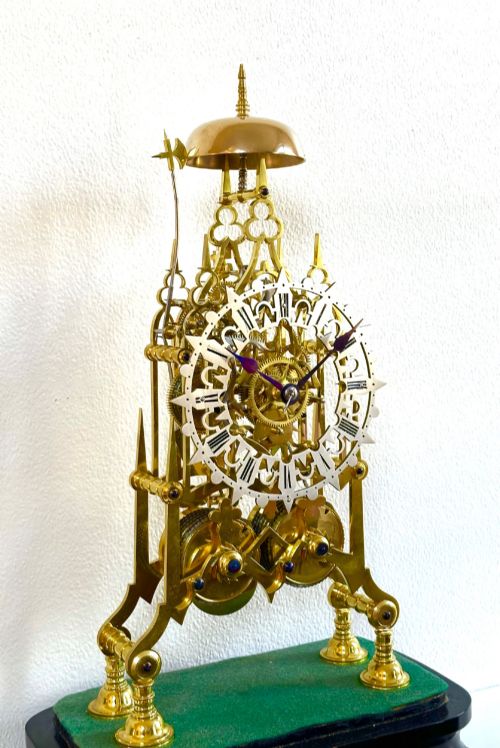
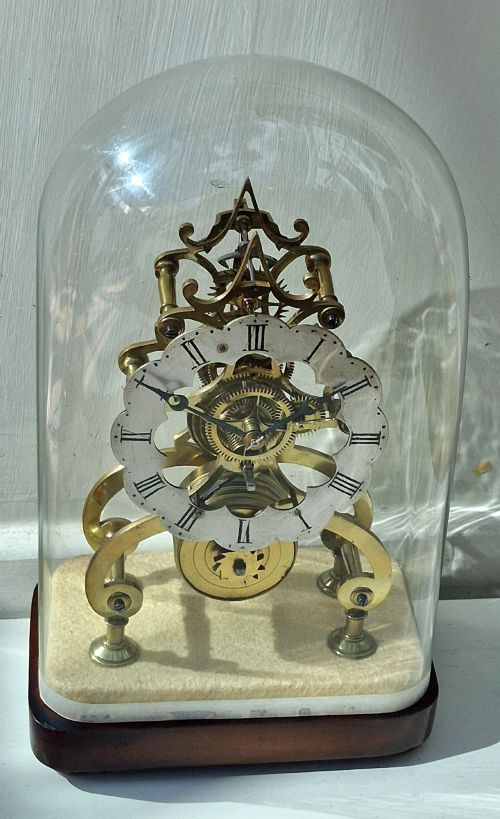
Horologists utilised brass, steel, and enamel to construct intricate clock movements, often housing them within exposed skeleton frames or protective glass-fronted cases. Woodworkers shaped mahogany, beech, and ebonised wood to build architectural clock cases and picture frames.
Movements relied on fusee or double barrel mechanisms to maintain even tension across the drive train. Dials featured painted enamel with delicate hands, while brass frames were polished or gilded to highlight structural detail.
Some nineteenth-century timepieces include hidden automatons that animate beneath glass domes while ticking away.
What varies in quality
The refinement of the movement dictates the standing of a piece, with double fusee mechanisms representing superior horological ambition compared to standard timepieces. The execution of the case work, from fretwork precision to the selection of mahogany or marble, defines the visual authority.
Integrity of the enamel dials and the crispness of the brass skeleton structure distinguish finer examples from standard production. Originality of components and the harmony between the frame and the internal movement govern the overall standard.
Thwaites of London·Purvis of London
The Frame Clock Victorian Glossary
- Fusee
- A conical pulley used in clock movements to maintain constant driving power as the mainspring unwinds. This mechanism ensures more accurate timekeeping throughout the run.
- Skeleton Clock
- A timepiece designed with an open metal frame that exposes the gear train and movement. These clocks allow light to pass through the mechanism.
- Dial
- The visible face of the clock where the hours and minutes are displayed. Dials on these pieces often feature enamel and painted numerals.
- Architectural Case
- A clock housing designed to mimic building facades or structural elements. These cases utilise fretwork, columns, and pediments.
- Automaton
- A mechanical figure or moving scene incorporated into a clock. These mechanisms create movement when the clock operates.
Frame Clock Victorian: Frequently Asked Questions
What is a fusee movement?
A fusee movement uses a conical drum and a cord or chain to equalise the pull of the mainspring. This keeps the driving force steady as the spring loses tension.
Such mechanisms indicate high-grade English clockmaking from the nineteenth century.
Where were wall clocks placed?
Wall clocks were hung in prominent public rooms, hallways, and libraries where occupants needed to coordinate daily schedules. Their frames matched the interior architecture of the period.
French picture frame wall clocks doubled as wall art while keeping accurate time.
How do I maintain an antique clock?
Antique clocks require stable room environments away from direct heat sources and dampness. Professional servicing every few years ensures the brass movements remain clean and lubricated.
Avoid moving the clock without securing the pendulum or internal components.
What defines Victorian Gothic style?
Victorian Gothic design draws inspiration from medieval architecture, featuring pointed arches, heavy fretwork, and solemn proportions. Clock cases built in this manner project architectural gravity.
Dark woods like mahogany and ebonised finishes often complement these severe structural forms.