
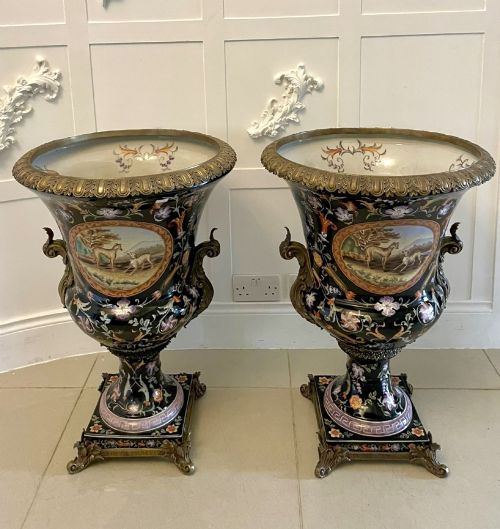
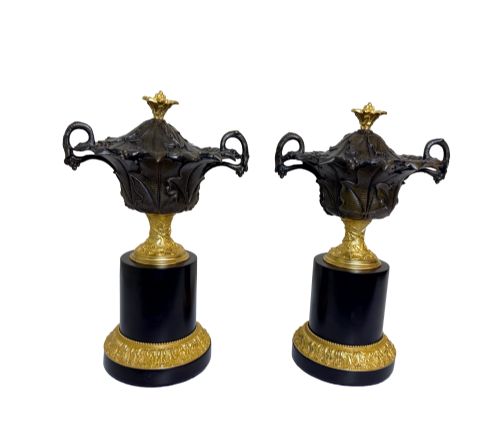
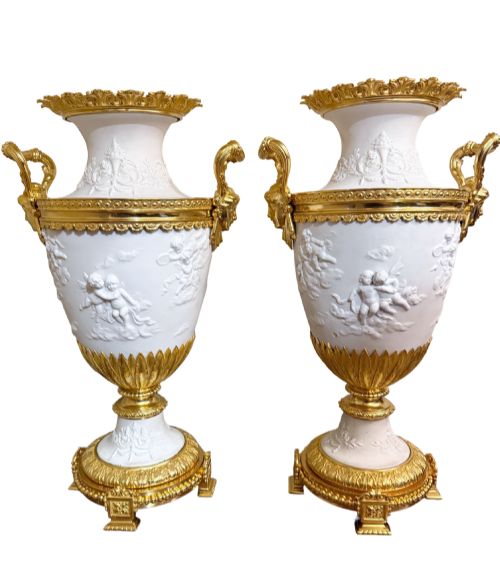
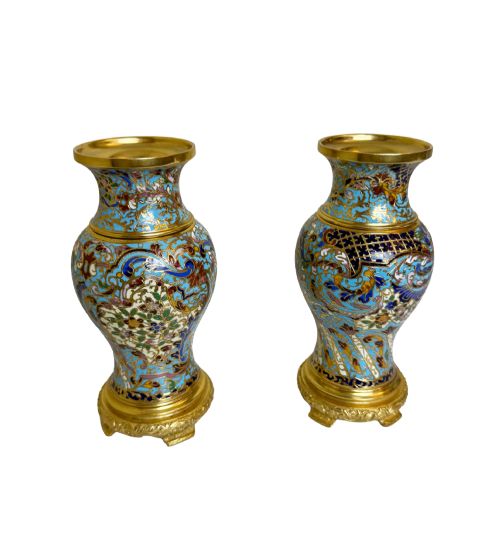
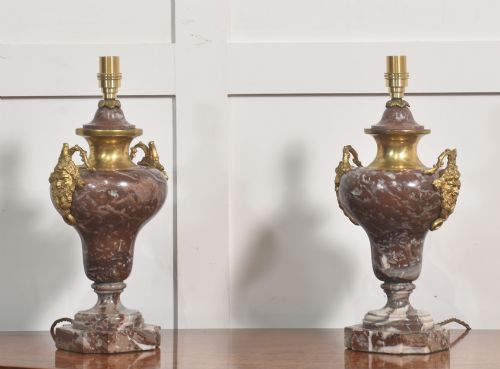
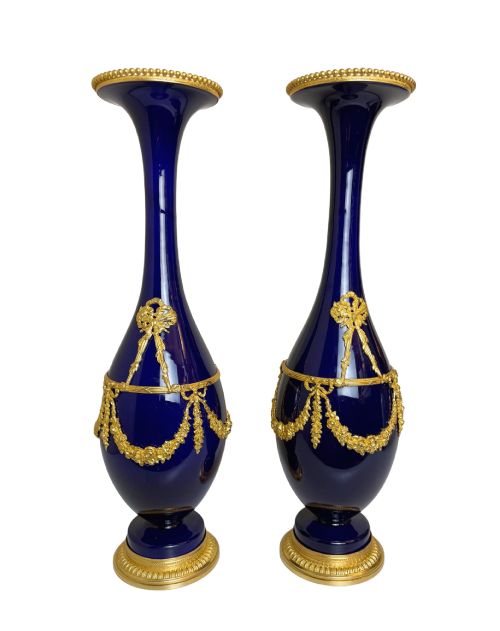
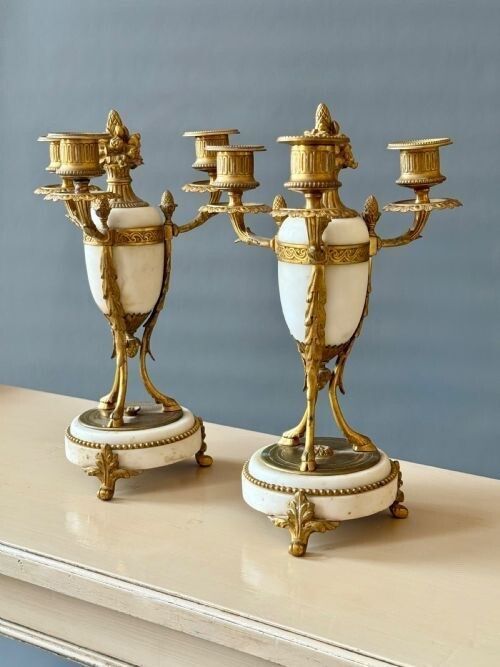
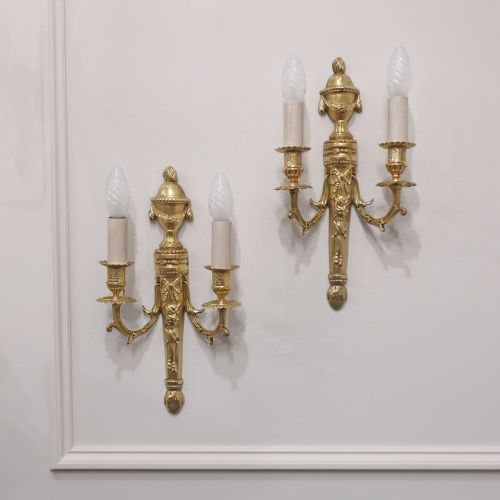
Ormolu Urn Pair
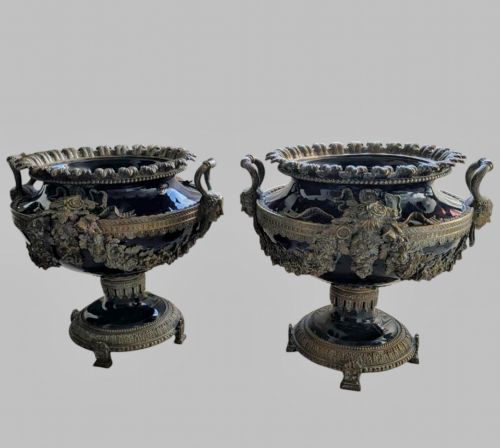
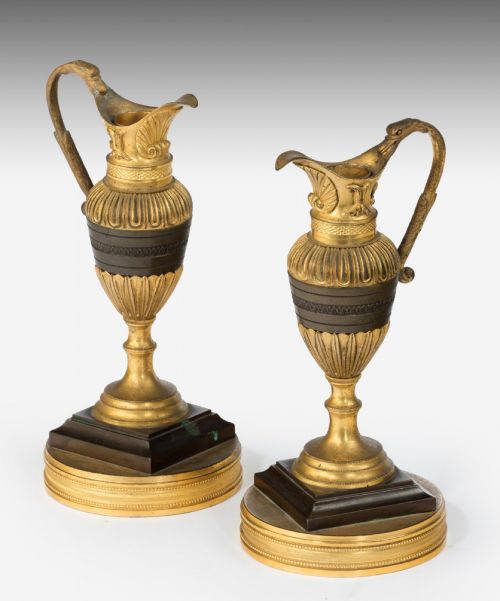
When searching for an ormolu urn pair, collectors find symmetrical decorative vessels cast in bronze and mounted with gilded brass, most frequently originating from nineteenth-century French workshops.
Ormolu Urn Pair
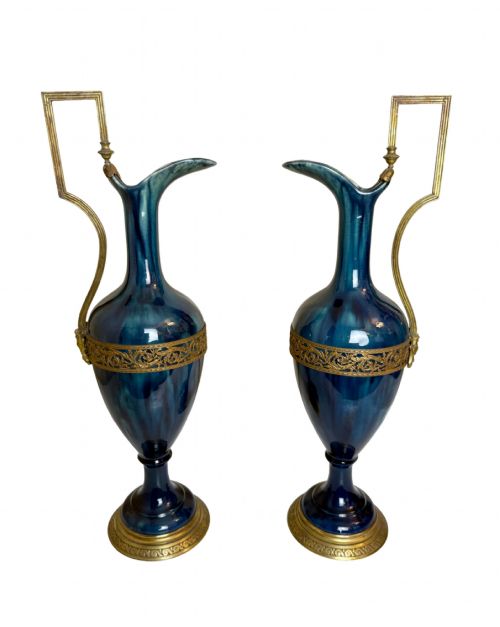
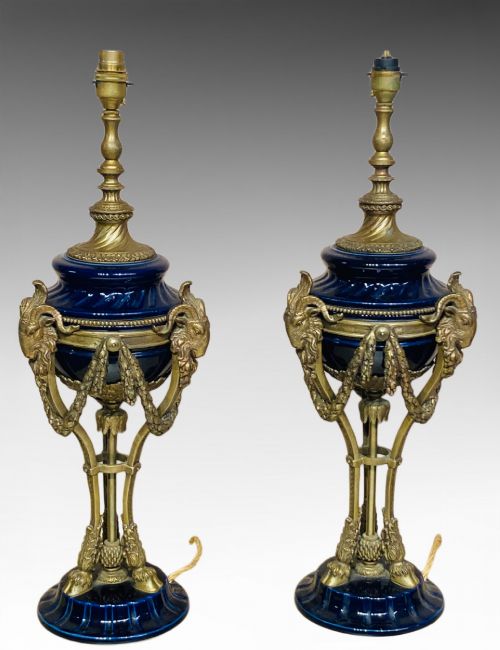
An ormolu urn pair represents a matching set of decorative vessels designed for symmetrical placement on mantelpieces, consoles, or tables. The search phrase encompasses traditional lidded urns, cassolettes, tazzas, and related forms adapted later into table lamps.
Most examples encountered on this page date from the nineteenth century, reflecting French Neoclassical, Empire, and Louis XVI revival styles. These objects combine classical antiquity themes with ornate decorative mounts typical of nineteenth-century European production.
How they were made
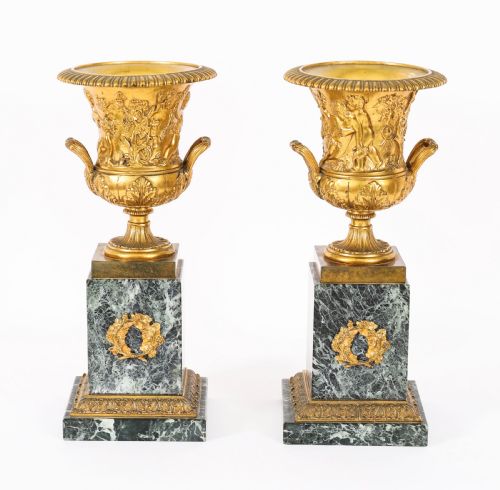
The manufacture of these pairs relies on combining cast bronze or gilded brass with contrasting bodies of marble, porcelain, or glass. Artisans shaped natural stone bases and ceramic vessels, then fitted them with intricately chased bronze components treated with mercury gilt or modern electroplating.
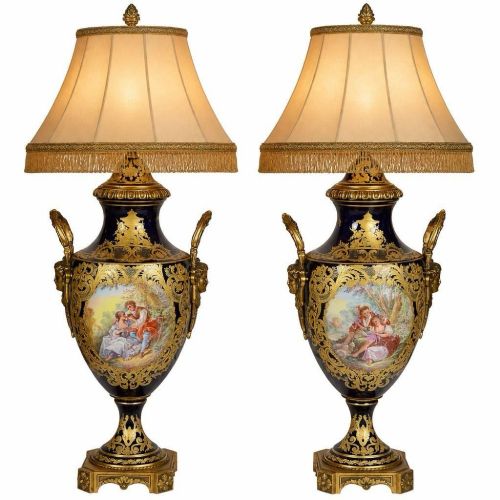
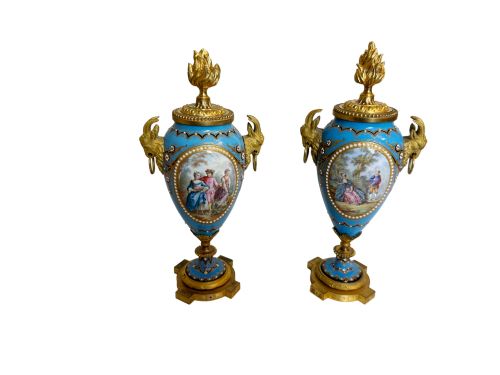
Many items incorporate specialised techniques such as champlevé enamel or hand-painted porcelain panels set within the metal framework. Individual cast sections are secured mechanically using threaded rods and nuts, allowing complex multi-material assemblies to maintain structural rigidity.
Listings feature porcelain bodies from Sèvres alongside white onyx, rouge marble, and various coloured ceramics paired with gilt bronze mounts.
What varies in quality
Quality in these decorative pairs depends primarily on the crispness of the bronze chasing and the depth of the gilding. Superior examples display sharp relief in foliage, masks, and scrollwork, whereas lesser items exhibit softened details resulting from worn production moulds.
The selection of materials also dictates the tier of the piece, with dense rouge or white marble bases and fine porcelain bodies elevating the overall execution. Heavier metal gauge and precise fitting between the stone and metal components distinguish the finest workshop output.
Casier·Thomas Hope
The Ormolu Urn Pair Glossary
- Ormolu
- Finely chopped gold amalgamated with mercury and applied to a bronze base, then heated to drive off the mercury. This historic technique produces a durable, rich golden surface finish on decorative bronze mounts.
- Cassolette
- A dual-purpose decorative vessel featuring a reversible lid that transforms the piece from an urn into a burner or candleholder. They frequently appear in nineteenth-century French marble and bronze assemblies.
- Tazza
- A shallow saucer or bowl mounted upon a stem and foot, designed for display on tables or pedestals. These classical forms are commonly rendered in bronze and marble.
- Champlevé
- An enamelling technique where troughs or cells are hollowed out of the metal surface and filled with vitreous paste before firing. The resulting coloured patterns accent the surrounding gilt bronze mountings.
- Garniture
- A coordinated set of ornamental objects, typically consisting of three or more pieces such as an urn flanked by matching cassolettes or candelabras. They provide balanced mantel or sideboard decoration.
Ormolu Urn Pair: Frequently Asked Questions
What is an ormolu urn pair used for?
These matching vessels served primarily as decorative garnitures on nineteenth-century mantelpieces, sideboards, and architectural consoles. Their symmetrical presence added formal elegance to domestic interiors.
In subsequent decades, many pairs were adapted with electrical fittings to function as table lamps while retaining their classical silhouette.
How do I identify French Empire style?
French Empire pieces display robust classical motifs inspired by ancient Rome and Greece, including laurel wreaths, sphinxes, and military trophies. The bronze mounts often feature heavy, solid proportions combined with contrasting dark patination.
Marble bases on these items tend to be architectural and straightforward, emphasising monumental dignity over delicate ornamentation.
How should I care for antique ormolu and marble?
Maintenance requires gentle dusting with a soft, dry cloth to prevent particulate accumulation on the gilded surfaces. Avoid abrasive cleaners, chemical polishes, and excessive moisture, which can strip historic gilding or stain porous marble.
Handling should be done by lifting the sturdy base rather than grasping delicate handles or decorative mounts.