

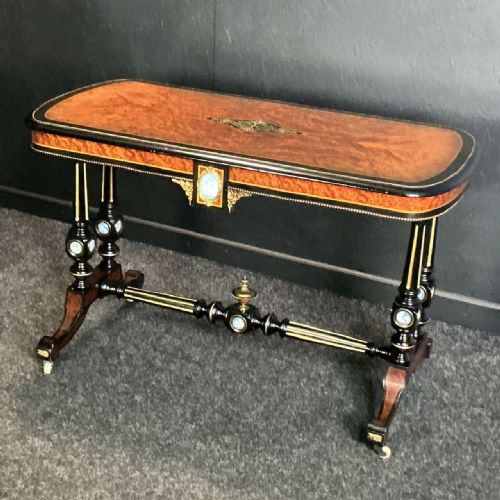
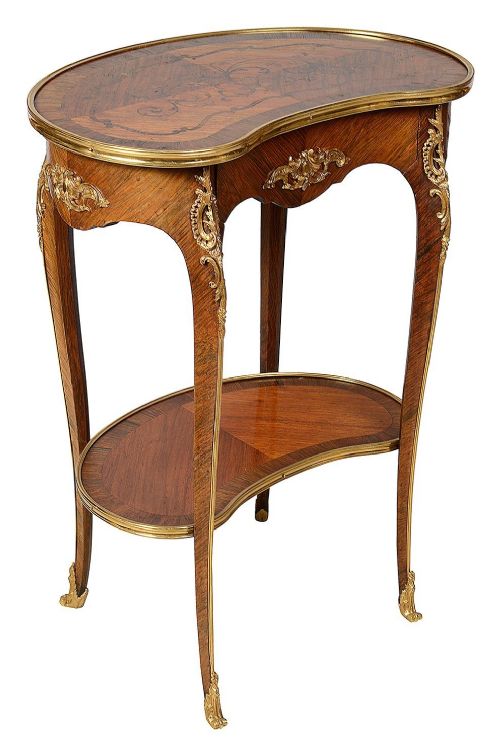
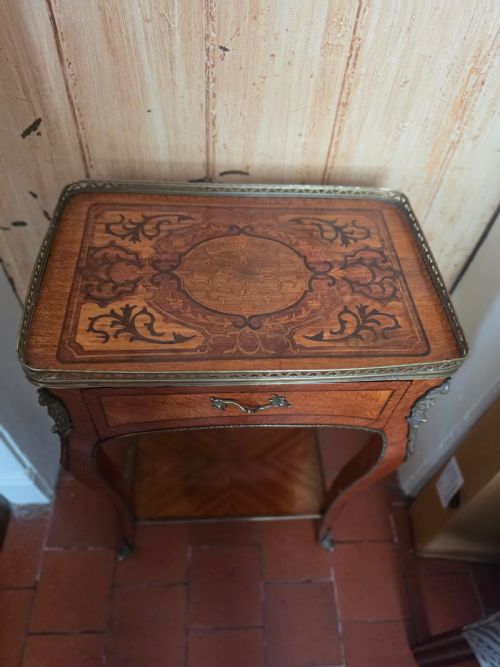
Ormolu Occasional Table
An ormolu occasional table brings French nineteenth-century elegance into a room through rich timber and cast gilt bronze mounts.
Ormolu Occasional Table
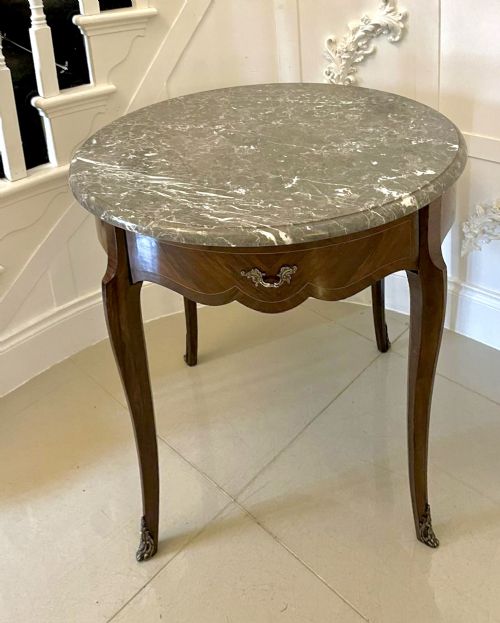
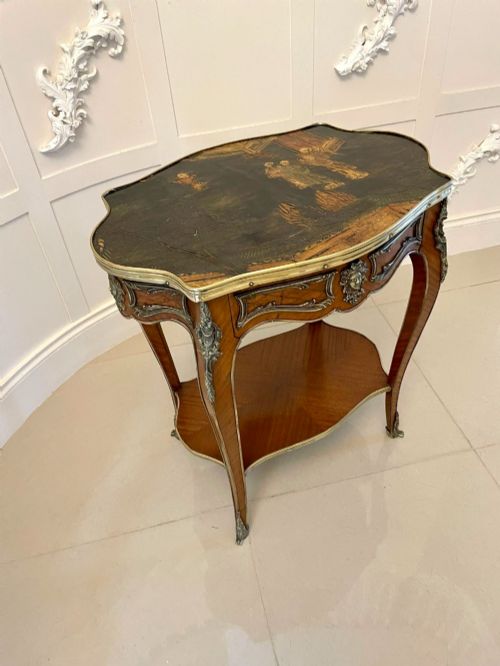
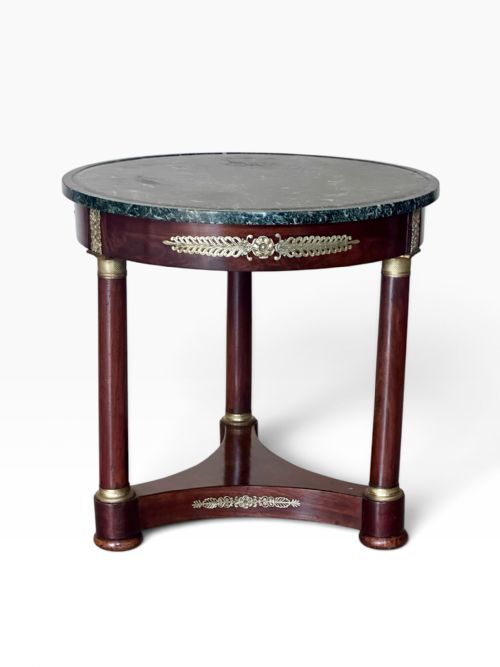
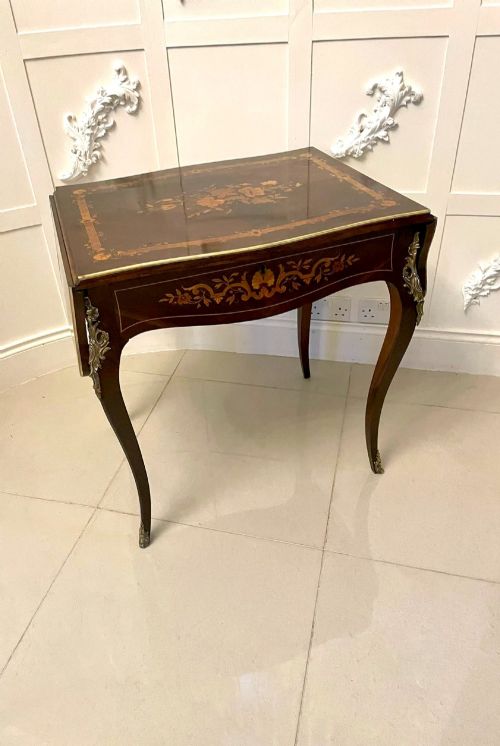
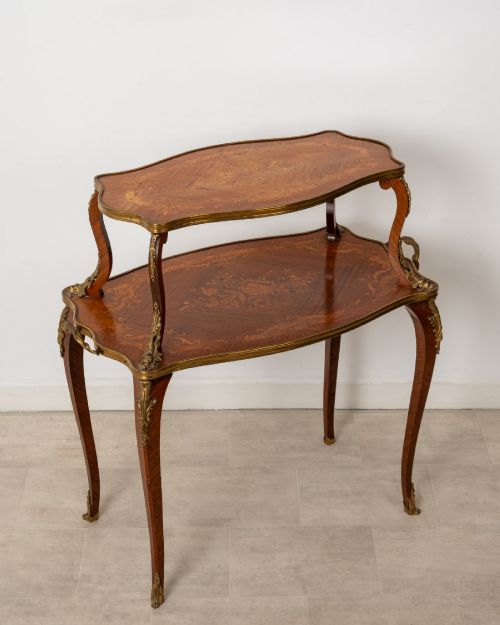
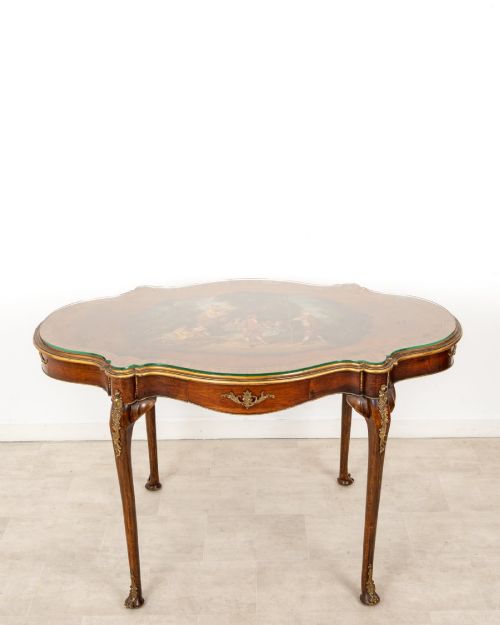
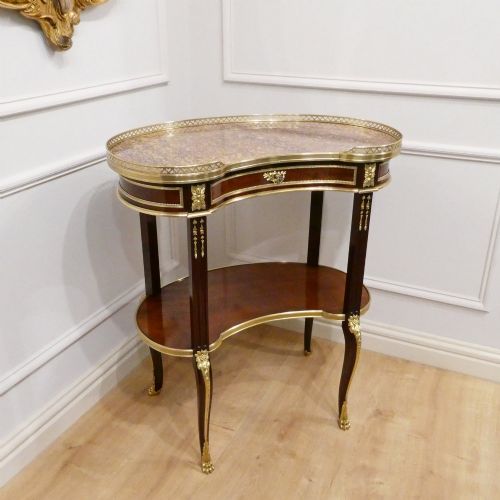
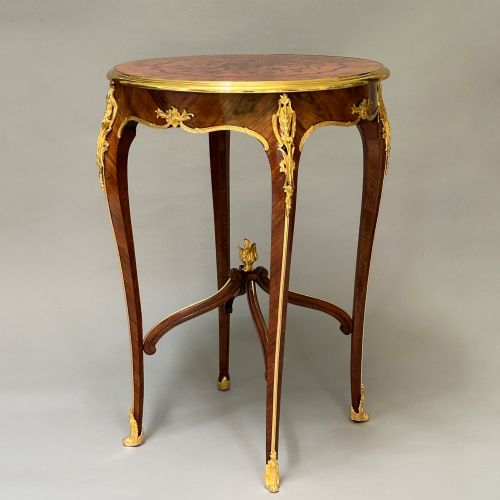
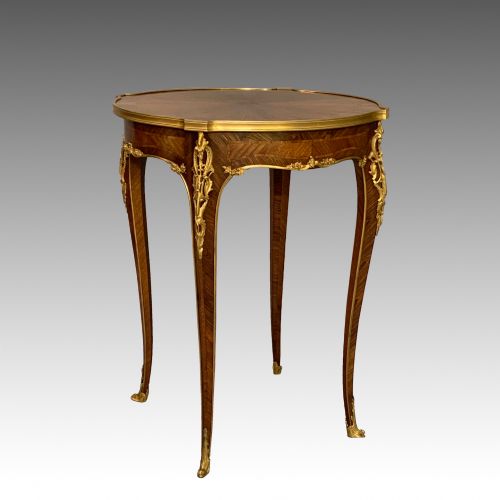
When you search for an ormolu occasional table, you encounter nineteenth-century French revival pieces, principally from the Victorian and Edwardian eras. These domestic tables span diverse forms such as kidney shapes, two-tier étagères, and circular gueridons designed for freestanding placement in a room.
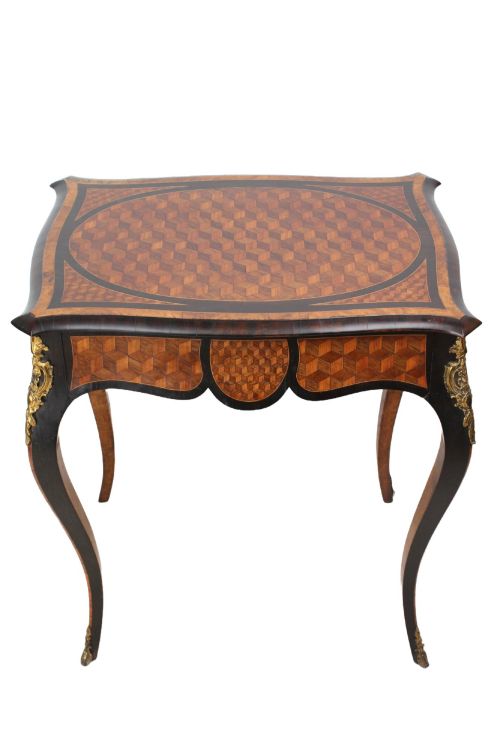
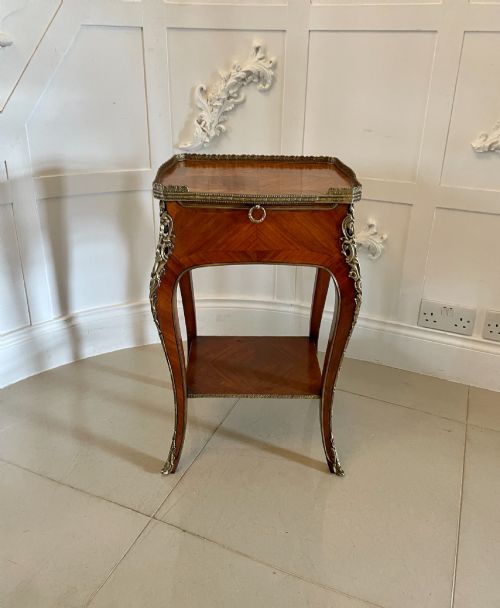
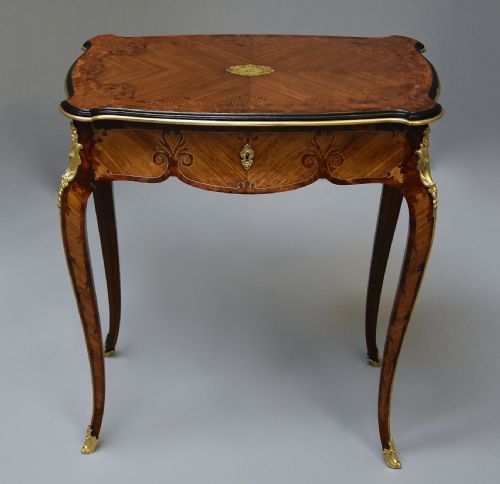
The prevailing styles draw heavily upon Louis XV and Louis Empire aesthetics, utilising exotic timbers such as kingwood, rosewood, and mahogany. Many examples feature detailed parquetry or floral marquetry alongside polished marble tops.
Makers integrated brass and bronze ormolu mounts to highlight the structural contours, corners, and apron friezes of each table. Such pieces served practical functions for lamps, tea, or writing while displaying sophisticated craftsmanship.
How they were made
Cabinetmakers constructed carcass frames from native hardwoods before applying veneers of kingwood, walnut, or mahogany. Artisans then executed intricate parquetry geometric patterns and floral marquetry using contrasting timber grains.
Foundries produced the ormolu mounts through bronze casting, which were subsequently chased by hand to sharpen details before receiving a golden fire-gilding treatment. These metal elements were then secured to the timber bodies with precision screws.
Secret mechanisms and clever drop leaves in these tables prove nineteenth-century makers loved a hidden party trick.
What varies in quality
The refinement of the cast bronze ormolu mounts dictates much of the visual merit, with hand-chased depth separating superior items from simpler pressings. Timber selection also matters, as tightly figured kingwood veneers and complex multi-wood marquetry demand greater carpentry skill.
Structural integrity is evident in the weight of the marble tops and the seamless movement of mechanical drawers or folding leaves. Maker attribution to notable Parisian workshops or London retailers further elevates the standing of a piece.
JAS Shoolbred·Maison Millet·Joseph-Emmanuel Zwiener·Antoine Lampre·Francois Linke·Edwards and Roberts·L Martin
The Ormolu Occasional Table Glossary
- Ormolu
- Gilt bronze mounts applied to furniture, cast and chased to create decorative metallic highlights. The technique involves a mercury amalgam process historically used on finer French pieces.
- Marquetry
- The art of forming decorative patterns on a wooden surface using fitted veneers of different woods, metals, or shells. Artisans cut these delicate elements together to ensure tight joints.
- Parquetry
- Geometric wood inlay forming repetitive patterns such as cubes, diamonds, or chequers across a table top. It creates an optical sense of depth through contrasting timber tones.
- Étagere
- An open tiered piece of furniture with multiple display shelves supported by slender uprights or columns. Nineteenth-century versions frequently incorporated ormolu galleries and mounts.
- Gueridon
- A small circular French table supported by a central column or multiple legs, often featuring a marble top. The form originated in the seventeenth century before being revived during the Empire period.
- Scagliola
- A composite material made from selenite, glue, and pigments used to imitate marble and other hard stones. It allows for intricate coloured inlays set directly into table tops.
Ormolu Occasional Table: Frequently Asked Questions
Where should I place an ormolu occasional table?
These tables suit placement as freestanding centre pieces or beside seating where their detailed bronze mounts remain visible. Their finished backs and compact proportions allow them to function effectively in both drawing rooms and hallways.
Avoid positioning them in direct sunlight to protect the polished timber veneers and natural wood grains from fading over time.
How do I clean ormolu mounts safely?
Dust the bronze elements gently with a soft, dry brush to prevent accumulation in the recesses of the casting. Avoid abrasive metal polishes that can strip away the original fire-gilding.
Keep moisture away from the surrounding wood veneer when maintaining the metal mounts to protect the historic polish of the table top.
What is the difference between marquetry and parquetry?
Marquetry employs varied veneers to create pictorial compositions, frequently depicting floral sprays, musical instruments, or scrolling foliage. It relies on fluid, organic curves.
Parquetry constructs strict geometric arrangements using wood tiles to form repeating patterns like cubes or herringbone. Both techniques often appear together on nineteenth-century French tables.