
Ormolu Mounted Bureau
When choosing an ormolu mounted bureau, a collector seeks the union of French cabinet-making and cast bronze ornamentation designed for formal writing.
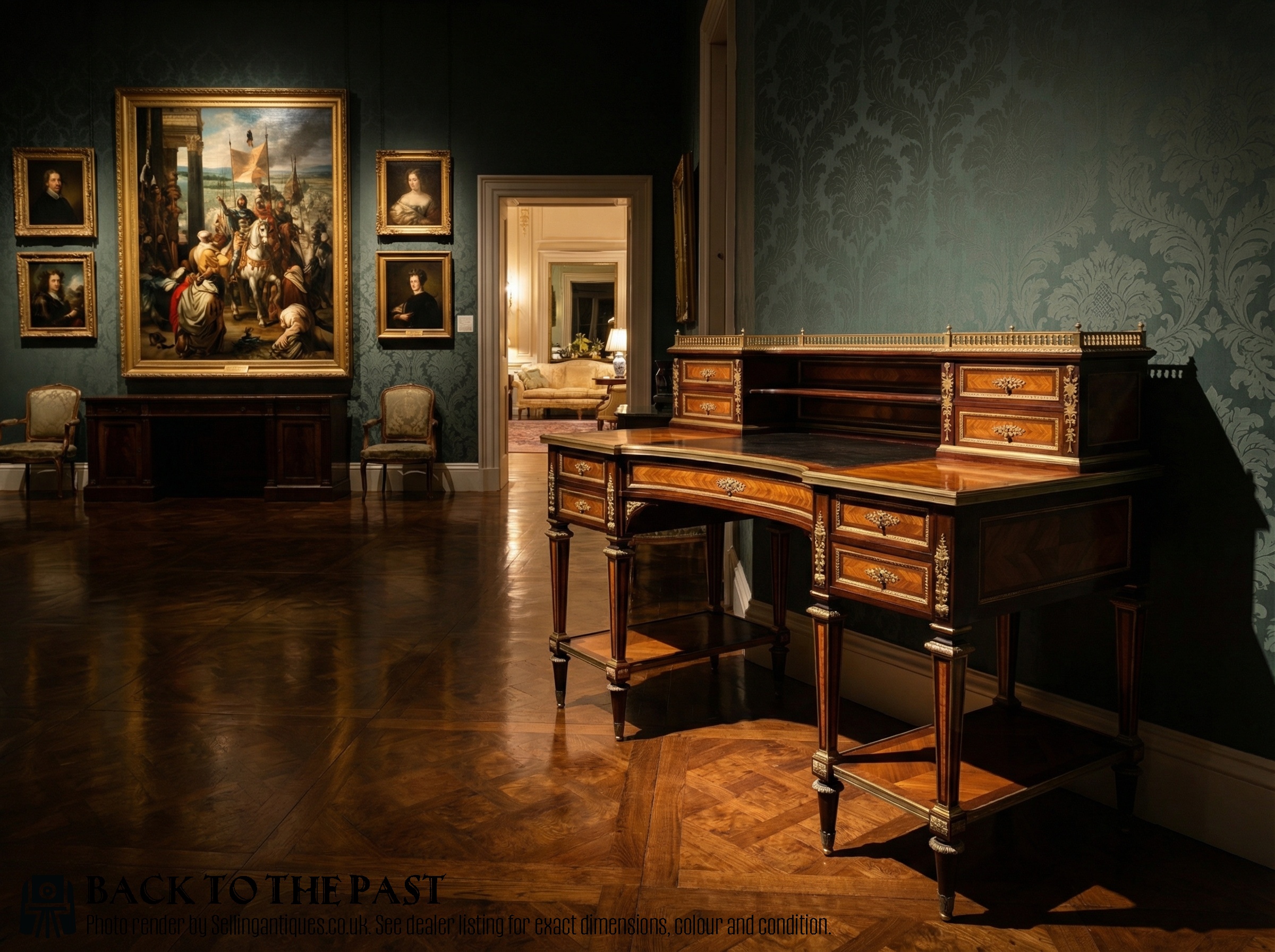
Ormolu Mounted Bureau
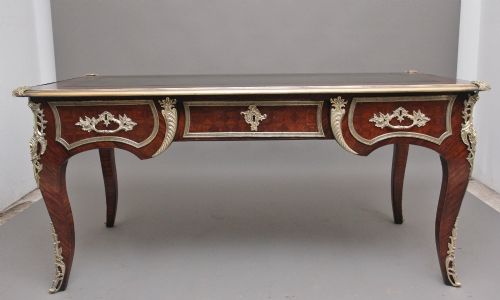
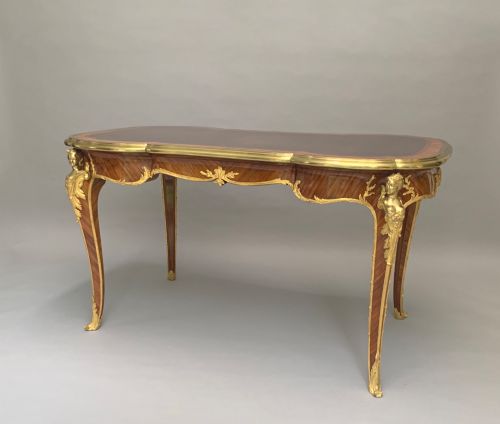
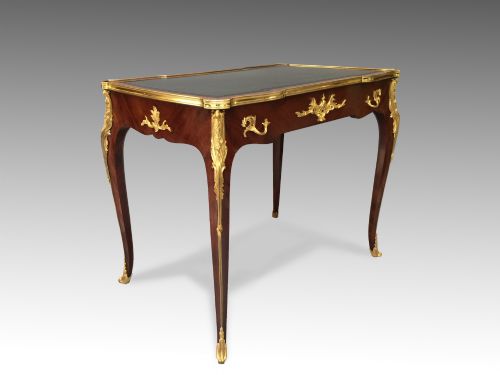
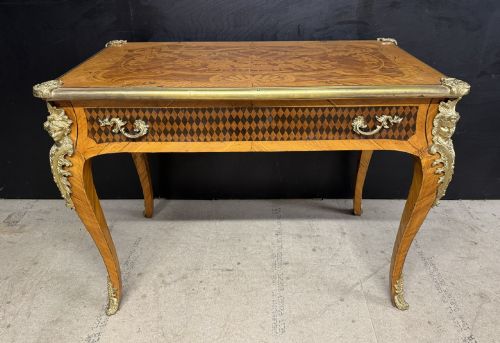
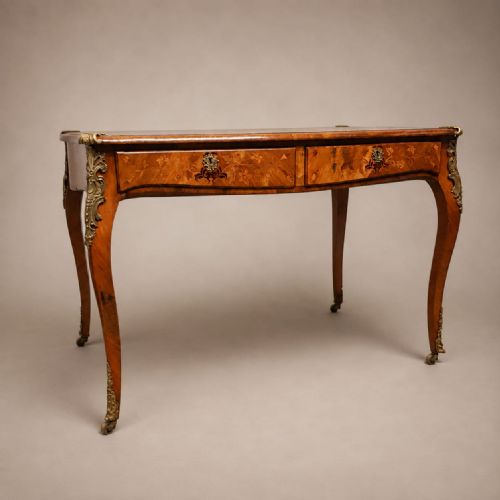
The ormolu mounted bureau encompasses a variety of writing furniture, from flat-topped tables to sloping desks and cabinets originating predominantly in nineteenth-century France. Buyers frequently encounter nineteenth-century pieces executed in the Louis XV and Louis XVI revival styles, often featuring serpentine or kidney shapes.
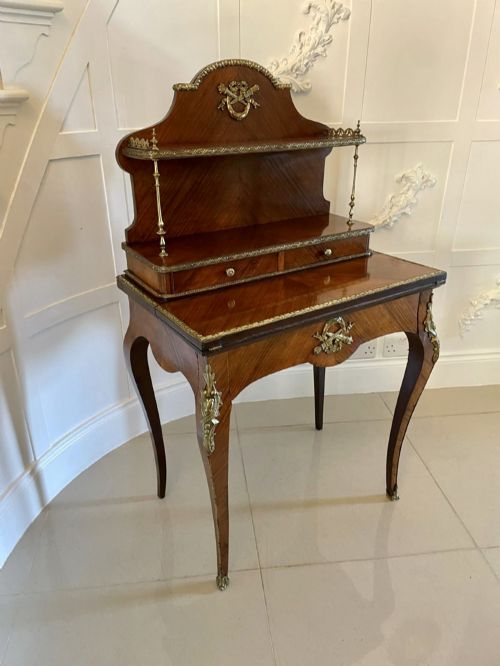
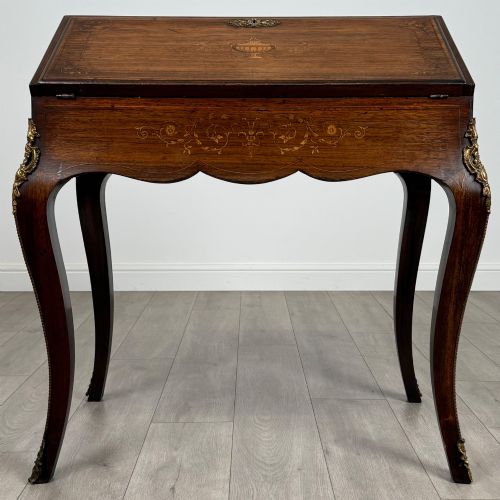
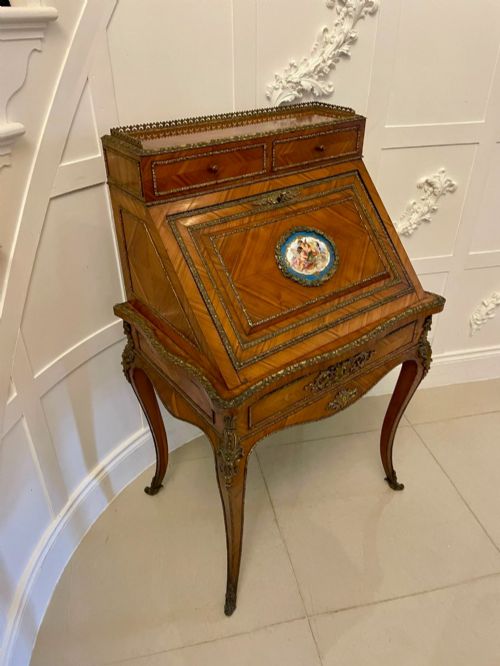
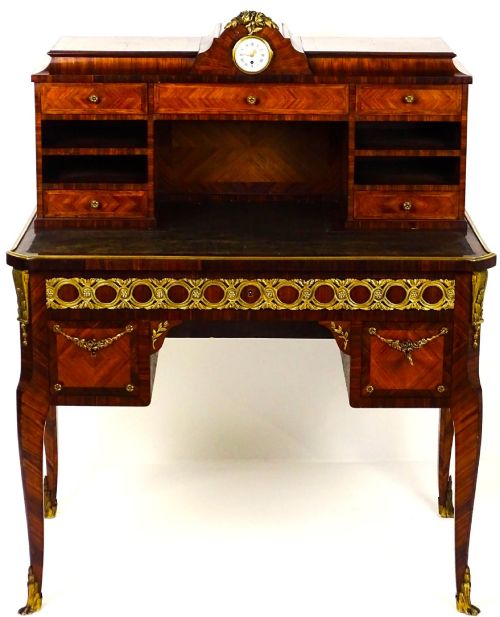
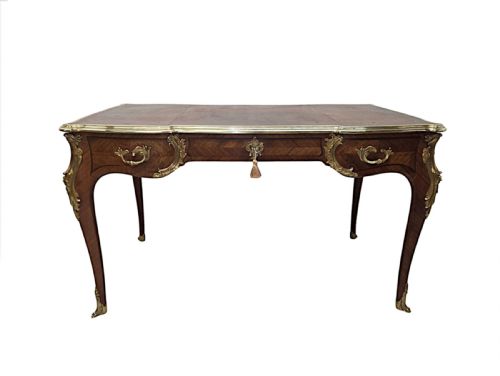
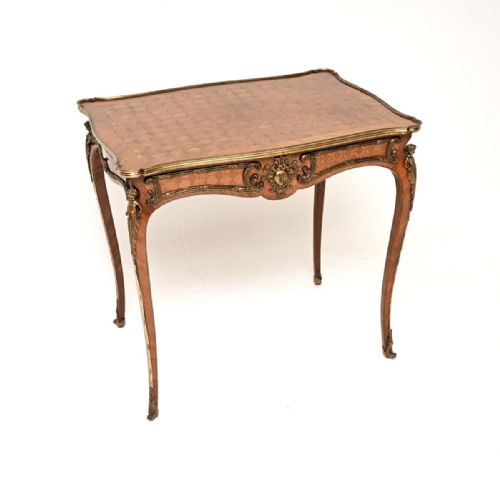
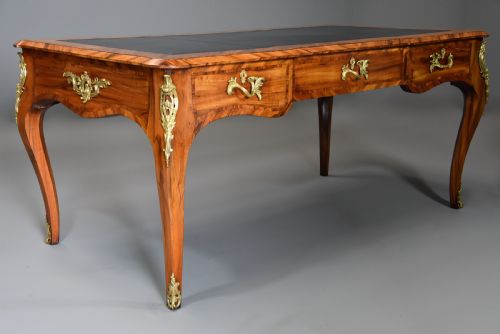
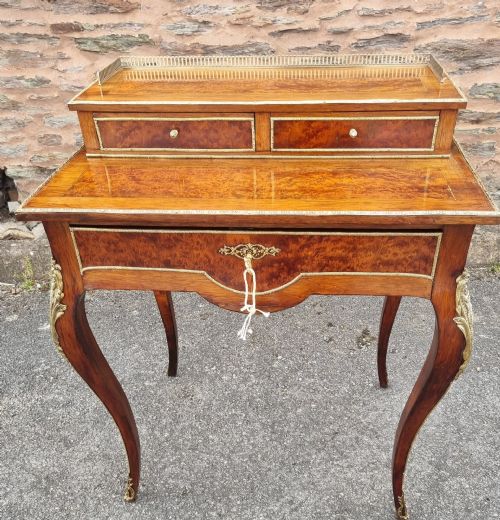
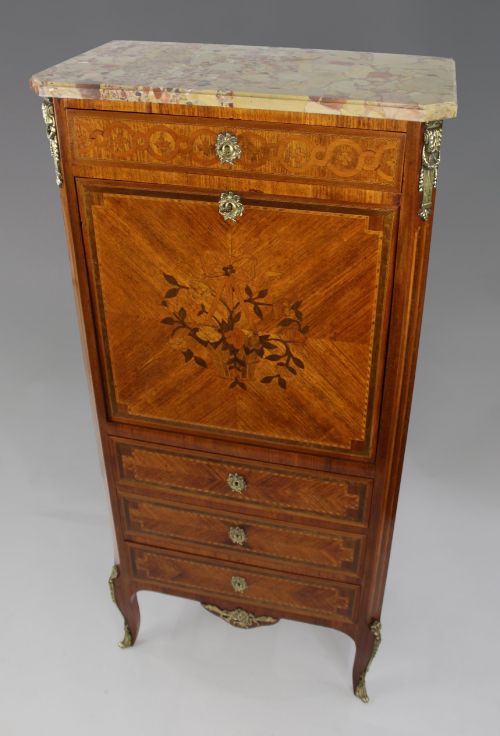
Forms on this page range from the bureau plat and writing table to the compact bonheur du jour and upright secretaire. These items served domestic and reception spaces in affluent homes, combining workspace storage with decorative presence.
Makers working during the Victorian and Napoleon III periods adapted eighteenth-century proportions using exotic veneers and gilt bronze mounts. This selection reflects a strong demand for revivalist writing furniture designed to command the centre of a room.
Materials and Construction
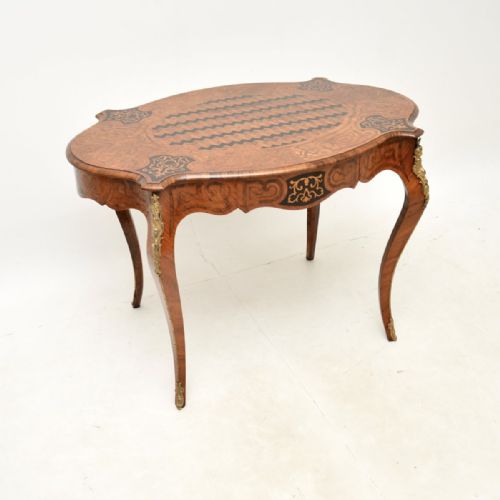
Makers utilised dense cabinet timbers including kingwood, rosewood, walnut and mahogany as the foundational carcase for marquetry and parquetry patterns. These woods provided stable surfaces for intricate geometric veneer layouts and floral designs.
Gilt bronze or ormolu mounts were cast, chased and fire-gilded before being fitted to the corners, feet and aprons of the desks. Leather writing surfaces, marble tops and porcelain plaques were frequently integrated into the design to complete the composition.
Ormolu Mounted Bureau Retail Price Guide 2026
Typical asking prices for ormolu mounted bureau among the pieces listed under this phrase on Sellingantiques today, from the lower quarter to the upper quarter. They describe what is for sale here now, not the wider market.
Secret drawers operated by hidden wooden catches remind us that nineteenth-century correspondents valued privacy as much as fine parquetry.
Evaluating Quality
Quality rests in the crispness of the bronze chasing and the precision of the timber inlay. Superior pieces display deep, sharp relief in the ormolu mounts alongside closely fitted parquetry that follows complex curves without gaps.
The integrity of the internal carcase construction and the retention of original surfaces distinguish finer examples from standard production. Master workshops employed heavier gauges of bronze and selected highly figured veneers that elevate the piece beyond routine revival work.
François Linke·Edwards and Roberts·Paul Sormani·Maison Krieger·CH Jeanselme and Co·Blake London·JAS Shoolbred·Hopilliart Paris
The Ormolu Mounted Bureau Glossary
- Ormolu
- Gilt bronze ornamentation applied to furniture mounts and decorative objects. The technique involves coating cast bronze with a mercury and gold amalgam before heating.
- Bureau Plat
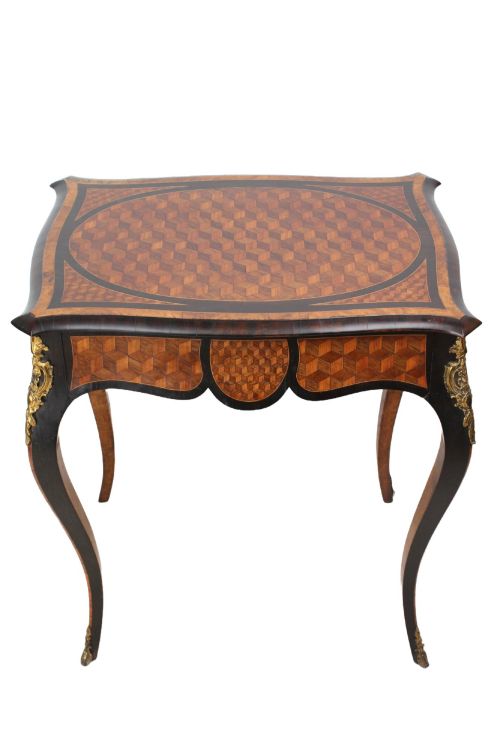
- A freestanding writing table with a flat top and one or more drawers in the frieze. These desks are finished on all sides to allow placement in the middle of a room.
- Bonheur Du Jour
- A small ladies writing desk featuring a tiered superstructure with shelves, drawers or a small cabinet above the main writing surface. This form emerged during the mid-eighteenth century and remained popular in nineteenth-century revivals.
- Marquetry
- Decorative veneer work forming pictorial or floral patterns using various coloured woods. Craftsmen cut thin slices of timber and assembled them into precise motifs before gluing them to the carcase.
- Parquetry
- Geometric wood inlay arranged in repetitive patterns such as cubes, chequers or lozenges. This technique highlights the natural grain and contrast of woods like kingwood and rosewood.
Ormolu Mounted Bureau: Frequently Asked Questions
What is a bureau plat?
A bureau plat is a freestanding writing table featuring a flat top and drawers within the frieze. Because the reverse side is finished with matching veneers and mounts, the desk can stand in the middle of a room rather than against a wall.
These tables date largely to the nineteenth century in revival styles and provide an expansive writing surface combined with decorative ormolu mounts.
How do I identify Louis XV style?
Louis XV style furniture is characterised by asymmetric curves, cabriole legs and elaborate rococo ormolu mounts. The overall silhouette avoids straight lines in favour of flowing serpentine forms and floral marquetry.
Nineteenth-century makers adopted these aesthetic conventions from earlier French royal furniture, applying rich veneers such as kingwood and rosewood to curved carcases.
Where were these desks placed?
These desks were designed for principal reception rooms, private libraries and boudoirs in large residences. Freestanding tables occupied the centre of a room, while smaller desks like the bonheur du jour stood against panelled walls.
Their finished backs and decorative gilt bronze mounts ensured they appeared appropriate from every angle within formal domestic interiors.
What is the difference between kingwood and rosewood?
Kingwood is a dense, hard timber featuring distinctive violet-brown tones marked with darker golden stripes. It was frequently used for contrasting geometric parquetry borders on nineteenth-century desks.
Rosewood displays a deeper reddish-brown colour with pronounced dark grain figuring, providing a heavier visual weight often selected for larger writing tables and cabinets.