
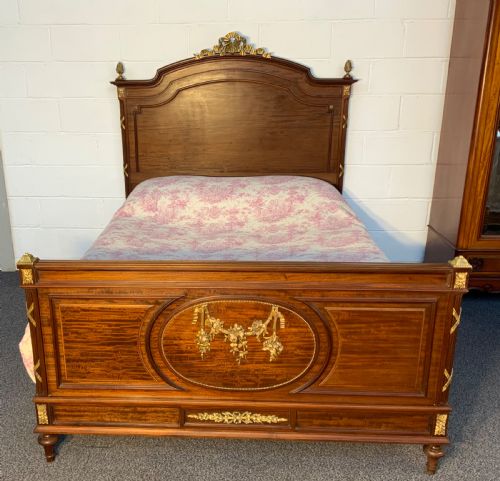


Ormolu Mounted Bed
An ormolu mounted bed brings architectural French grandeur to a bedroom through gilt bronze mounts set against rich mahogany and walnut.
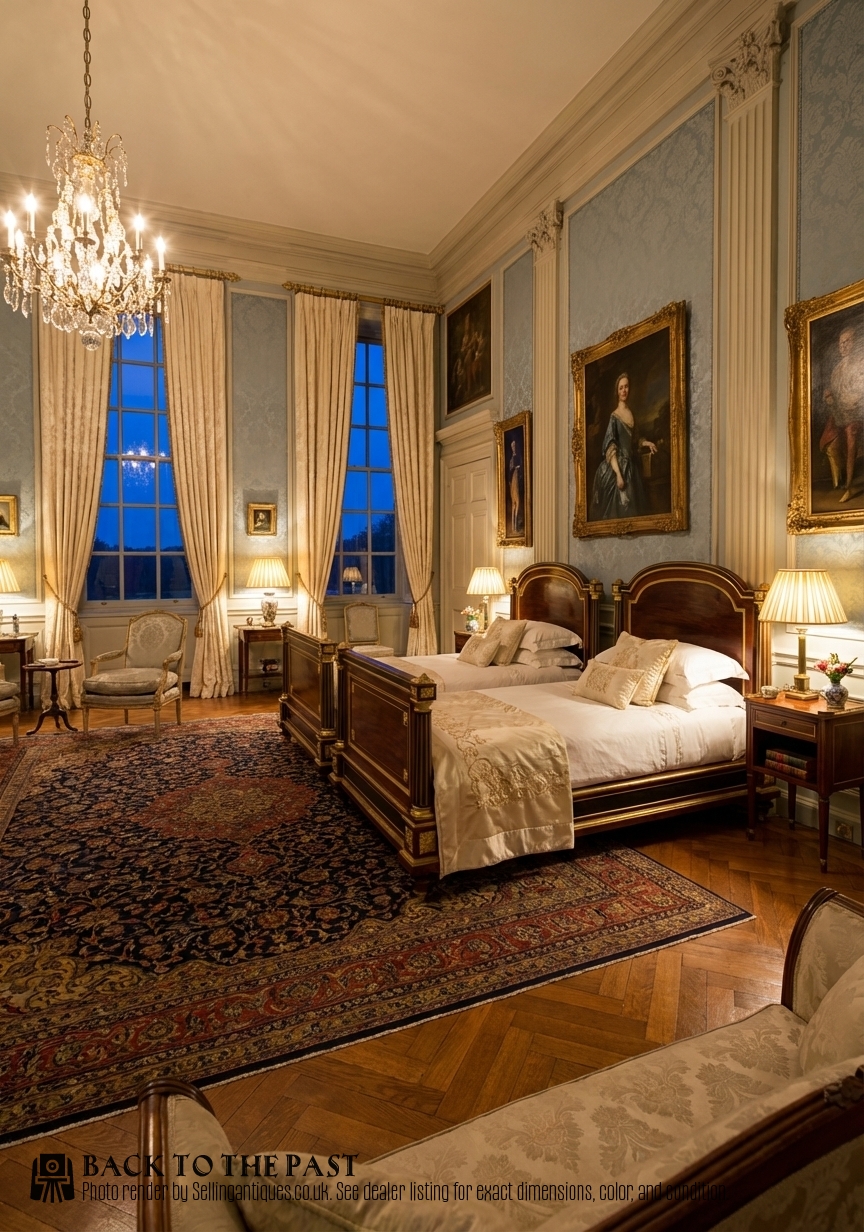
Ormolu Mounted Bed
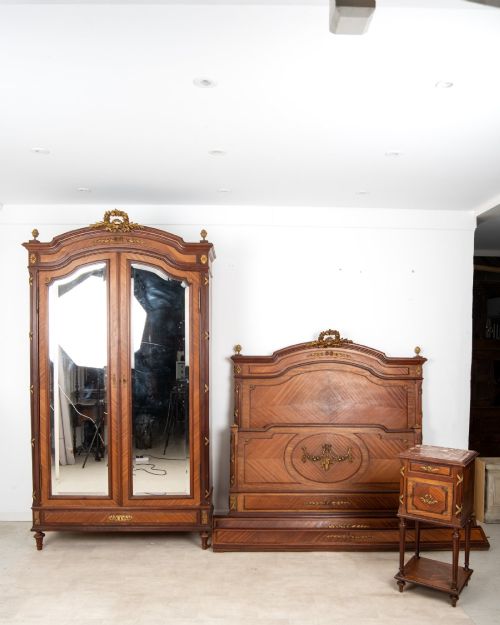
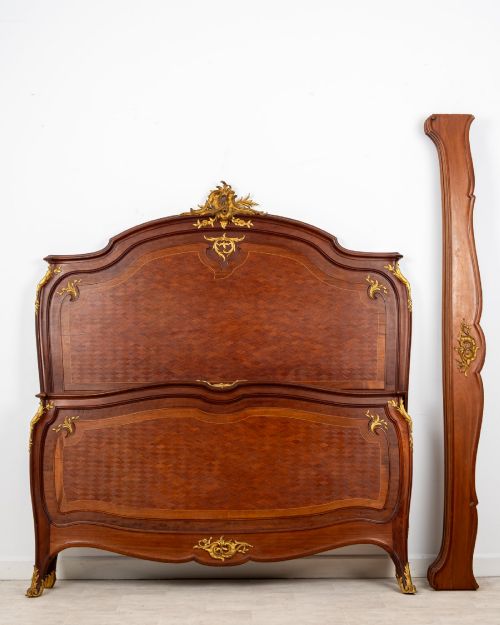
When you search for an ormolu mounted bed, you encounter substantial French bedsteads spanning the nineteenth century and the early twentieth century. These pieces appear most frequently in revivalist modes such as Louis XVI, Louis XV, and French Empire styles, often constructed as part of larger bedroom furniture suites with matching bedside cabinets.
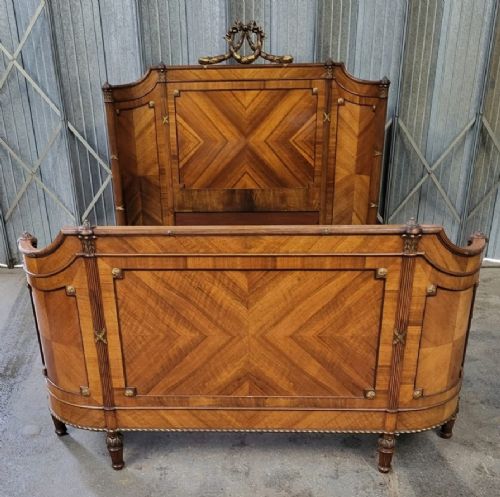
The timber framework relies heavily on figured mahogany, walnut, kingwood, and fruitwood, frequently enhanced by decorative parquetry or quarter veneered surfaces. Single beds, double beds, king sizes, and super king formats occur alongside daybeds, providing substantial scale and sculptural presence for the bedroom.
Makers of these bedsteads drew inspiration from royal French aesthetics, applying cast metal embellishments to headboards and footboards to create a commanding architectural focal point. The resulting pieces combine domestic utility with the opulent decorative vocabulary of Parisian chateaux and formal salons.
Materials and Construction
Cabinetmakers utilised dense native and exotic timbers such as mahogany, walnut, kingwood, rosewood, and fruitwood to build the structural carcase, often arranging veneers in geometric parquetry patterns. These wooden elements provide a dark, figured backdrop that contrasts with the bright metal mounts.
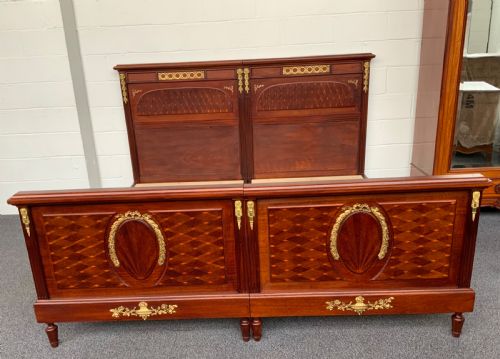
Ormolu mounts, consisting of cast and gilded bronze, or alternative brass detailing, were applied meticulously to frame panels, accent corners, and define structural lines. The metalwork was cast in relief, capturing classical motifs and scrollwork typical of French neoclassical and revivalist design.
Ormolu Mounted Bed Retail Price Guide 2026
Typical asking prices for ormolu mounted bed among the pieces listed under this phrase on Sellingantiques today, from the lower quarter to the upper quarter. They describe what is for sale here now, not the wider market.
Assessing Quality and Execution
Quality rests primarily in the crispness of the ormolu cast and the depth of the timber figuring, where finer pieces display sharper chasing in the metal and superior grain selection in the mahogany or kingwood veneers. Substantial quarter veneering and complex parquetry patterns indicate a higher tier of workshop production.
Proportion and architectural balance dictate the overall success of the piece, separating standard commercial bedsteads from grander suite items designed for important commission work. The integration of the brass or gilt bronze mounts directly into the structural wooden mouldings reveals the confidence of the maker.
Gillows
The Ormolu Mounted Bed Glossary
- Ormolu
- Gilded bronze produced by applying a mercury amalgam to cast bronze, creating a durable golden surface finish. This technique was widely utilised in French furniture manufacture from the eighteenth century onwards.
- Parquetry
- Geometric wood mosaic work formed by fitting small veneer pieces together to create patterns on a surface. It appears frequently on the headboards and footboards of finer nineteenth-century bedsteads.
- Quarter Veneer
- Timber veneer sliced and arranged so that the grain patterns mirror one another across a central axis. This method highlights the natural figure of mahogany or walnut.
- Louis XVI Style
- A neoclassical design movement characterised by straight lines, symmetry, and classical motifs such as acanthus leaves and fluting. It experienced major revivals throughout the nineteenth century.
- Plum Pudding Mahogany
- A richly figured variety of mahogany displaying small, rounded markings resembling the fruit within a Christmas pudding. It is prized by collectors for its unusual and decorative grain.
Ormolu Mounted Bed: Frequently Asked Questions
What periods do these beds come from?
The available pieces date predominantly from the nineteenth century and the early decades of the twentieth century. These encompass revival periods including Louis XVI, Louis XV, and French Empire styles.
Maker output during this era focused on recreating historic French aesthetics using traditional cabinetmaking timbers combined with cast metal mounts.
Do standard modern mattresses fit these beds?
Many nineteenth-century French beds are built to historical dimensions rather than standard modern UK or international mattress sizes. King size and super king formats appear frequently, but individual frames require careful measurement before fitting contemporary bases.
Adapting antique bedsteads often involves custom-made supportive slats or bespoke mattress dimensions to ensure a correct and stable fit within the wooden frame.
How do I care for ormolu mounts?
Ormolu mounts require gentle dusting with a dry, soft cloth to prevent the accumulation of dirt within the cast recesses. Avoid abrasive cleaning agents or harsh metal polishes that can strip the original gilding from the bronze.
Preserving the surface involves maintaining a stable room temperature and humidity level to protect both the metalwork and the surrounding timber veneer.
How do I distinguish French Empire from Louis XVI style?
French Empire pieces display heavier, more imposing classical proportions inspired by ancient Rome, frequently featuring military motifs, bold cornices, and rich mahogany surfaces. Louis XVI style focuses on lighter rectilinear geometry, symmetrical floral motifs, and restrained neoclassical ornamentation.
Examining the specific character of the ormolu mounts and the treatment of the timber columns or pilasters reveals which classical vocabulary the maker followed.