


Empire Style Bedstead
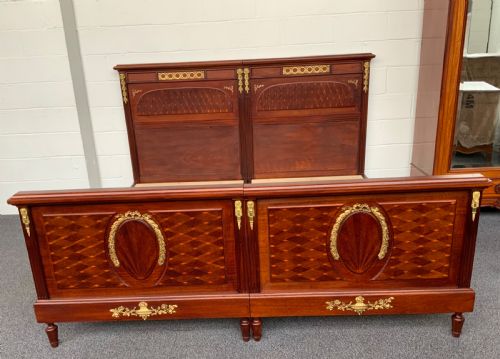
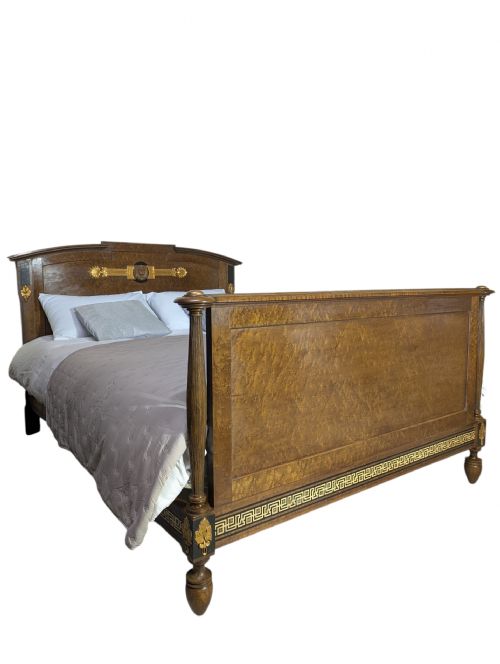
These empire style bedstead examples bring monumental neoclassical presence into a bedroom through rich mahogany, fruitwood, and striking ormolu mounts.
Empire Style Bedstead
An empire style bedstead embodies the architectural grandeur of neoclassical design, taking form as single beds, double frames, and king size sleeping quarters. When exploring this phrase, buyers encounter French and continental iterations spanning the late nineteenth century through to nineteen thirty, alongside specific art deco interpretations.
The primary forms on this page include grand emperor and king size frameworks, alongside matched pairs of single beds designed for symmetrical room layouts. These pieces frequently incorporate striking architectural lines drawn from French empire and continental neoclassical traditions, anchoring modern bedrooms with historical gravitas.
Makers and workshops constructed these bedsteads in standard configurations as well as generous proportions to accommodate modern sleeping arrangements without sacrificing period character. Material combinations range from solid plum pudding mahogany and burr walnut to painted wooden finishes accented with marble top side cabinets.
How they were made
Cabinetmakers utilised dense timbers such as mahogany, fruitwood, and burr walnut as foundational bases, often applying intricate parquetry and veneer work across large headboards and footboards. These wooden surfaces display deep natural grain patterns that were carefully selected to complement the substantial proportions of each bed frame.
Cast brass and ormolu mounts provide the signature metallic highlights characteristic of the style, securing directly onto the timber framework to accentuate structural lines. Artisans also integrated painted wooden finishes and specialised marble components on associated pieces like bedside cabinets to complete the decorative scheme.
Listings feature pieces spanning the nineteenth century, nineteen hundred, nineteen thirty, and eighteen ninety, constructed from mahogany, burr walnut, and painted wood.
What varies in quality
The distinction between standard examples and superior pieces rests heavily on the caliber of the timber selection and the crispness of the bronze or ormolu mounts. Finer bedsteads exhibit dense plum pudding mahogany veneers and heavily chased metalwork that retain sharp architectural detailing.
Structural integrity and the harmony of matched pairs also dictate desirability, particularly when dealing with nineteenth century single beds intended to function together in a grand chamber. Superior construction ensures that heavy wood and metal elements join seamlessly without compromising the clean neoclassical silhouette.
The Empire Style Bedstead Glossary
- Ormolu
- Gilded bronze applied as decorative mounts to furniture frames. This technique creates brilliant metallic contrasts against dark mahogany surfaces.
- Parquetry
- Geometric wood mosaic work used for decorative flooring or surface veneers. Artisans employed this technique to create intricate patterns on bed headboards.
- Neoclassical
- A style reviving classical architectural motifs from ancient Greece and Rome. This aesthetic defines the symmetrical columns and monumental lines of these beds.
- Burr walnut
- Wood grain featuring swirling knot formations that create highly decorative patterns. It adds rich visual texture to art deco influenced bed frames.
Empire Style Bedstead: Frequently Asked Questions
How do I measure for a king size empire bedstead?
Measure your bedroom floor space carefully, accounting for the prominent headboard and footboard overhangs typical of nineteenth century French proportions.
Verify mattress dimensions against the specific frame width, as historical sizing conventions can occasionally vary from standard modern metrics.
Are these beds suitable for daily use?
These robust wooden and metal frames are built for regular domestic sleeping arrangements when properly assembled and supported by appropriate modern slats.
Ensure that all structural joints and metal brackets are periodically checked for stability to protect the antique timber during daily use.
How do I care for mahogany and ormolu?
Dust mahogany and burr walnut surfaces regularly with a soft, dry cloth to preserve the natural lustre of the timber and polished veneer.
Clean ormolu mounts gently without harsh chemical abrasives to maintain the integrity of the metallic gilding over time.
What is the difference between empire and art deco styles?
Empire design relies on classical neoclassical motifs, monumental symmetry, and heavy ormolu mounts inspired by antiquity and military conquests.
Art deco iterations incorporate streamlined geometric shapes and burr walnut veneers while retaining the grand proportions characteristic of earlier French framing.